Light

Article library

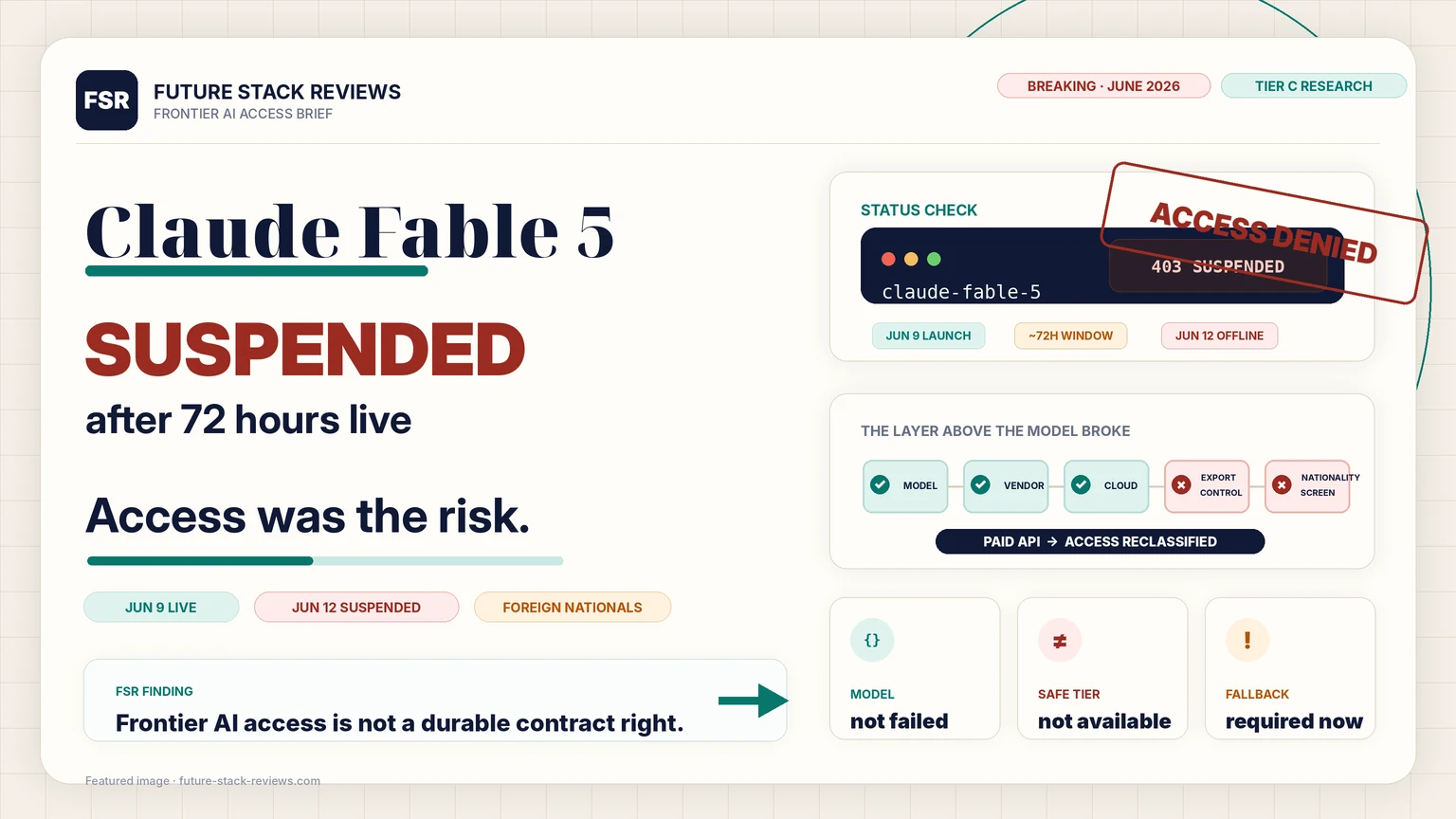
Future Stack Reviews Tier B infographic for Claude Fable 5, July 2, 2026. The same Fable usage is shown three ways with no official conversion between them: 5% weekly in the Claude app, 95.2K tokens in Claude Code, and $0.00 in the usage credits panel. Restored July 1, 2026. API pricing is $10 per million input and $50 output versus Opus 4.8 at $5 and $25, included up to 50% of weekly limits through July 7, then usage credits.
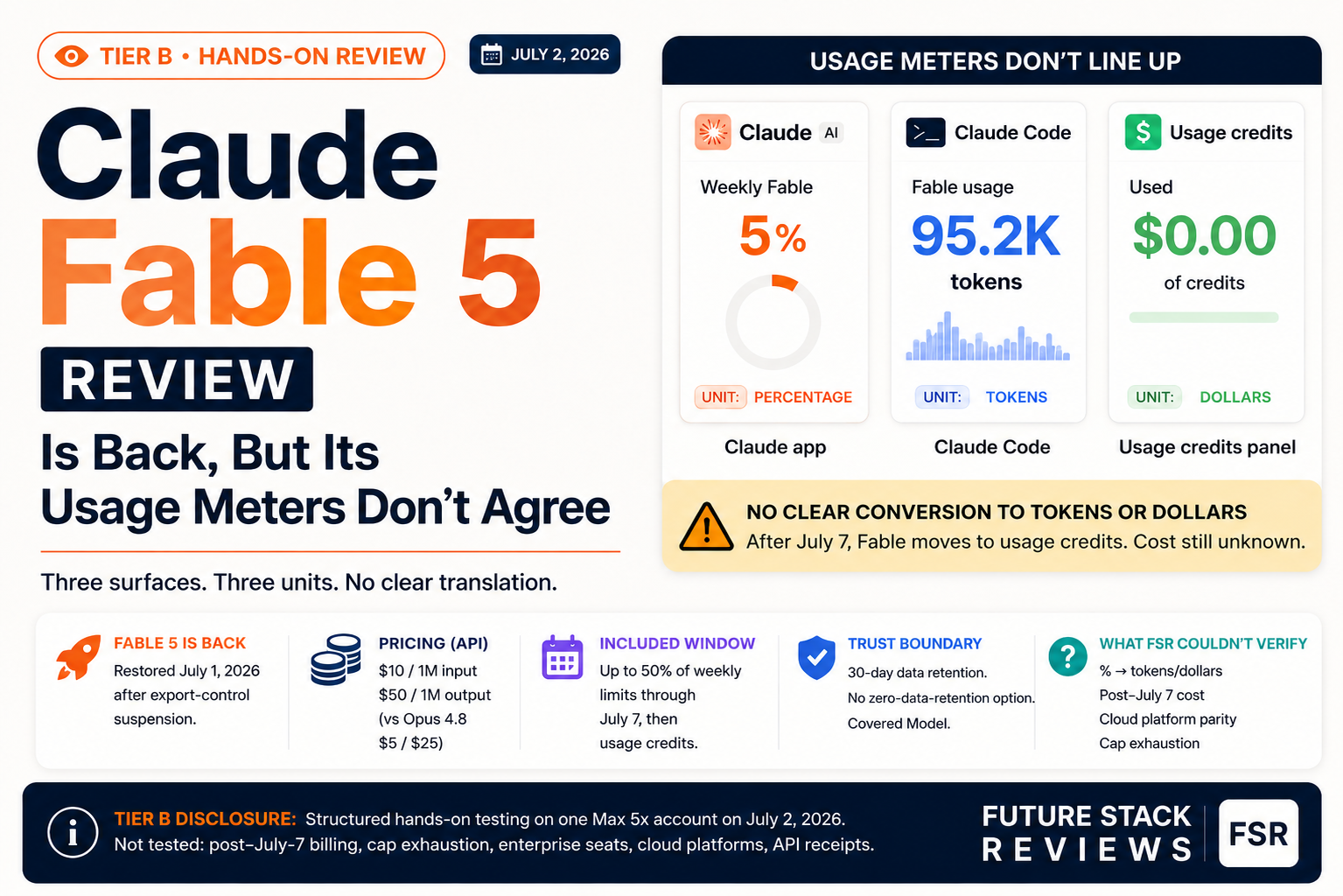
Claude Fable 5 Is Back, But Its Usage Meters Do Not Agree

Anthropic restored Claude Fable 5 on July 1, but it returned as a capped, separately metered entitlement. On a Max 5x account, FSR found tokens in Claude Code, a percentage meter in the Claude app, and usage credits at $0.00, with no official way to convert between them. A Tier B hands-on look at Fa…
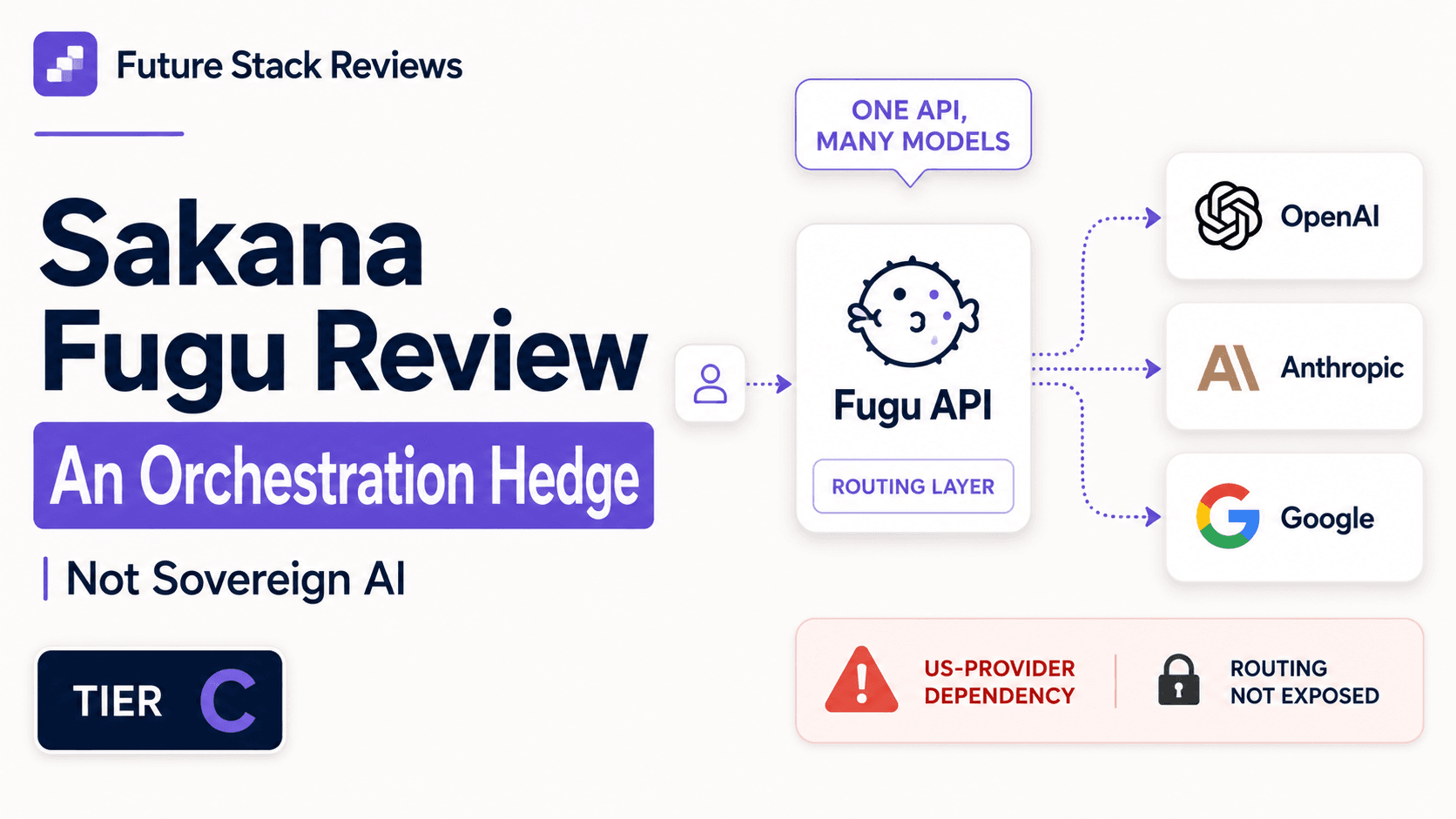
Sakana Fugu review: diagram of the Fugu API routing over OpenAI, Anthropic, and Google, flagged Tier C and routing not exposed.

Sakana Fugu Review: An Orchestration Hedge, Not Sovereign AI

Sakana Fugu sells itself as AI sovereignty, launched days after rival frontier models were cut off by US export control. Read the Terms and the story narrows: routing you cannot see, the models it names all in one jurisdiction, and orchestration cost you cannot forecast. An audit of the gap between…

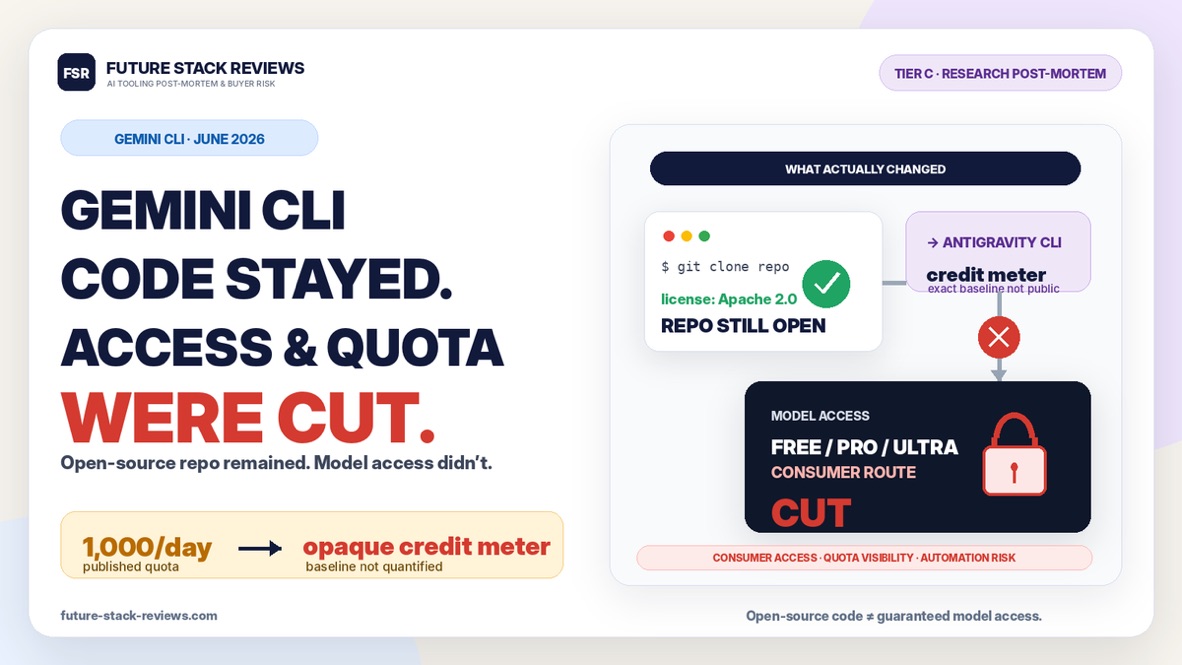
Gemini CLI shutdown infographic: Google kept the Apache 2.0 repo open but cut free, Pro, and Ultra consumer access on June 18, 2026, swapping a published 1,000-requests-per-day quota for an opaque Antigravity CLI credit meter.

Gemini CLI Was Open Source. The Access Was Not.

On June 18, 2026, Google cut Gemini CLI access for free, Pro, and Ultra users and moved them to Antigravity CLI. The Apache 2.0 code stayed open; the free entitlement to Google's backend did not. Here is what changed, who wins, who loses, and the dependency most migration guides skipped.

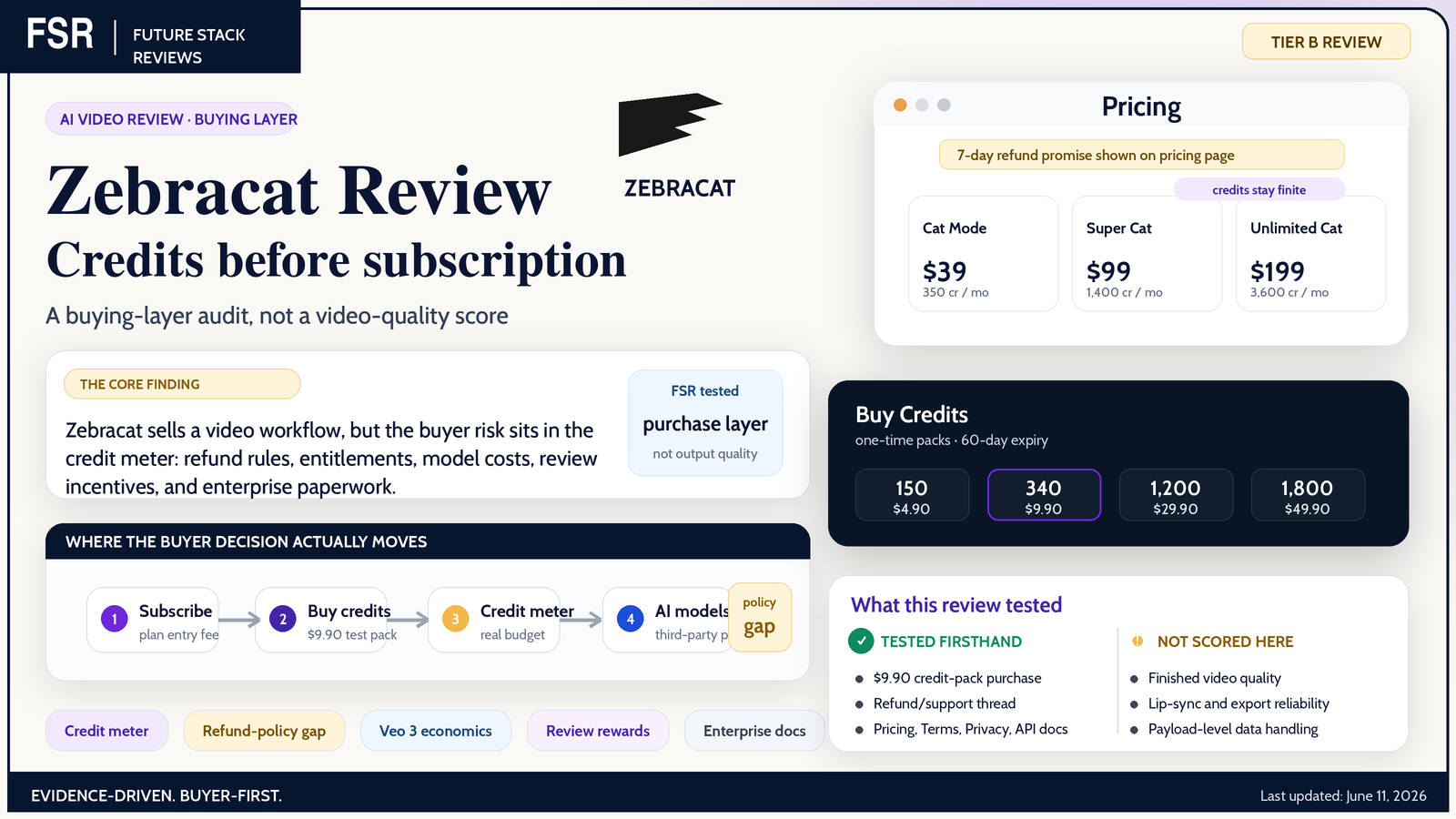
Zebracat review summary card from Future Stack Reviews, labeled a Tier B buying-layer audit rather than a video-quality score. Its core finding is that the buyer risk sits in the credit meter: refund rules, entitlements, model costs, review incentives, and enterprise paperwork. The card lays out Zebracat's three plan prices, a four-step buyer flow that ends at a policy gap, the one-time credit packs with 60-day expiry, and what FSR tested firsthand versus what it did not score.

Zebracat Review: What Happens If You Buy Credits Before You Subscribe

We bought Zebracat credits before subscribing, and the refund was refused. This Zebracat review audits the buying layer where the risk actually sits: refund rules, credit metering, model costs, review incentives, and enterprise paperwork, all with receipts and dates. It does not score video quality,…