GPT-5.6 on Amazon Bedrock infographic comparing In-Region, Geographic, and Global routing, with US and India geography coverage and a 10% higher regional rate.

GPT-5.6 on Amazon Bedrock: What the 10 Percent Regional Rate Covers

Amazon Bedrock exposes three routing options for GPT-5.6, but only two are cross-Region inference profiles. In-Region and Geographic pricing is exactly 1.10 times the Global rate on all 24 published line items, and the same ratio appears on a neighboring vendor’s model. A Geographic profile exists in the United States and India, and nowhere else in the reviewed documents. This Tier C briefing maps what the regional rate establishes, where AWS pages disagree with each other, and which parts of the data path the boundary does not cover.

Ox Alpha buyer-risk graphic showing an anonymous provider, contract uncertainty, a 58.4% DeepSWE score, and questions about code handling.

Ox Alpha: Data Terms, DeepSWE Results, and Buyer Risks

Ox Alpha arrived on August 20, 2026 with a million-token context window, a price of zero, and no company name attached. This Tier C briefing reads the contract stack behind each access route, separates the 58.4% full DeepSWE run from the 80% subset that traveled further, and marks what the public record leaves open.

GitHub Copilot Pricing 2026 infographic showing AI Credits, credit-consuming features, code completions with no credit use, and September billing changes.

GitHub Copilot Pricing 2026: What Your Seat Price Actually Includes

GitHub AI Credits are Copilot’s metered billing unit, at $0.01 per credit. Seat prices held steady through the June 2026 shift to usage-based billing, while the included usage underneath them was restructured. On September 1, existing Business and Enterprise accounts return to a smaller standard pool at the same seat price.

Hermes Agent and Nous Portal featured image showing the MIT license on a laptop and Portal billing and privacy terms on a phone.

Hermes Agent and Nous Portal: What the MIT License Does Not Cover

Hermes Agent ships under the MIT license. Nous Portal, the provider the setup command enables, is a separate commercial service with its own Terms, a Section 12.3 data grant covering third-party availability, and California arbitration. A document-first read of what each document covers, and where the two disagree.

Gemini 3.7 Flash migration diagram showing that thinking_level minimal returns a documented error, with low, medium, and high supported.

Gemini 3.7 Flash Migration: What Breaks Before You Switch From 3.6

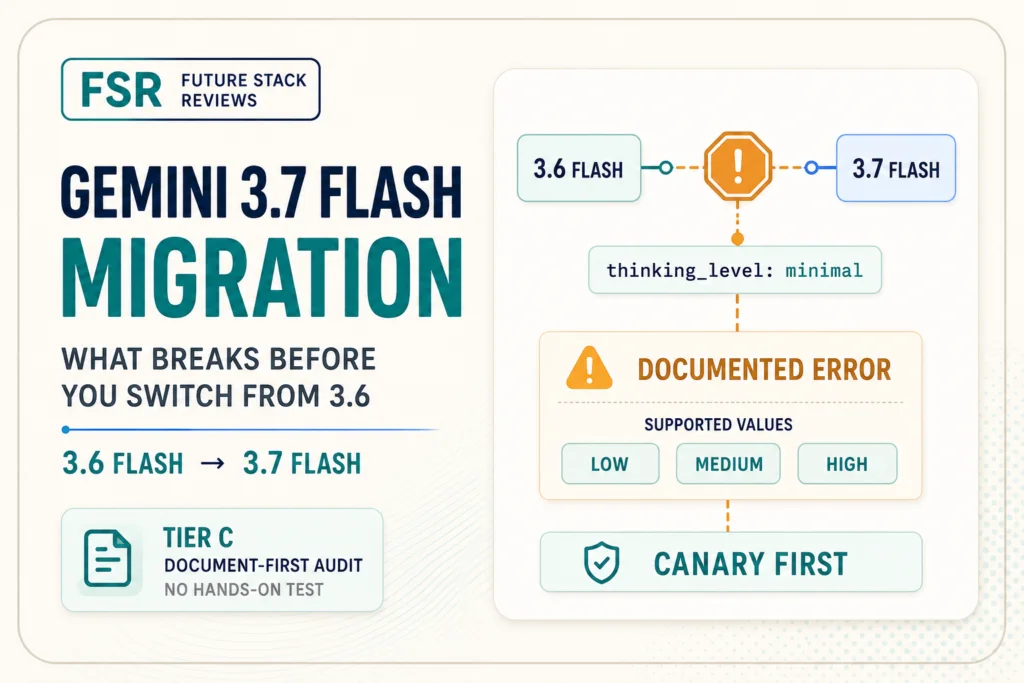
Gemini 3.7 Flash carries the same list price as the model it is built on and one fewer accepted thinking level. A 3.6 request that pins minimal returns an error. Seven more request dependencies must change, and Google states no failure mode for any of them. Document-first, no hands-on testing.

FSR featured graphic titled “Claude Text Watermark: Marked, Not Fully Mapped,” with cards for text watermarking, C2PA files, detector pending, unclear model scope, and positive detection not proving authorship.

Does Claude Watermark Text? What Anthropic Has Actually Documented

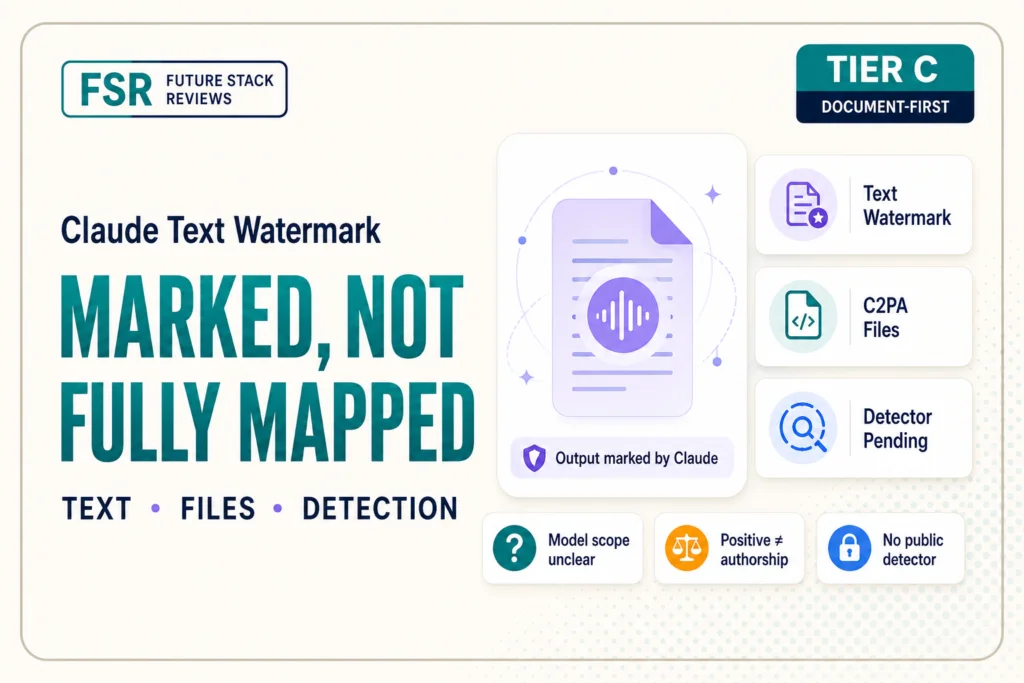
Anthropic has committed to embedding a machine-readable watermark in Claude’s generated text, and signed provenance metadata in supported files. As of 13 August 2026 it has not published which models carry the mark, a detector anyone can run, or any documented opt-out. This document-first briefing separates what Anthropic states from what a buyer can verify.