 Future Stack Reviews
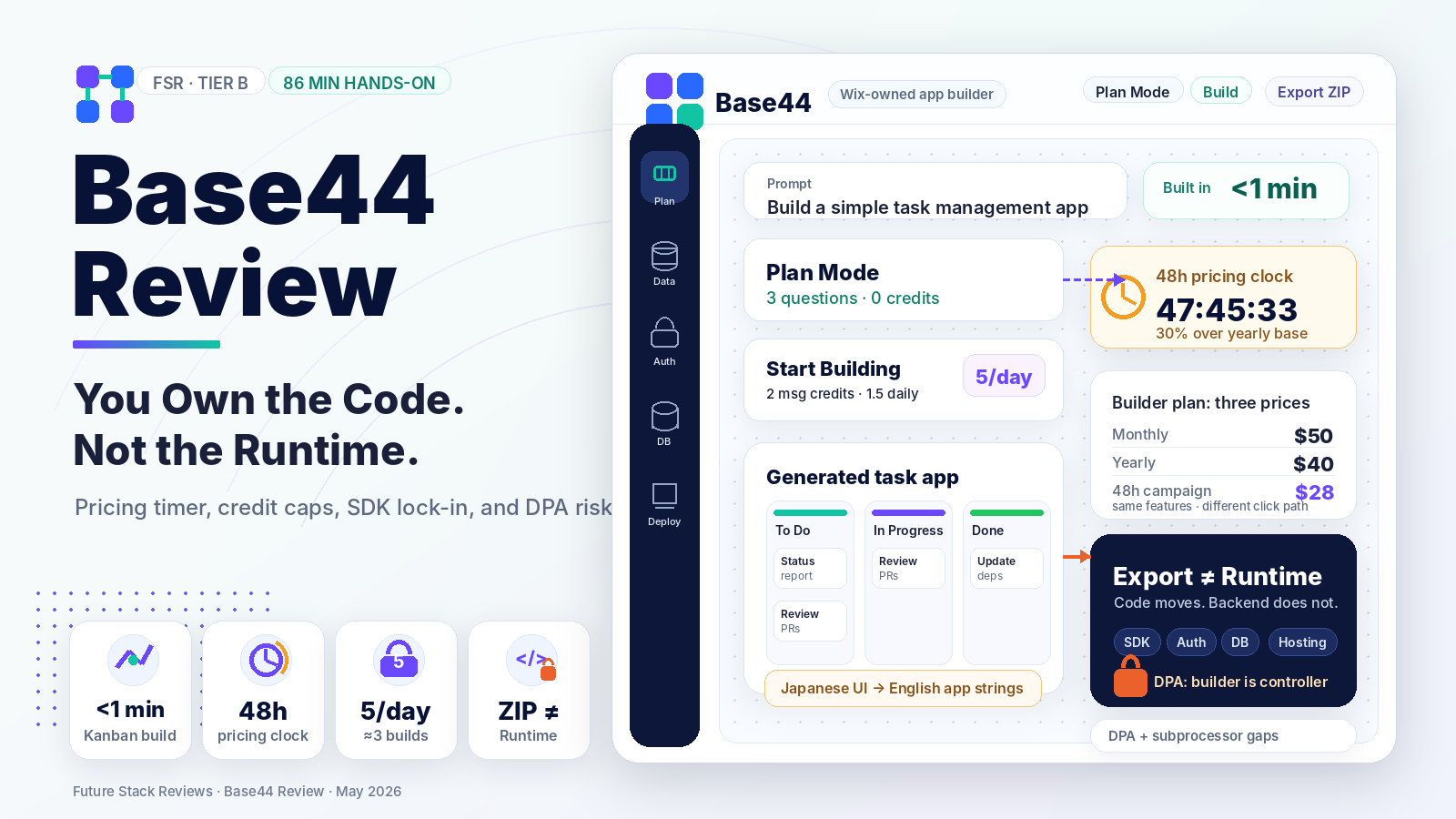
Base44 Review (2026): You Own the Code. Not the Runtime
Base44 review 2026: You own the code, not the runtime. 86-minute hands-on test, five pricing tiers, and a 48-hour onboarding clock decoded.
Base44 review 2026: You own the code, not the runtime. 86-minute hands-on test, five pricing tiers, and a 48-hour onboarding clock decoded.
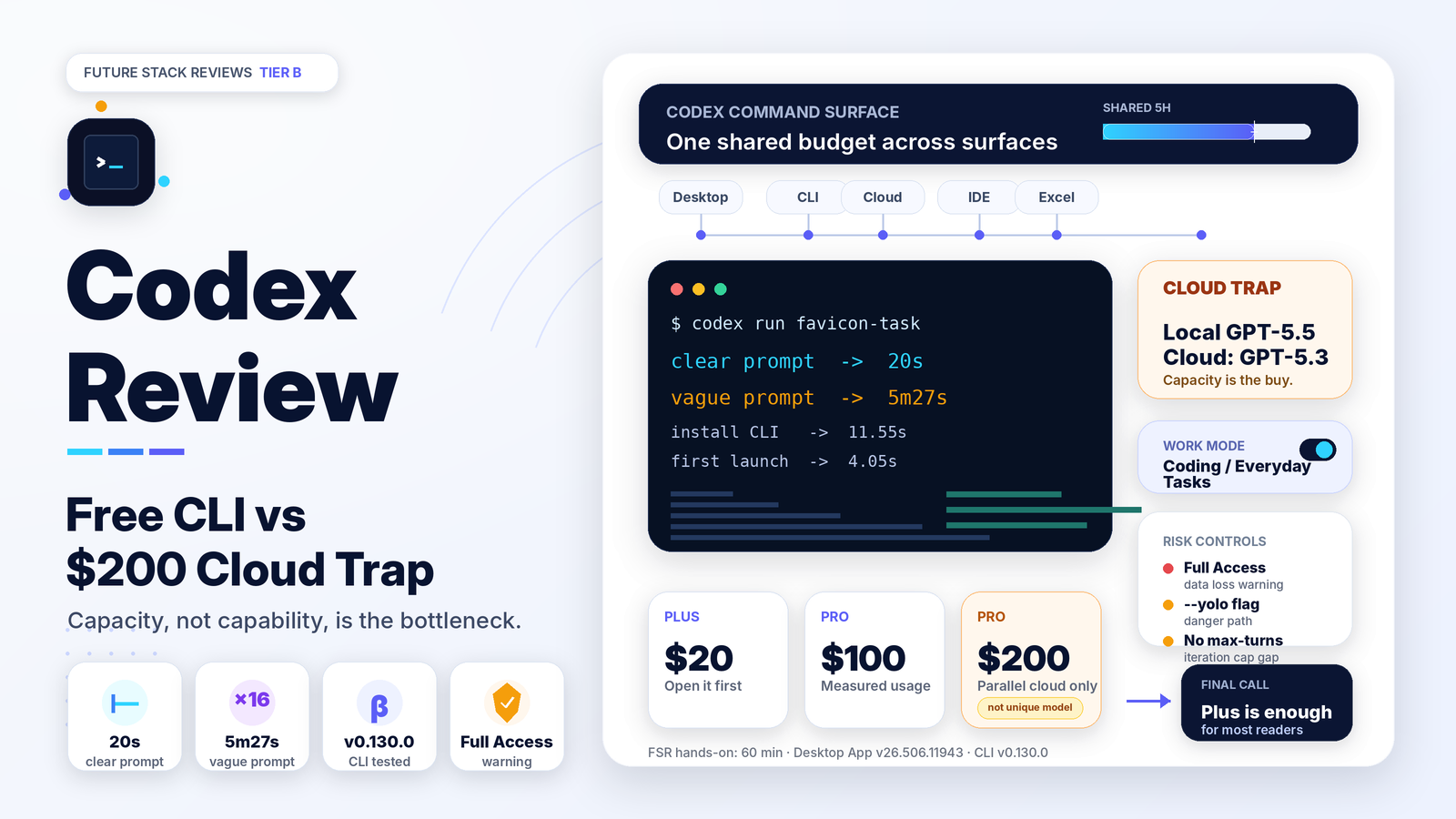
I paid $200 a month for OpenAI Codex and didn't open it for nine days. Here's what I found behind the icon and which plan is actually rational in May 2026.
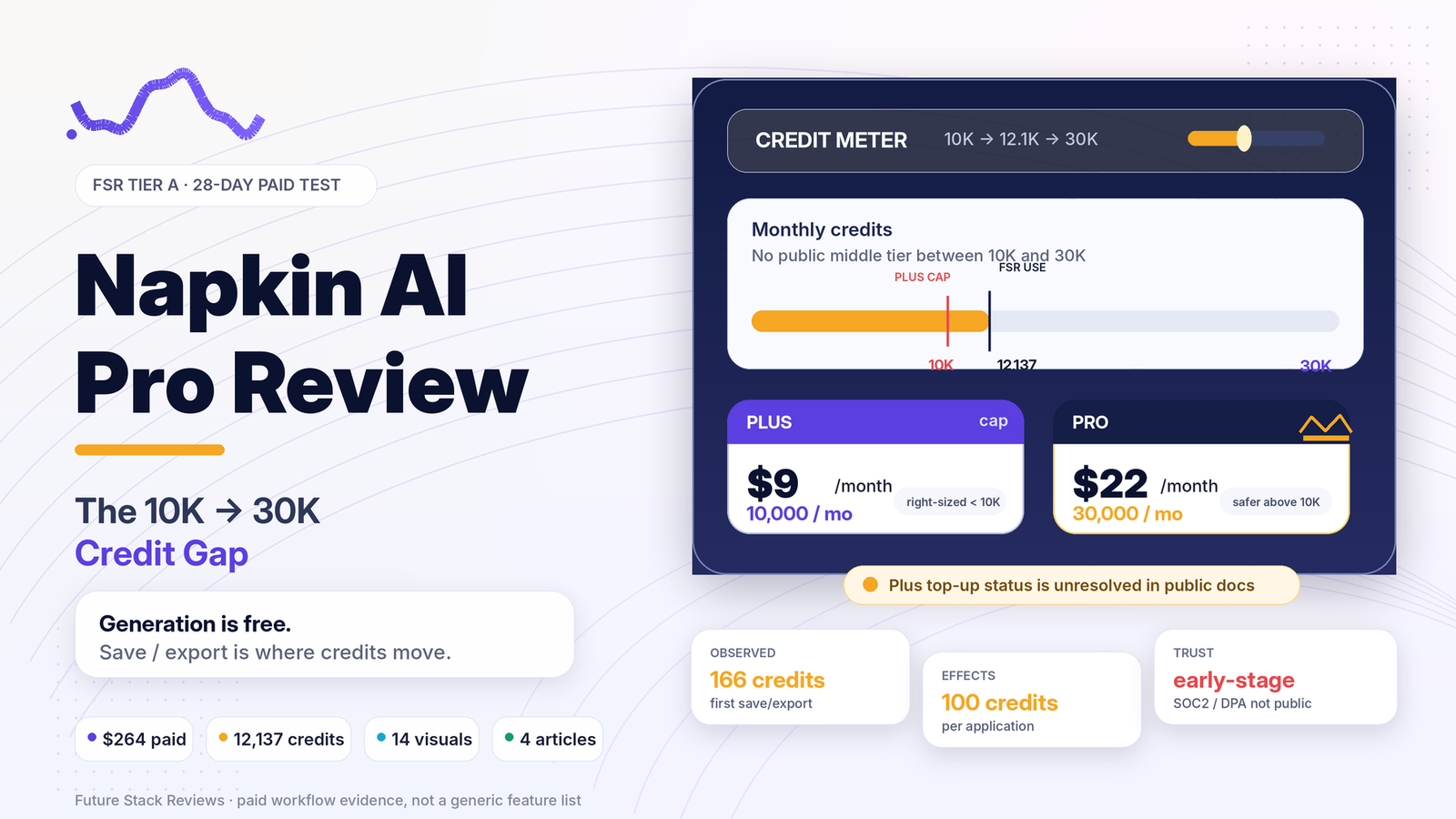
$264 for Napkin AI Pro Annual. 12,303 credits in 28 days. 14 production visuals across 4 articles. A Tier A review of the credit model, the 10K-30K architectural gap, and the documentation conflict other reviews miss.
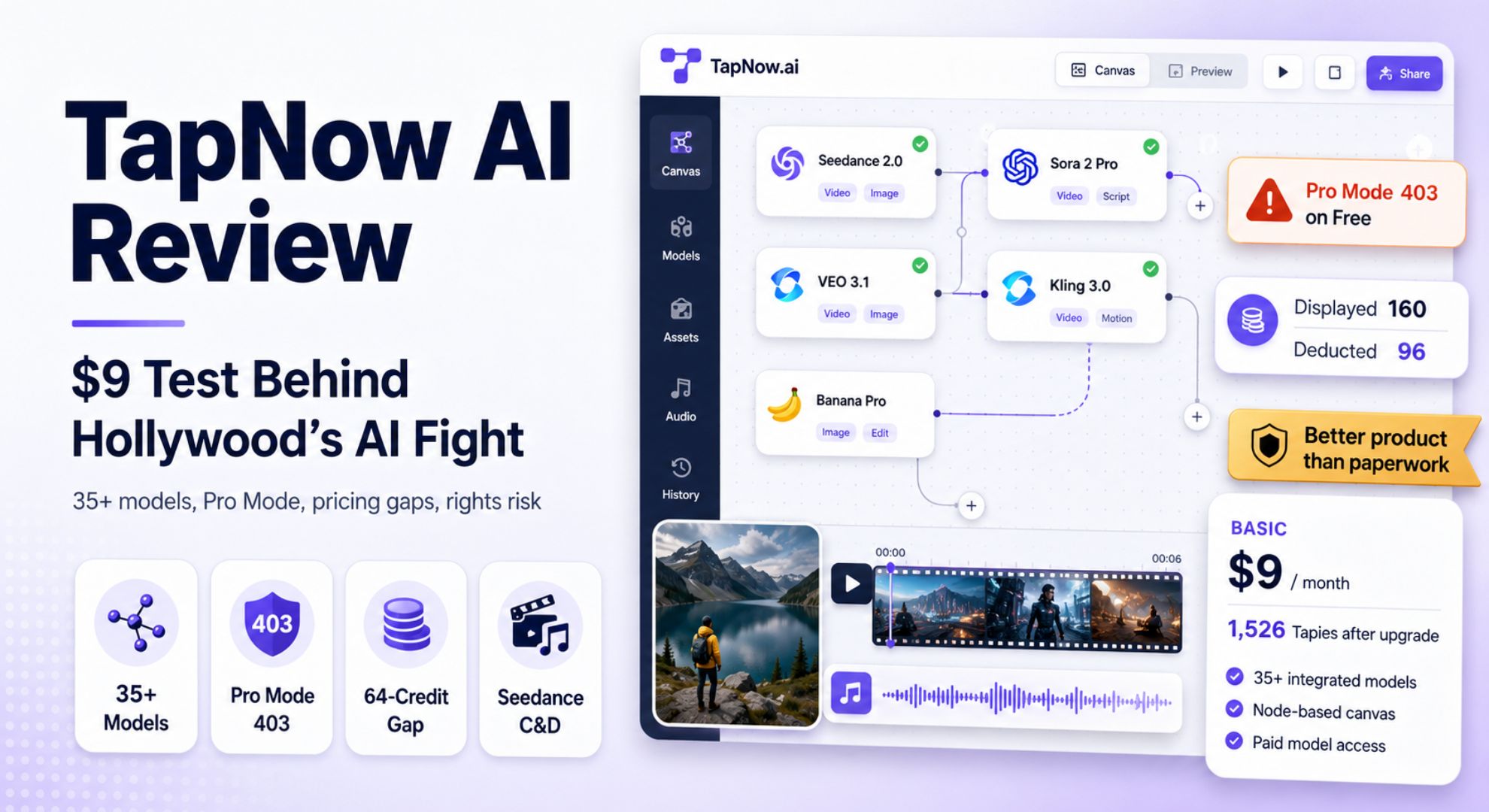
We paid $9 to test TapNow.ai across Seedance 2.0, Sora 2 Pro, VEO 3.1, Kling Omni and Banana Pro. Here is where it wins and where it fails.
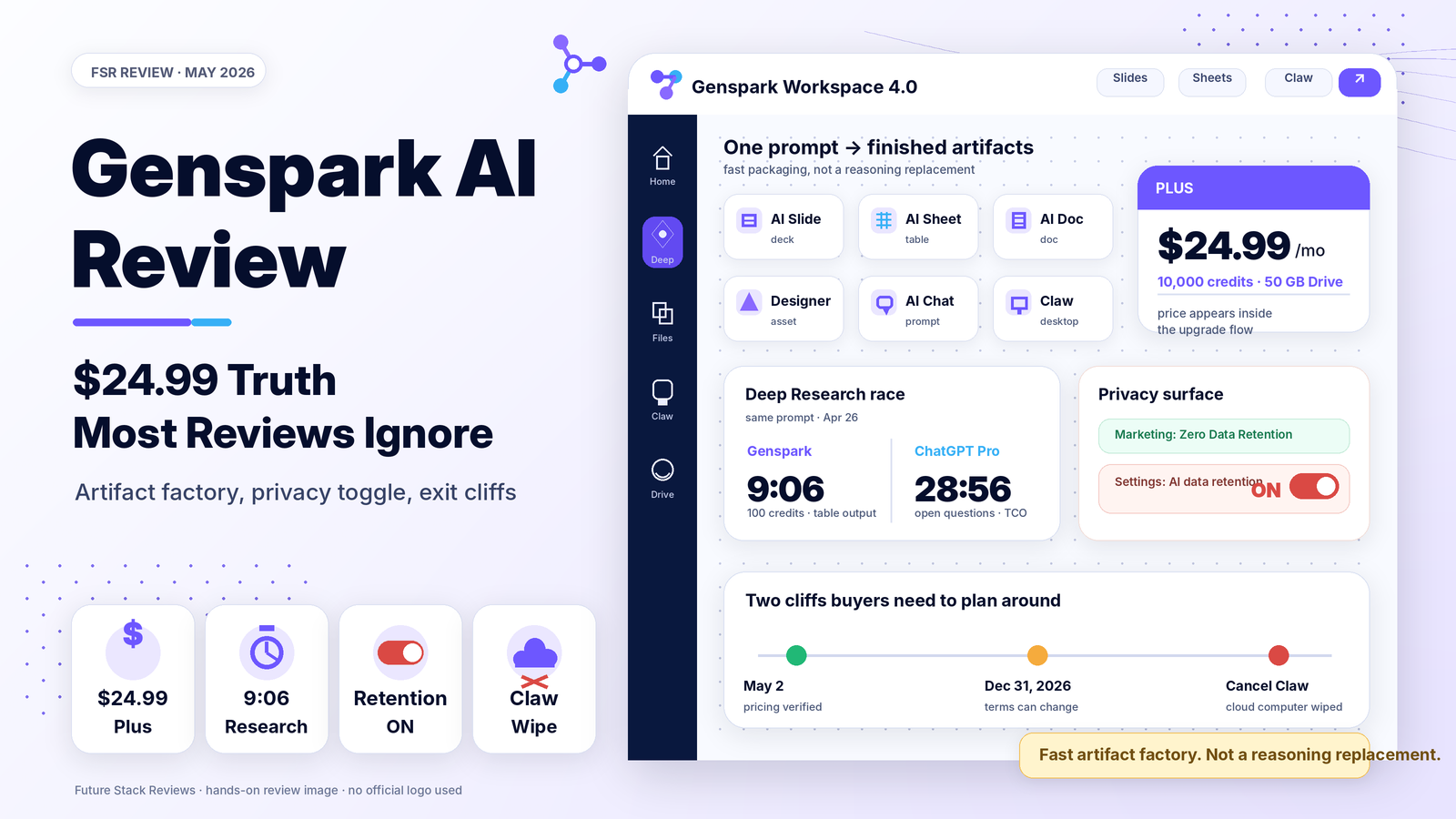
$24.99 a month for Genspark Plus, $200 for ChatGPT Pro. 110 minutes head-to-head, plus the privacy default the marketing copy hides. Verified May 2, 2026.
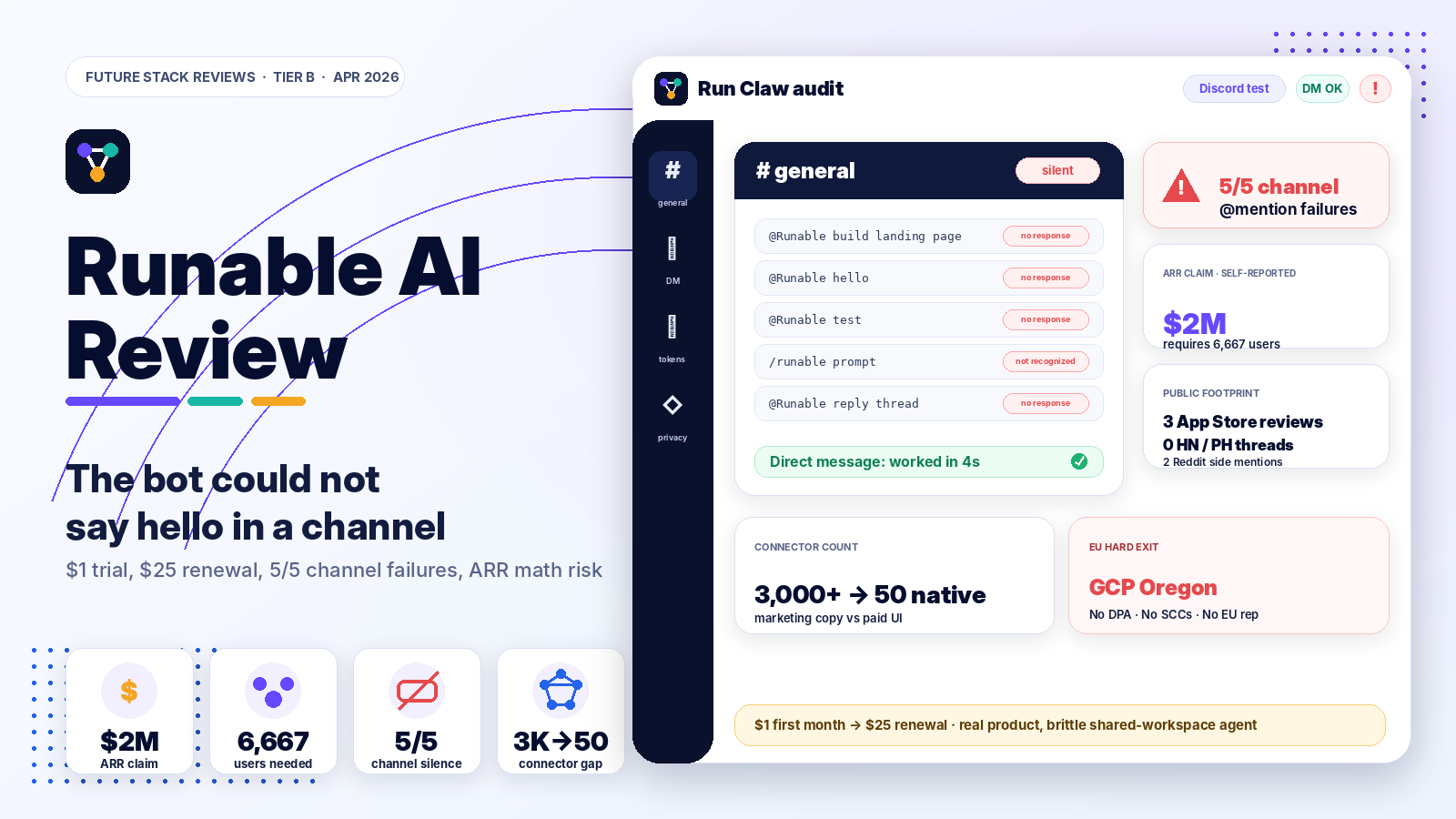
Runable AI Review 2026: $2 million ARR claimed in three weeks. 6,800 X followers. 3 US App Store reviews. The cloud agent could not respond to "hello" in five attempts. Future Stack Reviews documents the gaps between Runable's marketing copy, its dashboard UI, and the public footprint of the company…

I opened my Canva Pro dashboard on April 26, 2026. Eleven days after Canva took the stage in Los Angeles and announced what they called the biggest product launch in their history, a small banner still sat at the bottom of my AI panel. It read: "This is...

Both tools claim $20/month. Neither actually costs that. Real pricing, real developer data, and a decision framework based on failure modes.
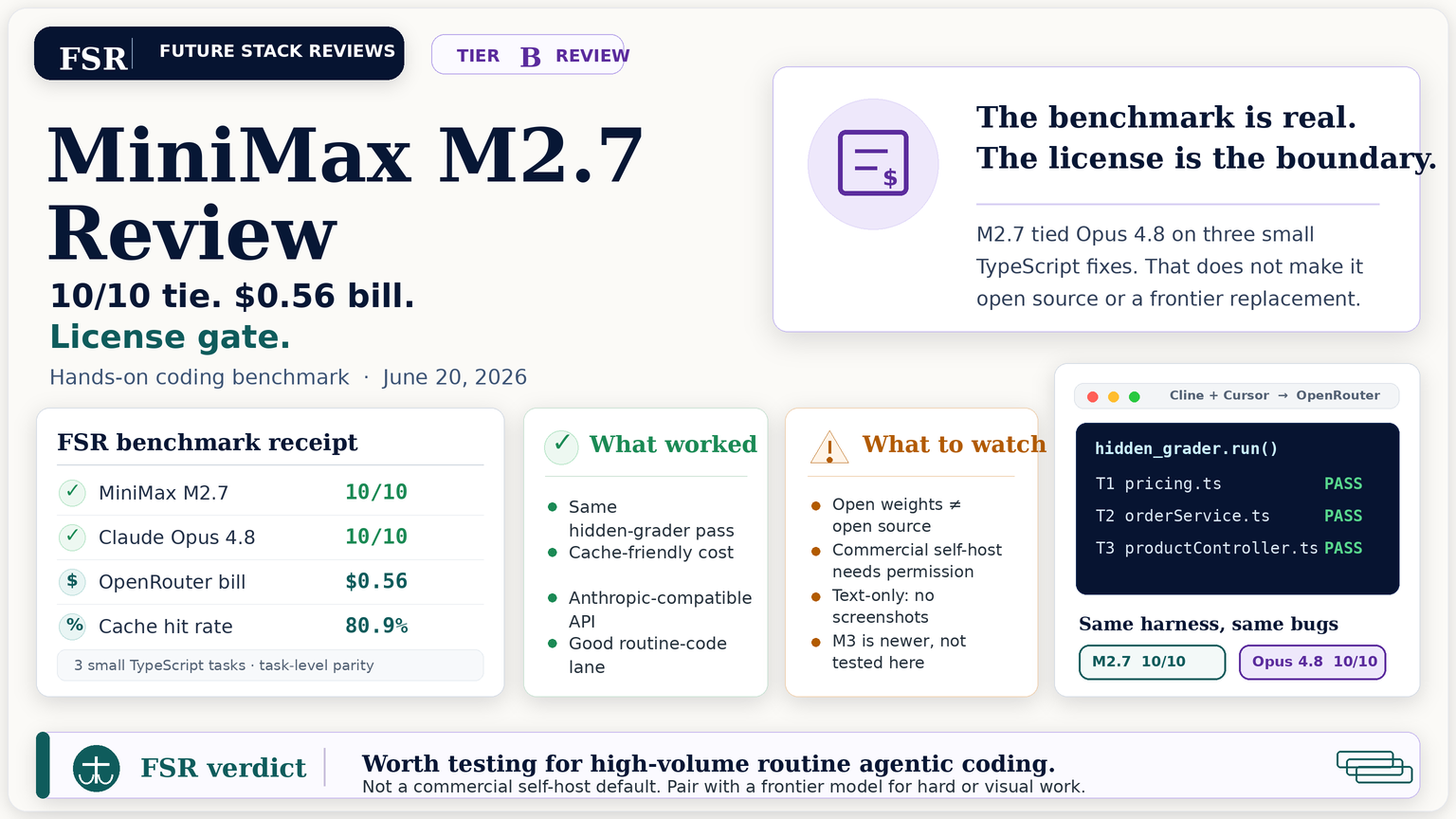
MiniMax M2.7 is cheap and strong on narrow coding tasks: in our hands-on benchmark it tied Claude Opus 4.8 at 10/10 for a $0.56 bill. The non-commercial license, not the price, is the real catch.
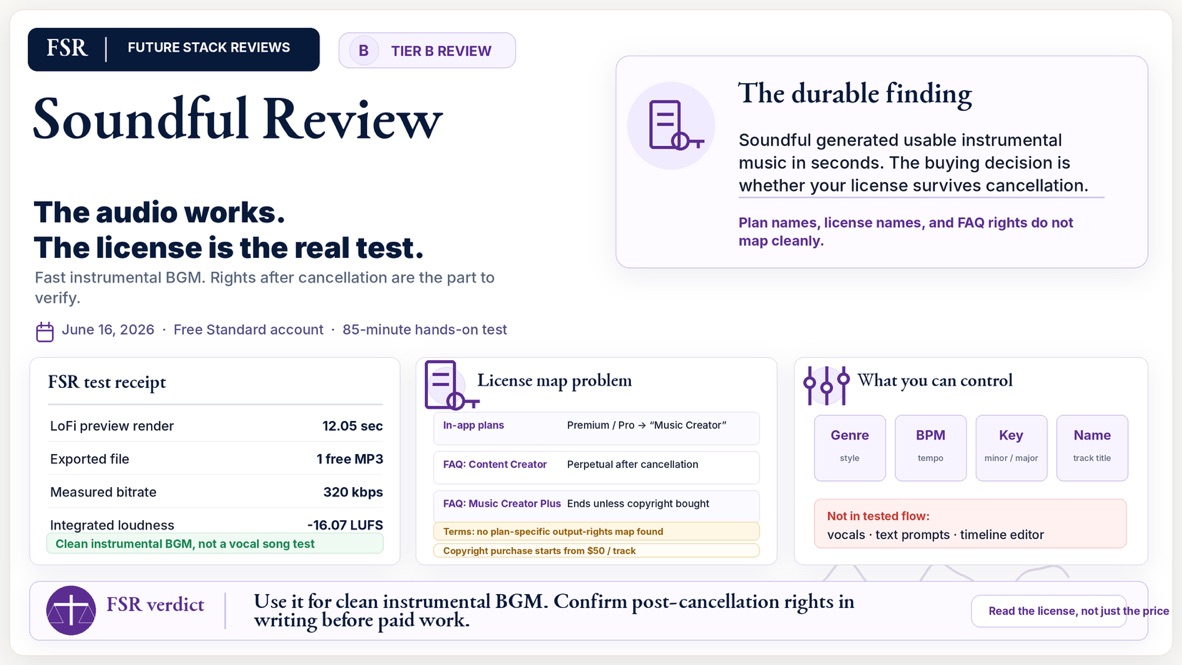
Soundful makes clean instrumental BGM in seconds. The license, however, depends on a name across three pages that do not agree. What FSR's tests found and what to confirm before you pay.
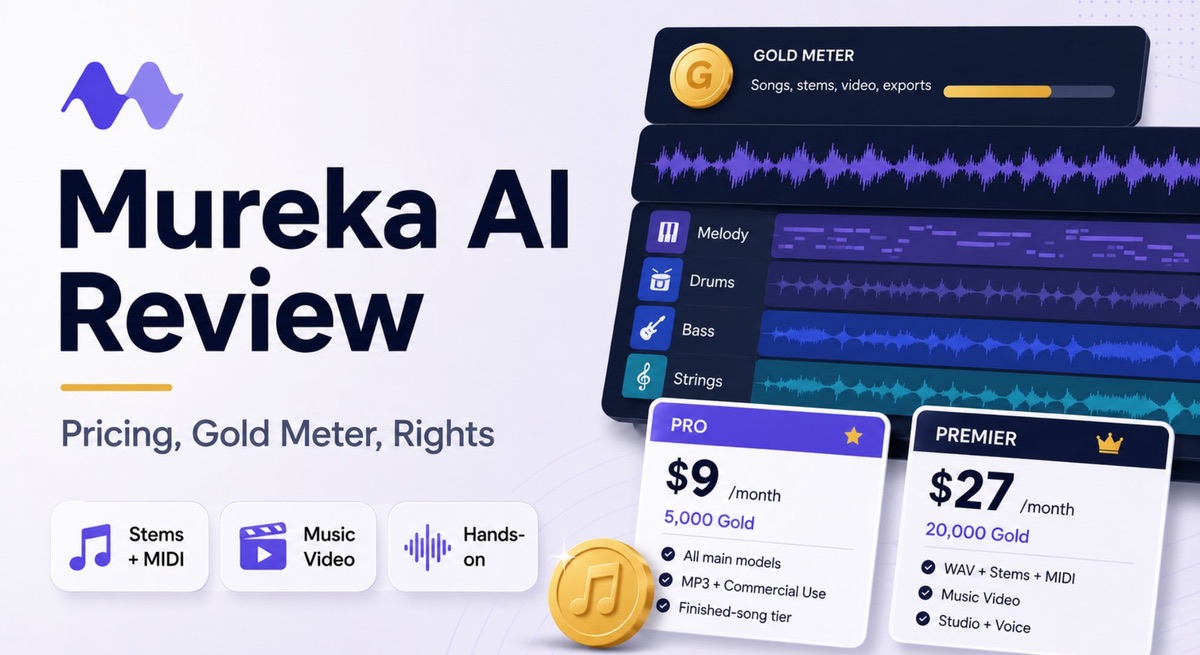
Mureka's $27 price is the entry fee, not the cost. The real bill is the Gold meter: stems 100, video 400. Pro at $9 is a real finished-song tier. FSR weighs the meter, the watermark, and the lawsuit.
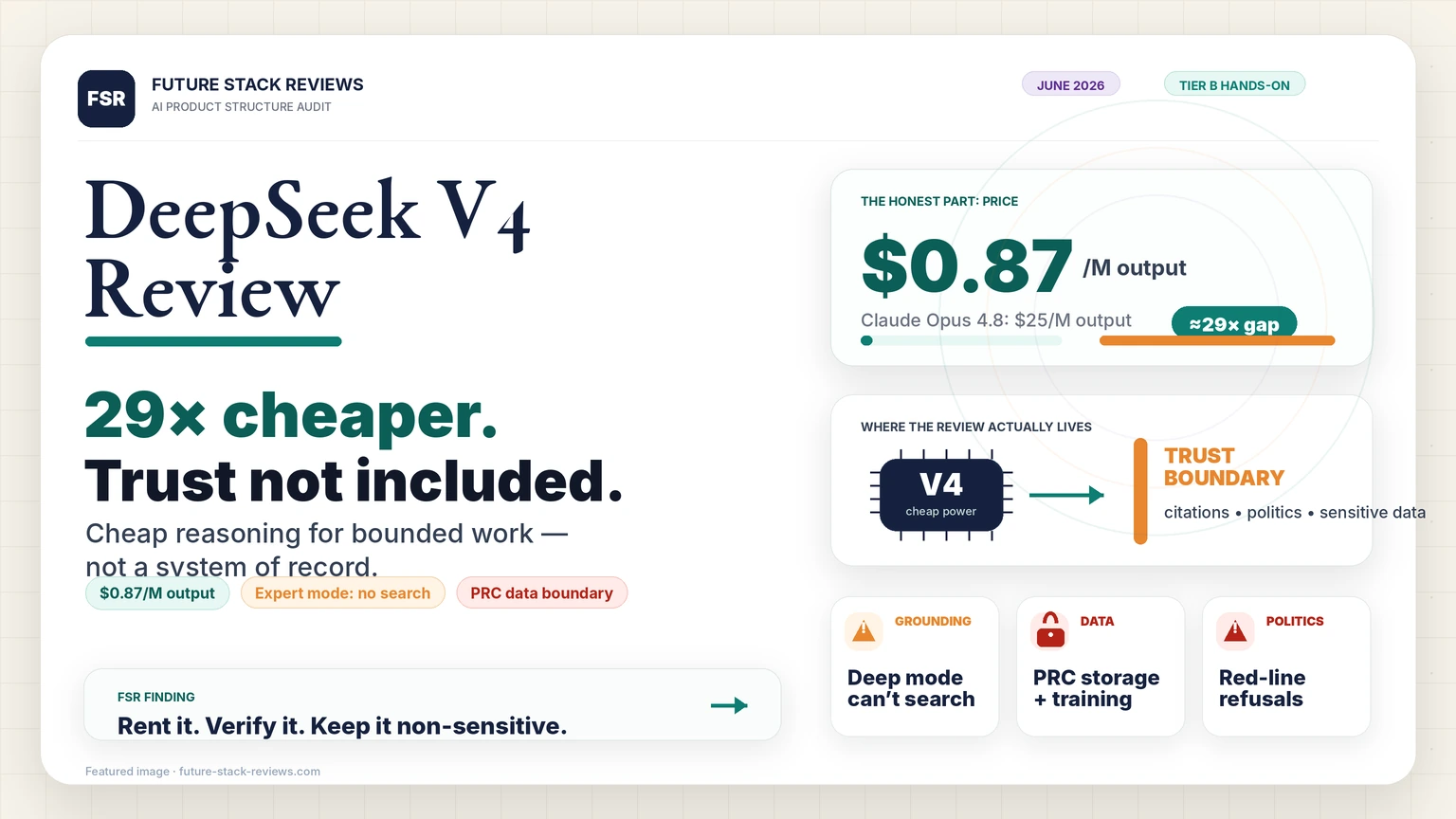
DeepSeek V4 is cheap and genuinely capable: V4-Pro runs about 29x cheaper than Claude Opus 4.8 on output. The price is the honest part. Hosted data sits in the PRC, the policy warns against sensitive data, and FSR's tests show it breaking on China's political red lines. Rent it; do not marry it.
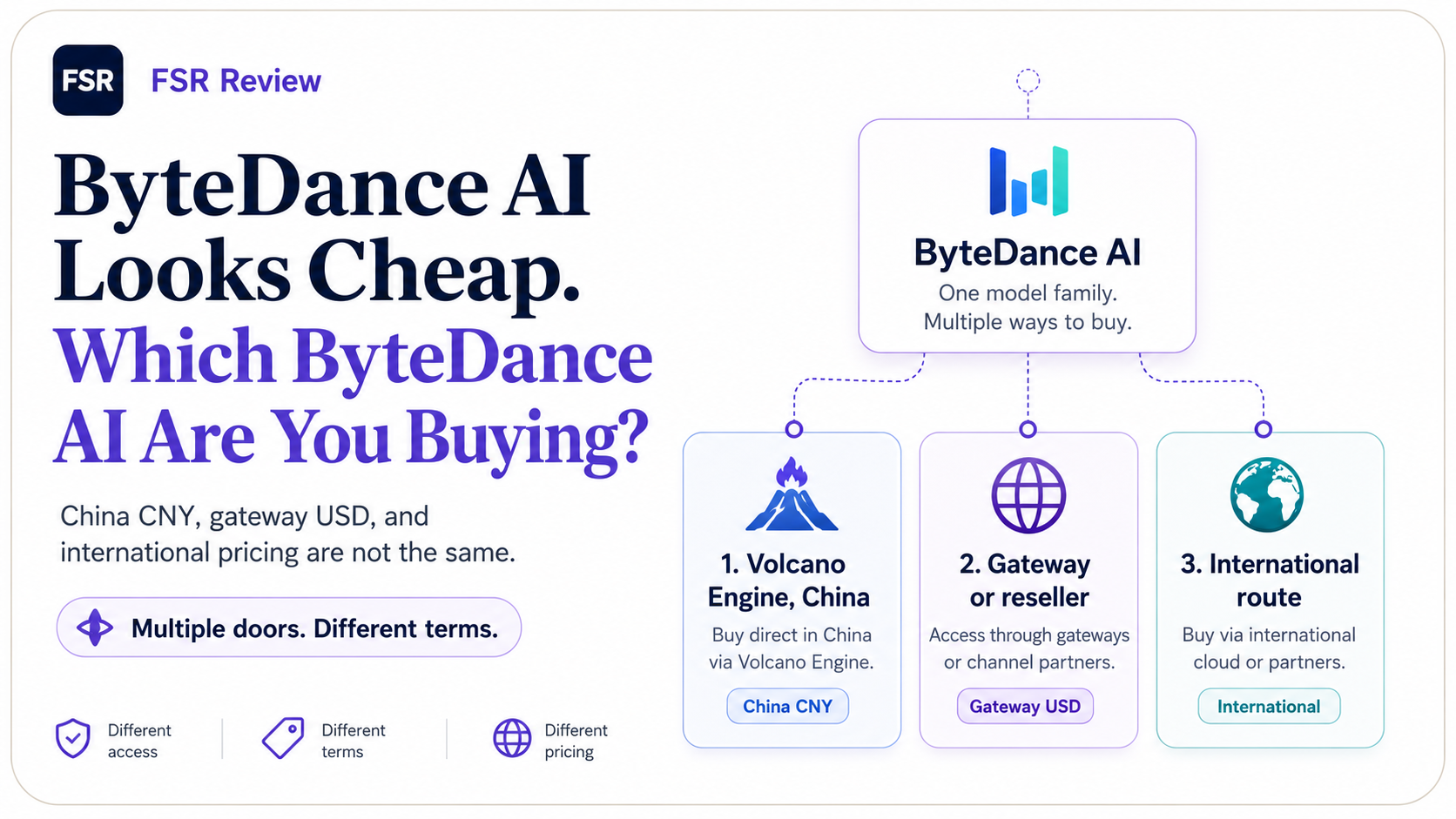
ByteDance AI is not one product. Doubao, the Dola AI app, and Seed each change the model, price, jurisdiction, and rights. Pick the access layer first.
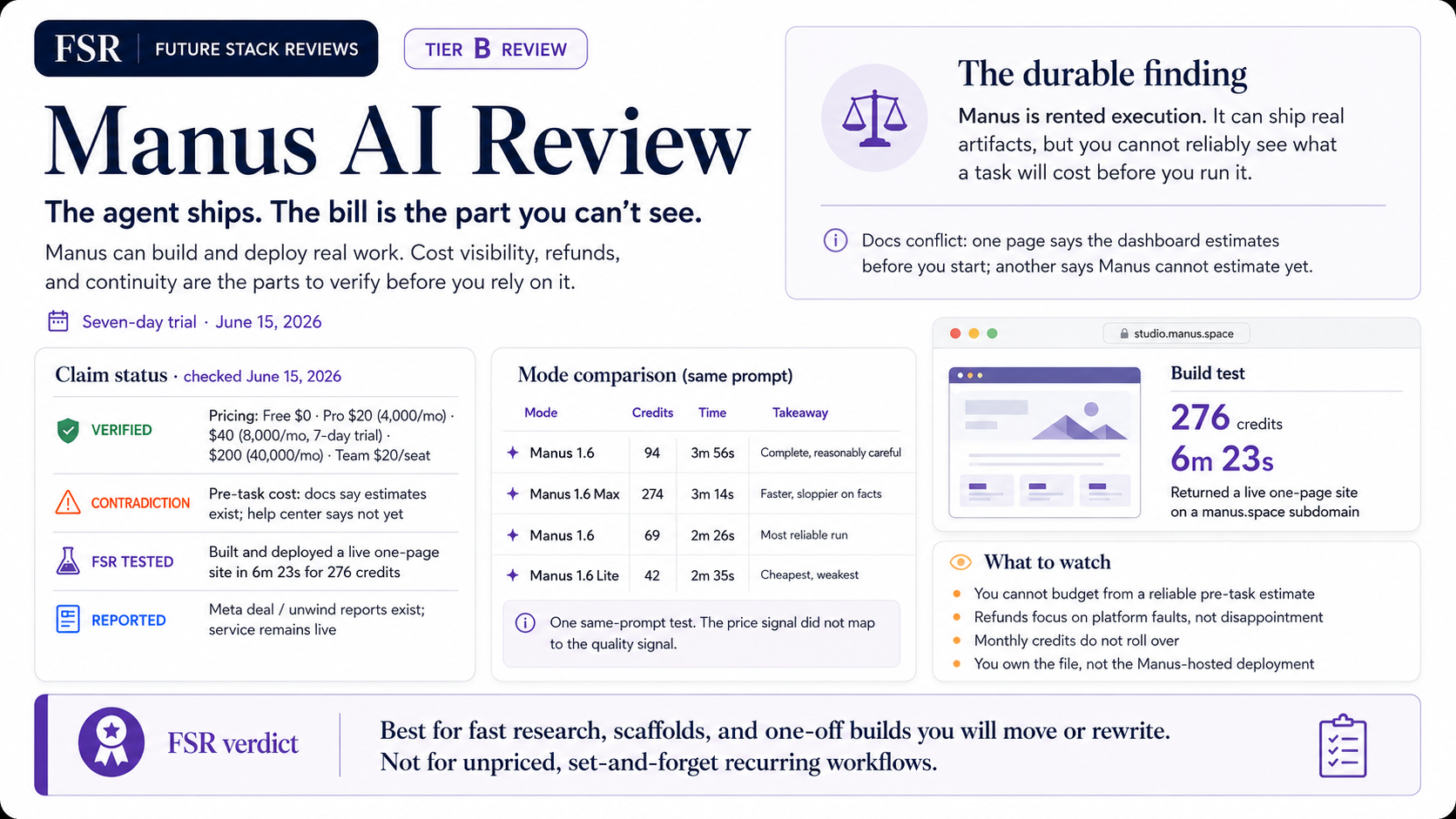
Manus built and shipped a live website in 6 minutes 23 seconds, for 276 credits. What it would not tell us was the cost. Its own help center admits there's no reliable pre-task estimate, and warns in the same breath that the agent's answers can be fabricated. A Tier B review of a capable agent you r…
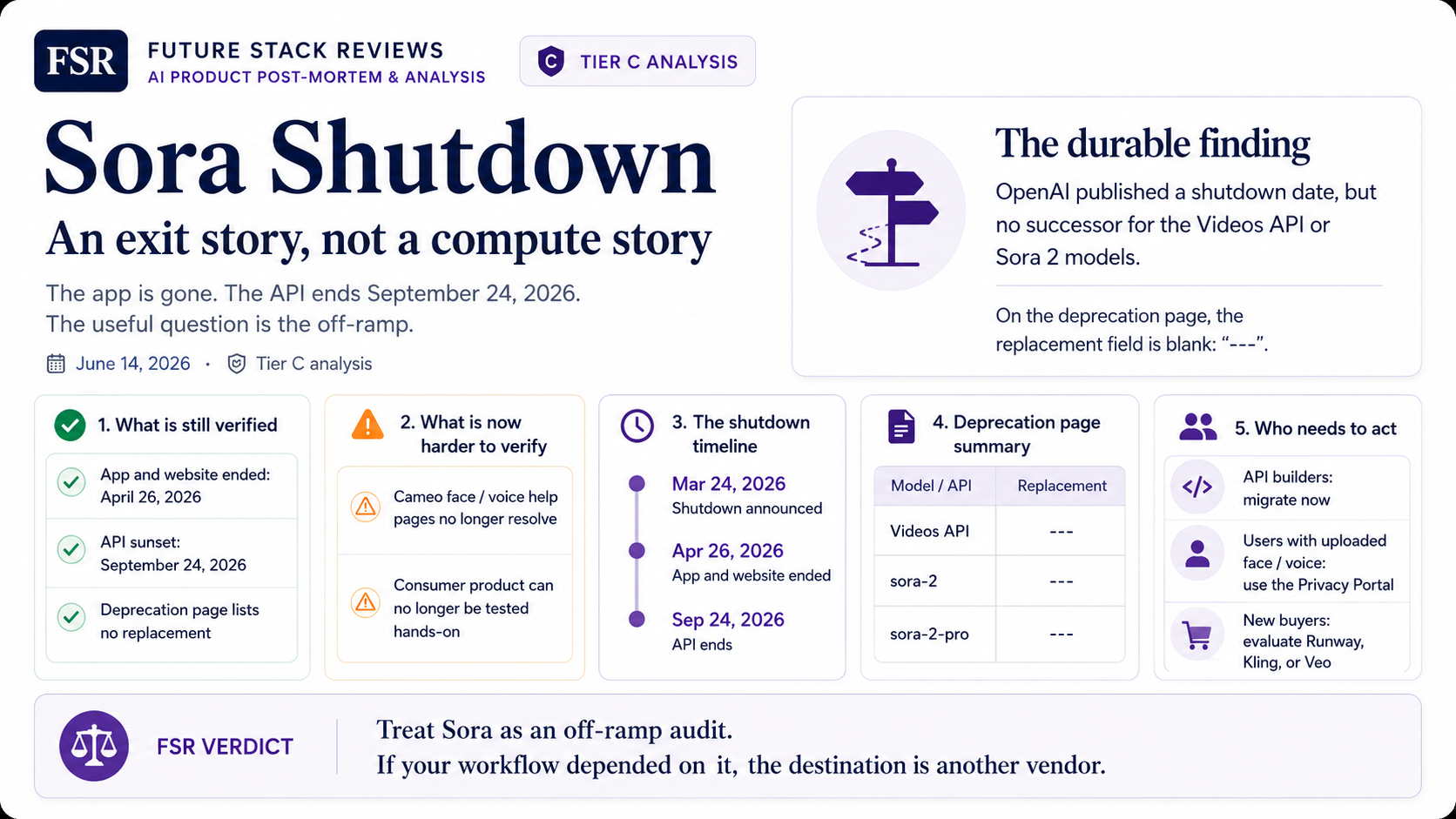
OpenAI shut down Sora. The cost story is the easy one. The harder one is the off-ramp it left behind: an API ending September 24, 2026 with no successor, and a replacement market that is open and cheaper.
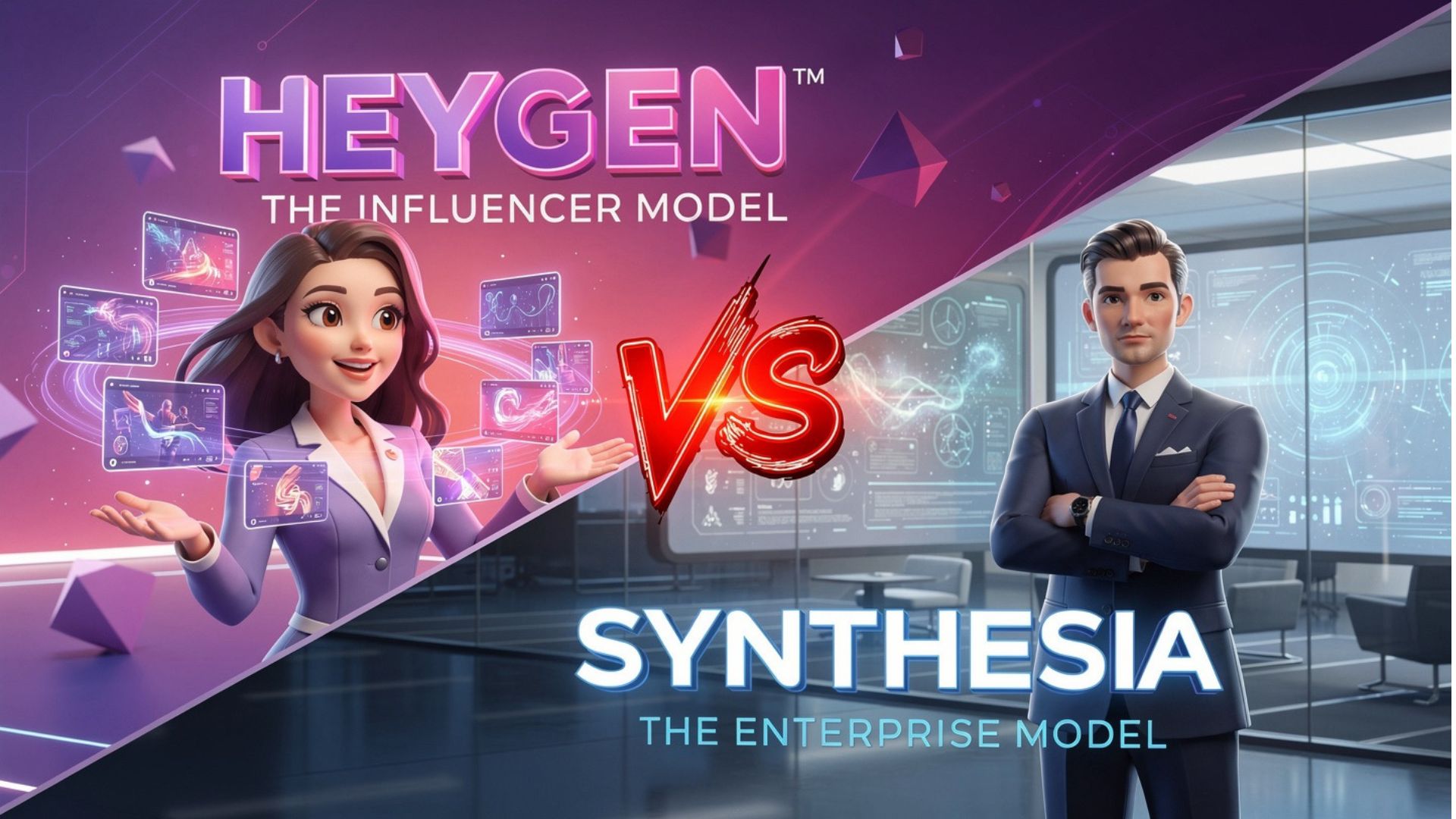
HeyGen is built for marketing volume. Synthesia is built for enterprise training. Pick wrong and you'll switch within a quarter.
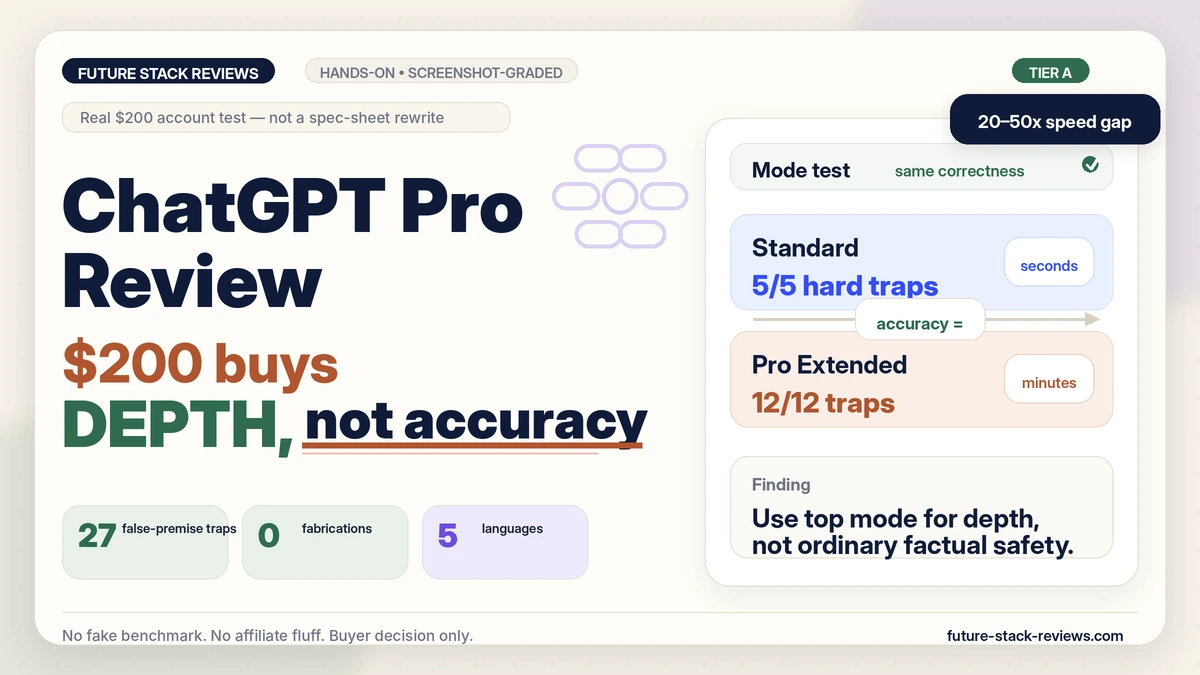
We paid for ChatGPT Pro and tested the $200 tier from the inside. Across 27 false-premise traps in five languages it fabricated nothing, yet its most expensive mode proved no more accurate than the cheaper one, only slower. The premium buys capacity and depth, not fewer factual errors.
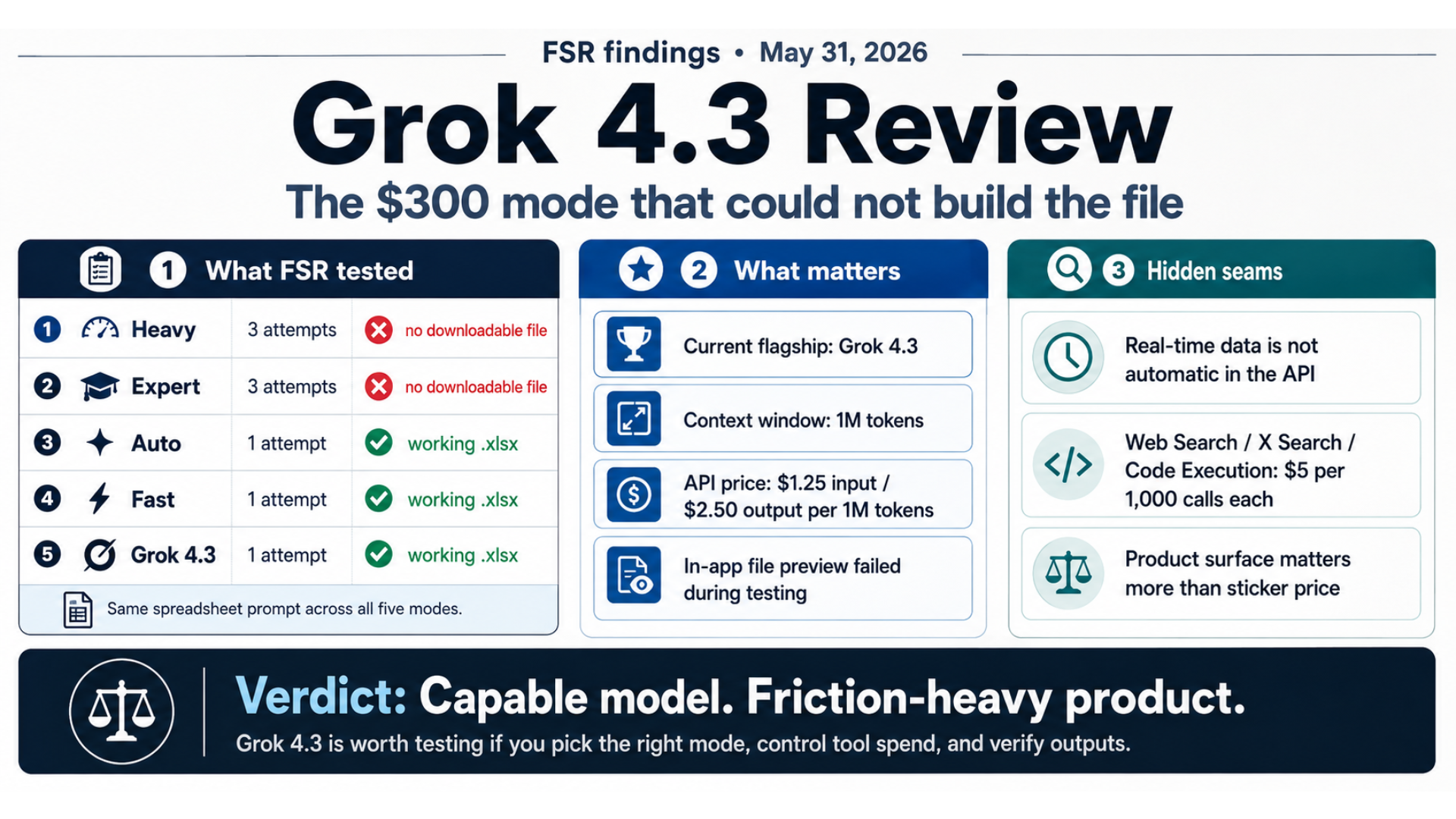
Grok 4.3's real edge is live X data, and at $30 a month that is most of what justifies paying over the free tier. The $300 tier is a harder sell.