Dark

Article library

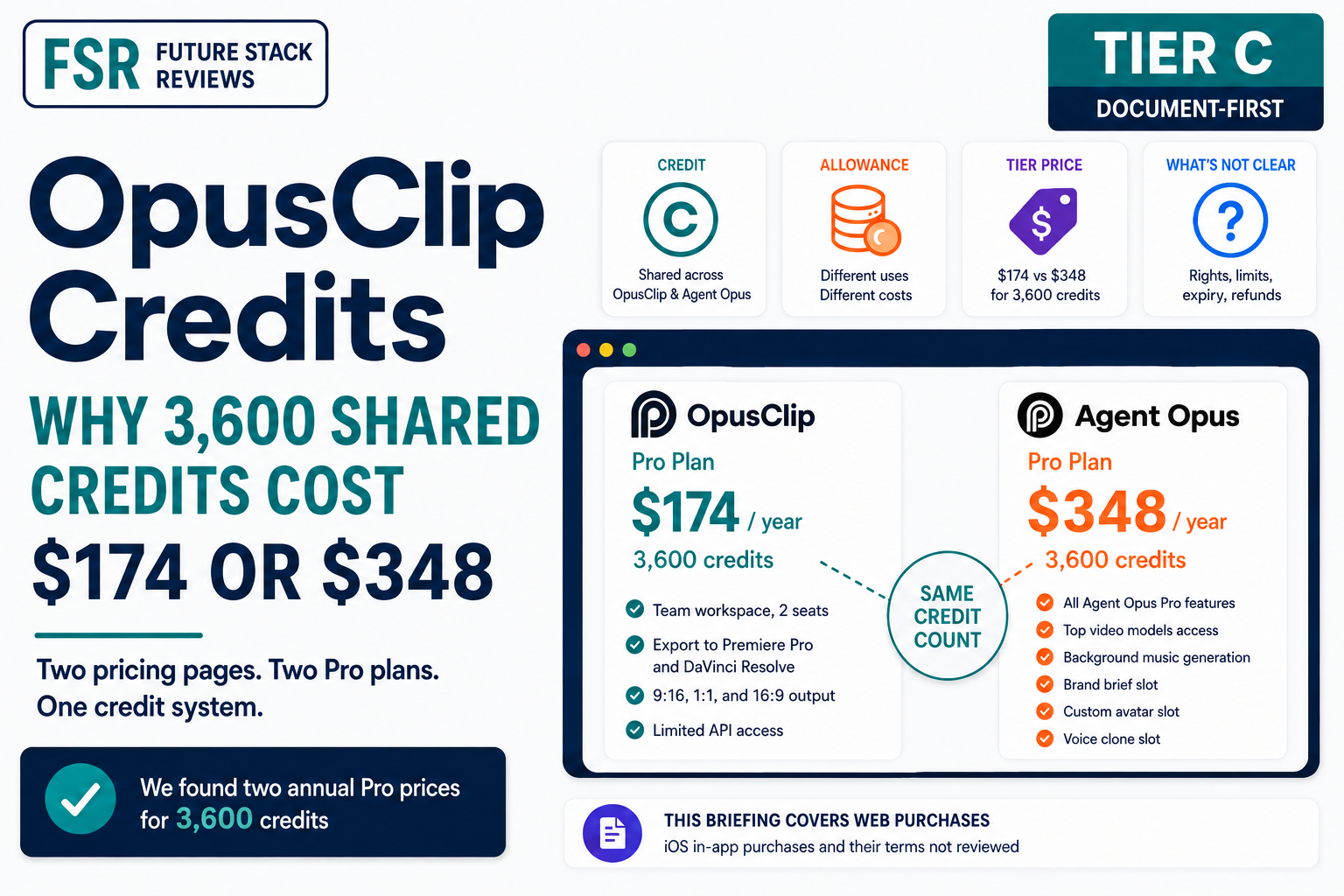
Future Stack Reviews Tier C briefing graphic comparing two annual Pro plans from Opusclip Inc.: OpusClip Pro at $174 a year and Agent Opus Pro at $348 a year, both listing 3,600 credits, with different feature bundles on each side
OpusClip Credits: Why 3,600 Shared Credits Cost $174 or $348

Opusclip Inc. runs two pricing pages, and 3,600 annual credits list at $174 on one and $348 on the other. A document-first briefing on what the published documents settle about OpusClip credits, and what they leave to the buyer.

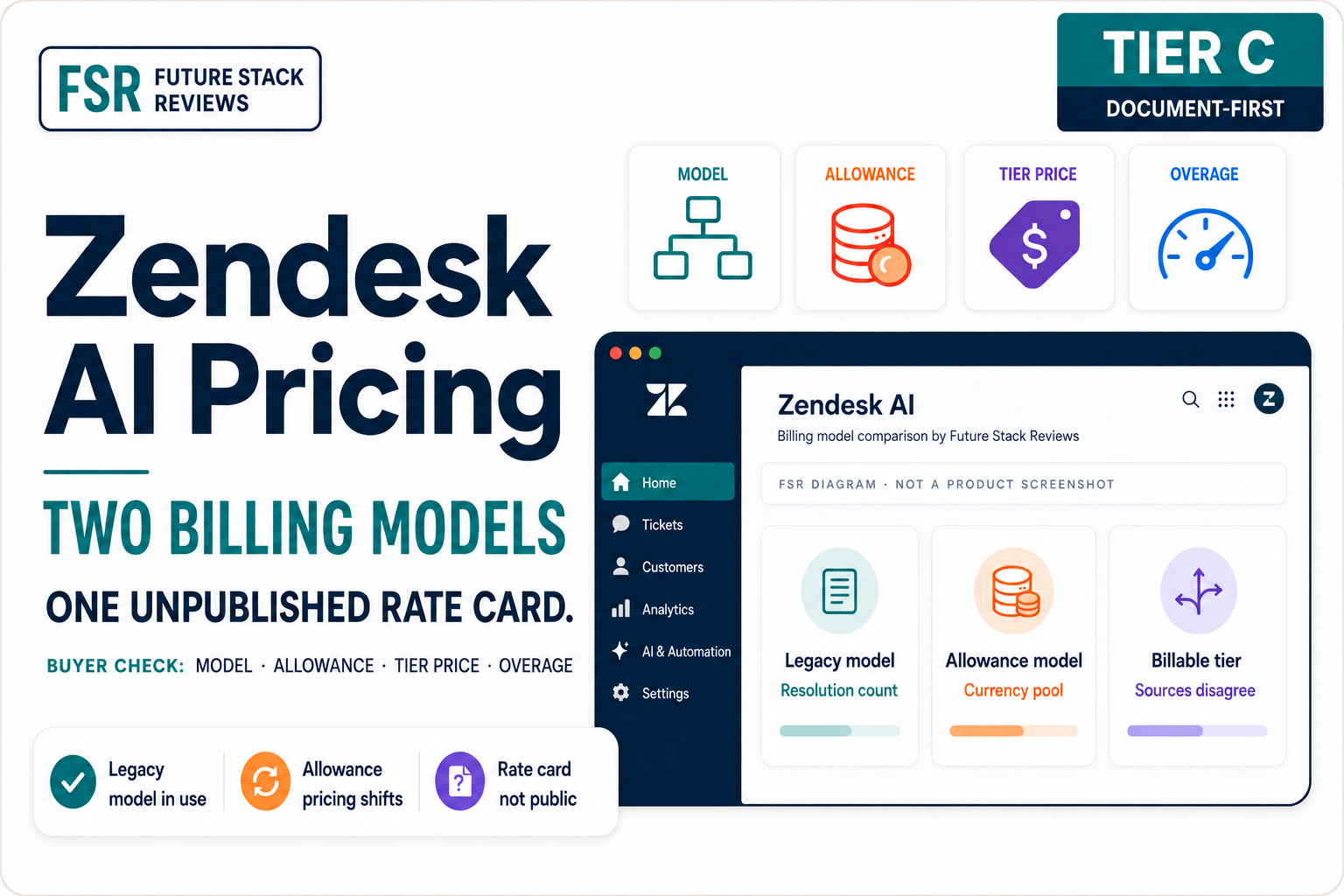
Illustrated cover graphic for a Future Stack Reviews Tier C document-first briefing, headlined Zendesk AI Pricing, Two Billing Models, One Unpublished Rate Card. Four buyer checks are labeled model, allowance, tier price, and overage. A diagram panel, marked as not a product screenshot, sets three cards side by side: a legacy model measured in resolution count, an allowance model funded by a currency pool, and a billable tier on which the sources disagree.

Zendesk AI Pricing in 2026: Two Billing Models, One Unpublished Rate Card

Zendesk is moving AI agent billing from counted automated resolutions to a currency-funded resolution allowance, and both models are live at the same time. A document-first look at what is billable, where Zendesk's own pages disagree, and why the tier price is not on the pricing page.

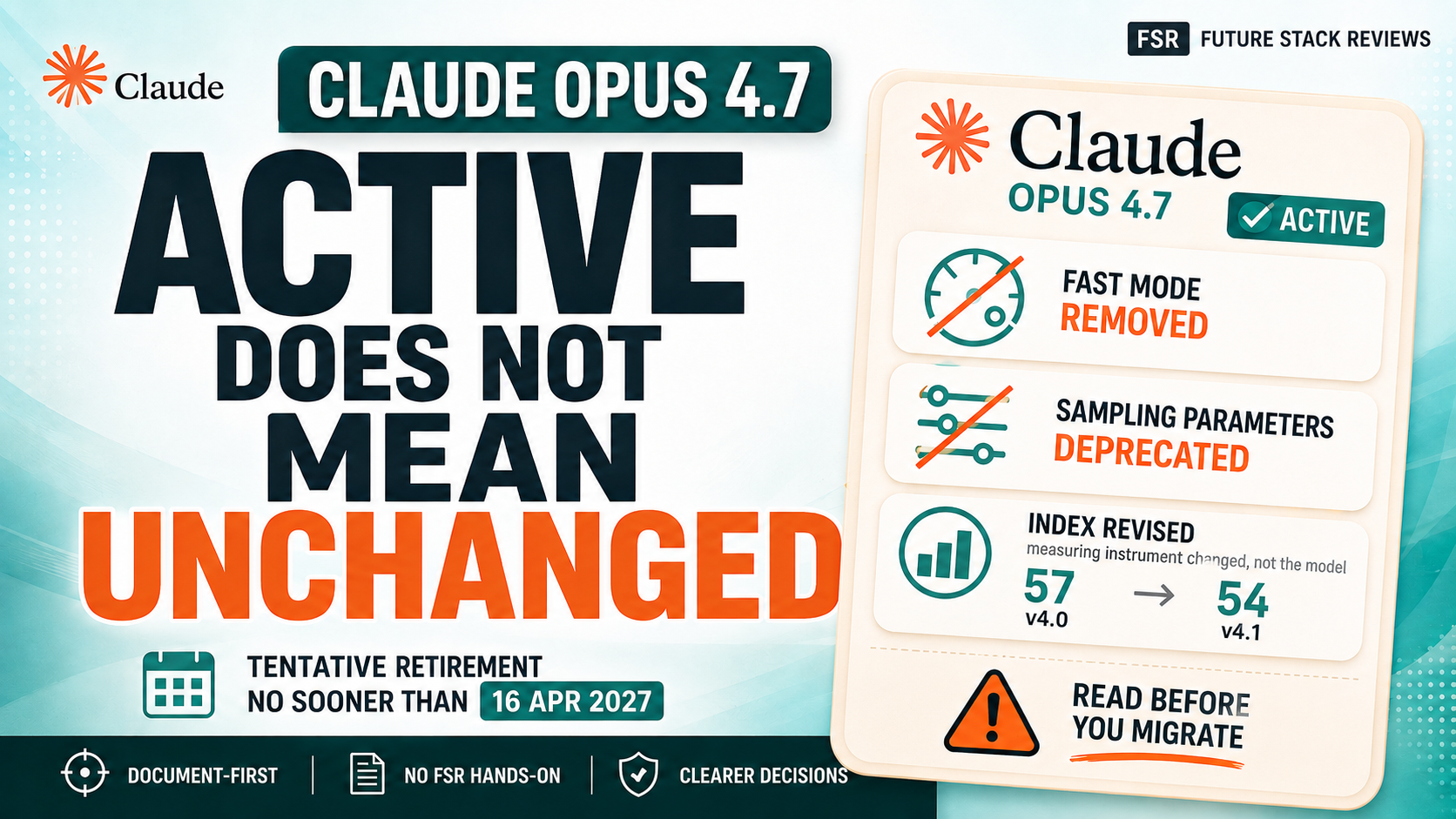
Claude Opus 4.7 briefing card headed Active does not mean unchanged, showing fast mode removed, sampling parameters deprecated, an index score of 57 on v4.0 against 54 on v4.1, and tentative retirement no sooner than 16 April 2027.

Claude Opus 4.7 Is Still Active. What Changed, and When Should You Migrate?

Anthropic still lists Claude Opus 4.7 as Active, with retirement no earlier than 16 April 2027. Fast mode was removed on 24 July, requests that worked on Opus 4.6 now return errors, and Amazon Bedrock runs its own lifecycle clock. A document-first audit of what the label does not cover, and how to c…

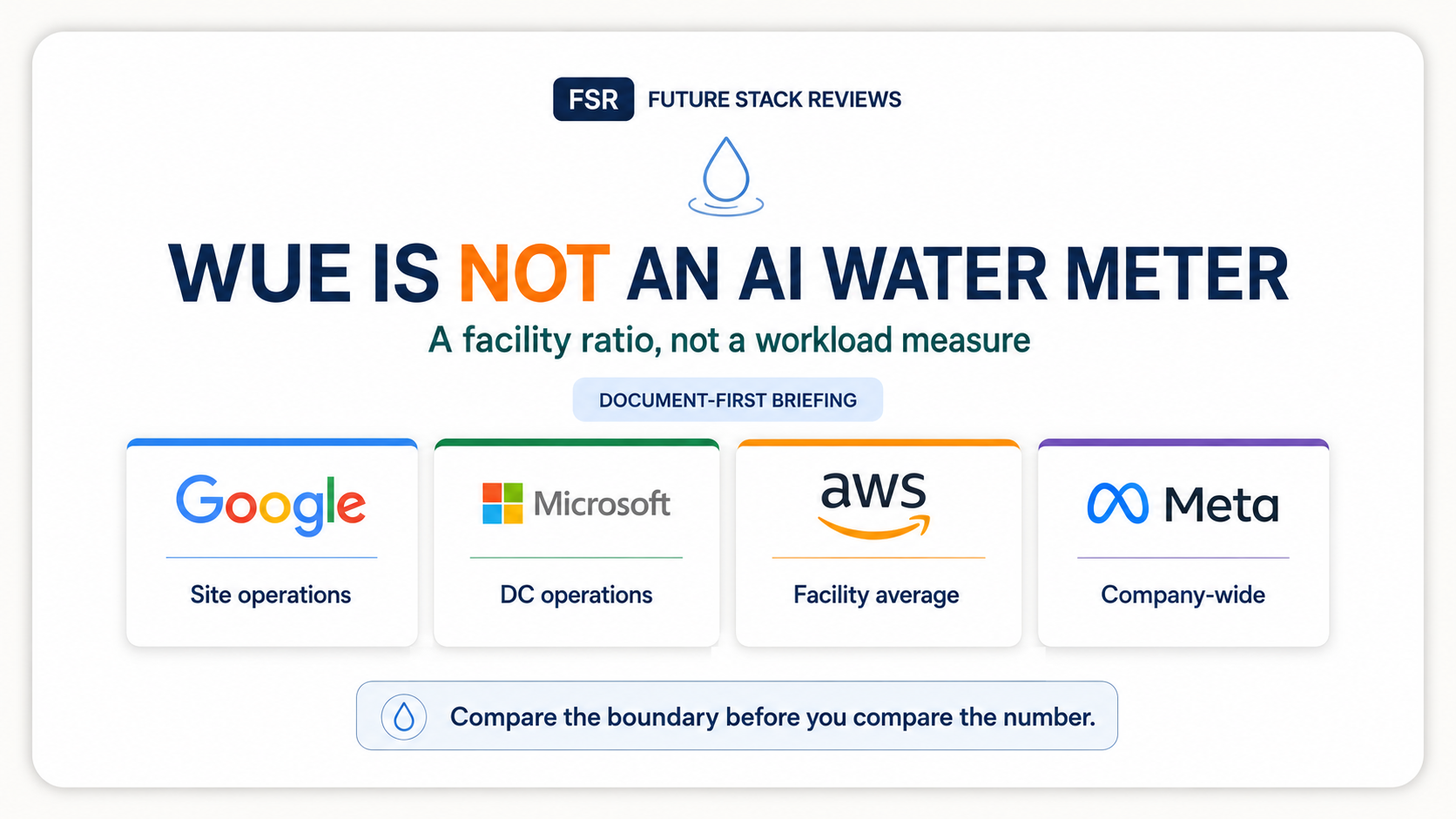
WUE is not an AI water meter: Google, Microsoft, AWS, and Meta cards show different data-center reporting boundaries.

AI Data Center Water: Why WUE Cannot Measure a Workload

AI data center water is reported through one metric, and three cloud operators publish it with three different numerators. Water Usage Effectiveness is a facility ratio, not an AI workload meter. This Tier C briefing reads the primary documents and sets out the eight fields to request before compari…

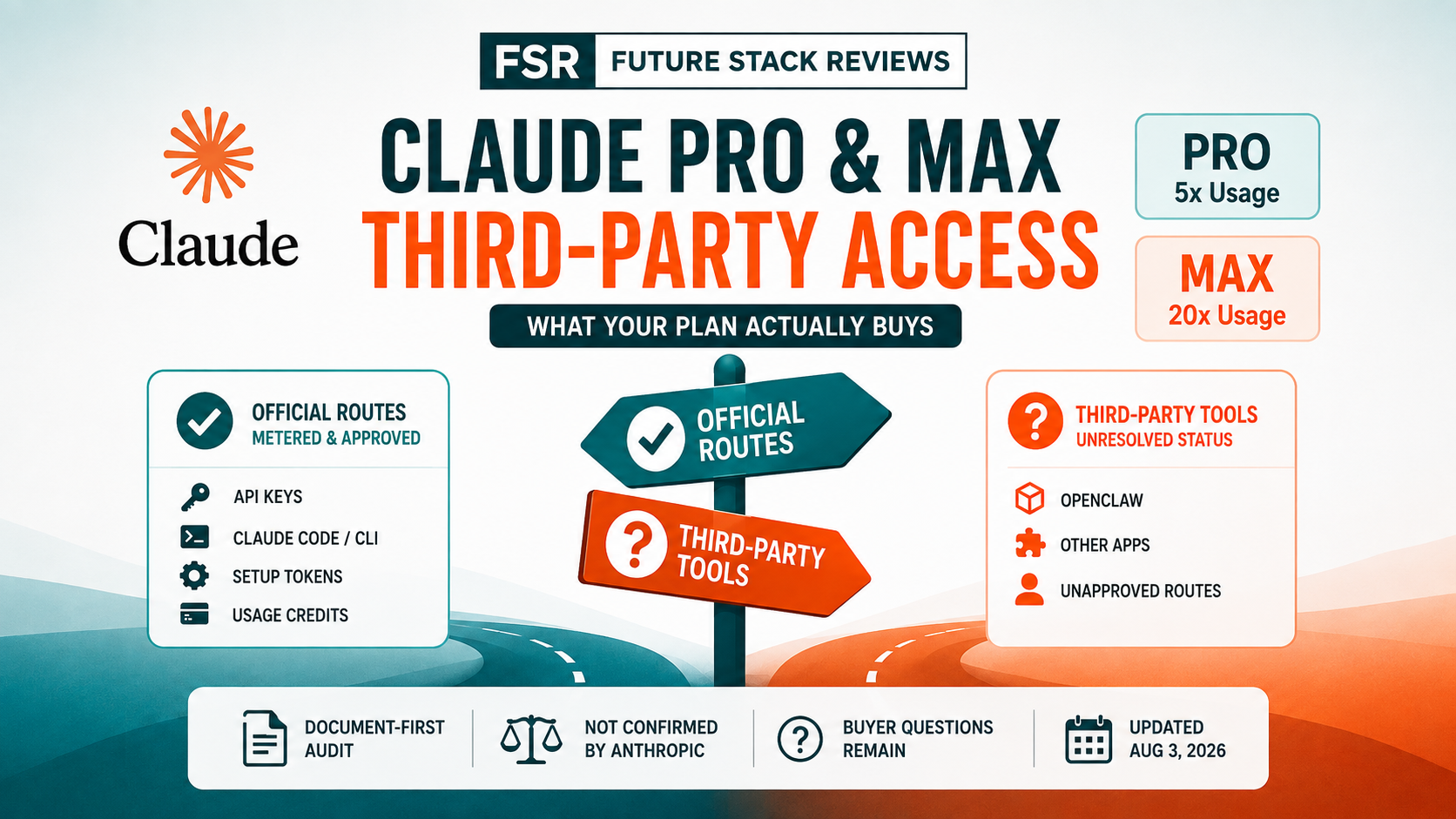
Future Stack Reviews briefing image comparing Claude Pro and Max official access routes with third-party routes of unresolved status

Claude Pro and Max Third-Party Access: What Your Plan Actually Buys

Pro and Max buy capacity and priority on Anthropic's own surfaces. Neither is documented as a portable entitlement for every external client. Ten access routes audited against Anthropic's own pages, and OpenClaw's status still unresolved in the public record.

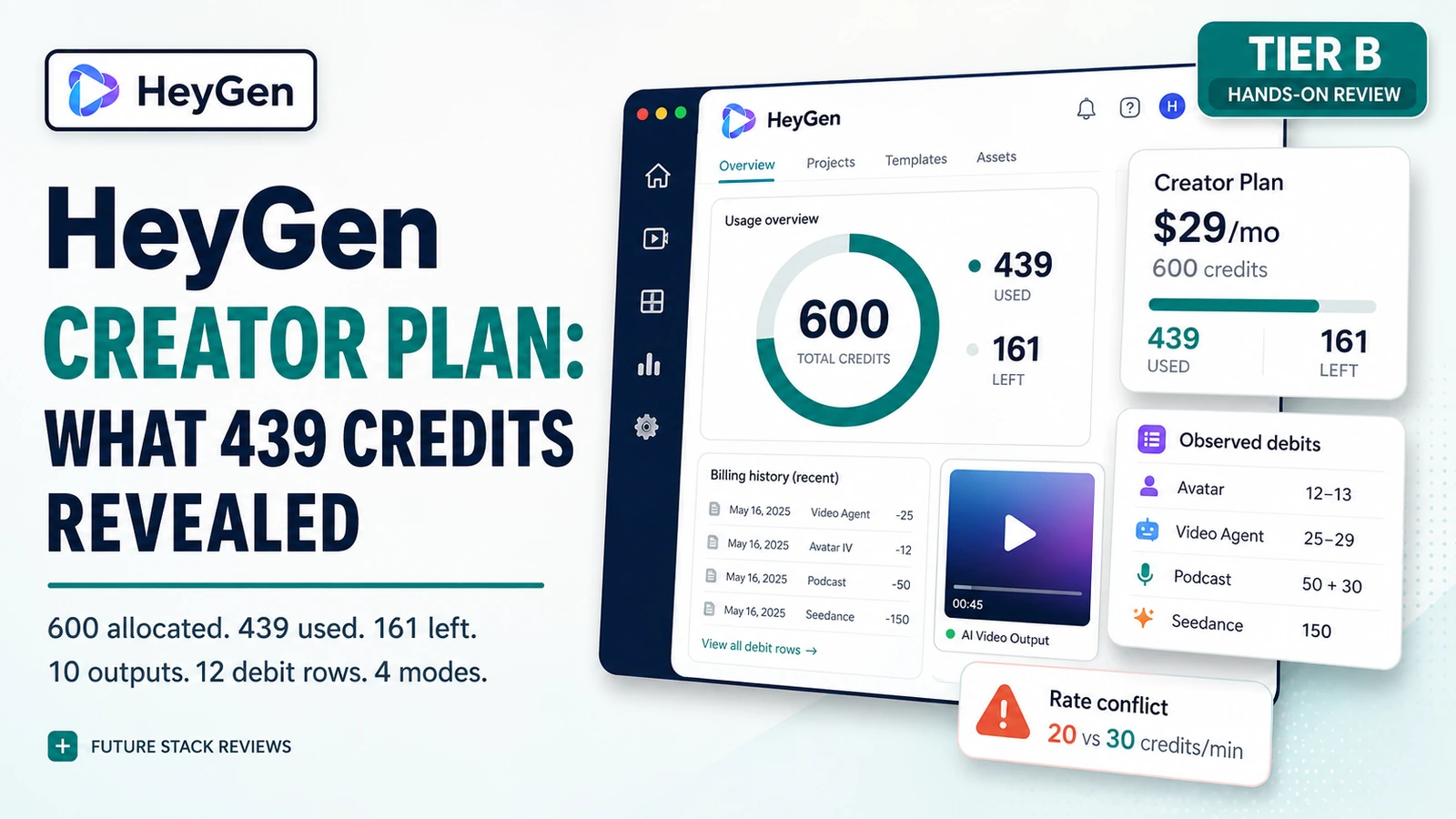
Editorial illustration for a Future Stack Reviews briefing on the HeyGen Creator plan. On the left, the HeyGen wordmark sits above the headline "HeyGen Creator Plan: What 439 Credits Revealed" and a two-line summary reading "600 allocated. 439 used. 161 left." and "10 outputs. 12 debit rows. 4 modes.", with the Future Stack Reviews byline beneath. On the right, a stylized product interface shows a usage donut labeled 600 total credits with 439 used and 161 left, a billing history list showing four charges of 25, 12, 50 and 150 credits, and a video output thumbnail. Three cards overlay it: a Creator Plan card reading $29 a month for 600 credits with the same 439 and 161 split, an observed debits card listing Avatar at 12 to 13, Video Agent at 25 to 29, Podcast at 50 plus 30 and Seedance at 150, and a warning card headed "Rate conflict" reading 20 versus 30 credits per minute. A Tier B, hands-on review badge sits at the top right. The interface shown is an illustration, not a screenshot.

HeyGen Creator Plan Credit Audit: What 439 Credits Revealed

We bought the HeyGen Creator plan and spent 439 of its 600 credits across four generation modes. Every charge reconciled to the credit. What no surface in the account could tell us was what a job would cost before it ran, or which job a charge belonged to afterward.