Dark

Article library

Compare pricing and limits

CallRail alternatives in 2026 shown with a billing meter and five models: fixed bundle, usage credit, metered usage, inclusive calls, and quote-only pricing.

CallRail Alternatives in 2026: Compare the Meter, Not the Monthly Price

Call tracking vendors do not package telephony the same way. Across the eight platforms reviewed here, published pricing takes five different forms, and not one of them publishes enough for a buyer to compute a monthly total. A document-first audit of what the rate cards actually say, read on 20 Aug…

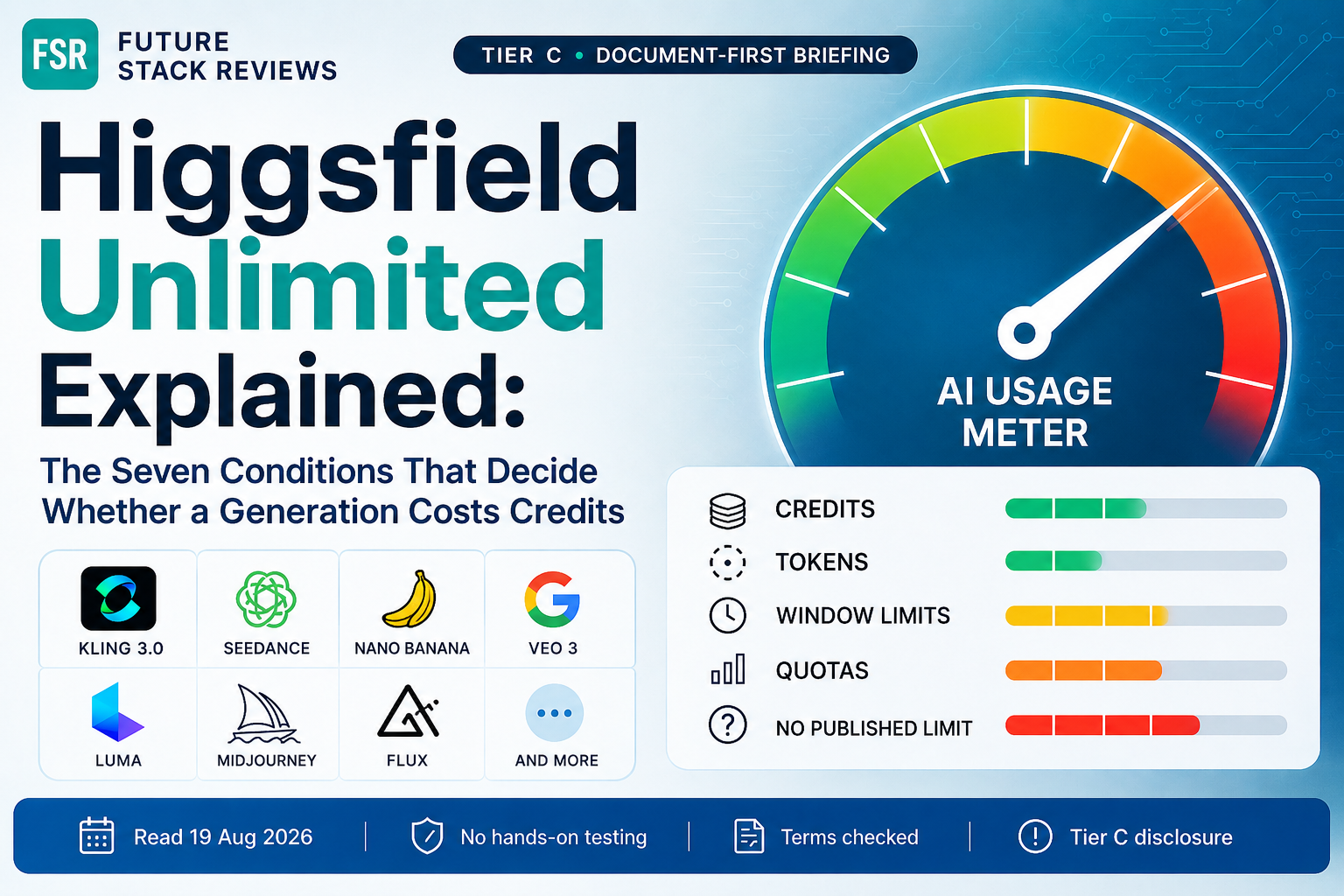
Higgsfield Unlimited explained with an AI usage meter, model tiles, and the seven conditions that determine whether a generation costs credits.

Higgsfield Unlimited Explained: 7 Conditions That Decide What It Covers

Higgsfield advertises Unlimited access to named models on several plans. The word covers a grant with seven conditions attached: the model, the settings, the window, the subscription, the surface, the queue, and fair use. This document-first briefing sets them out from Higgsfield's own pages, with a…

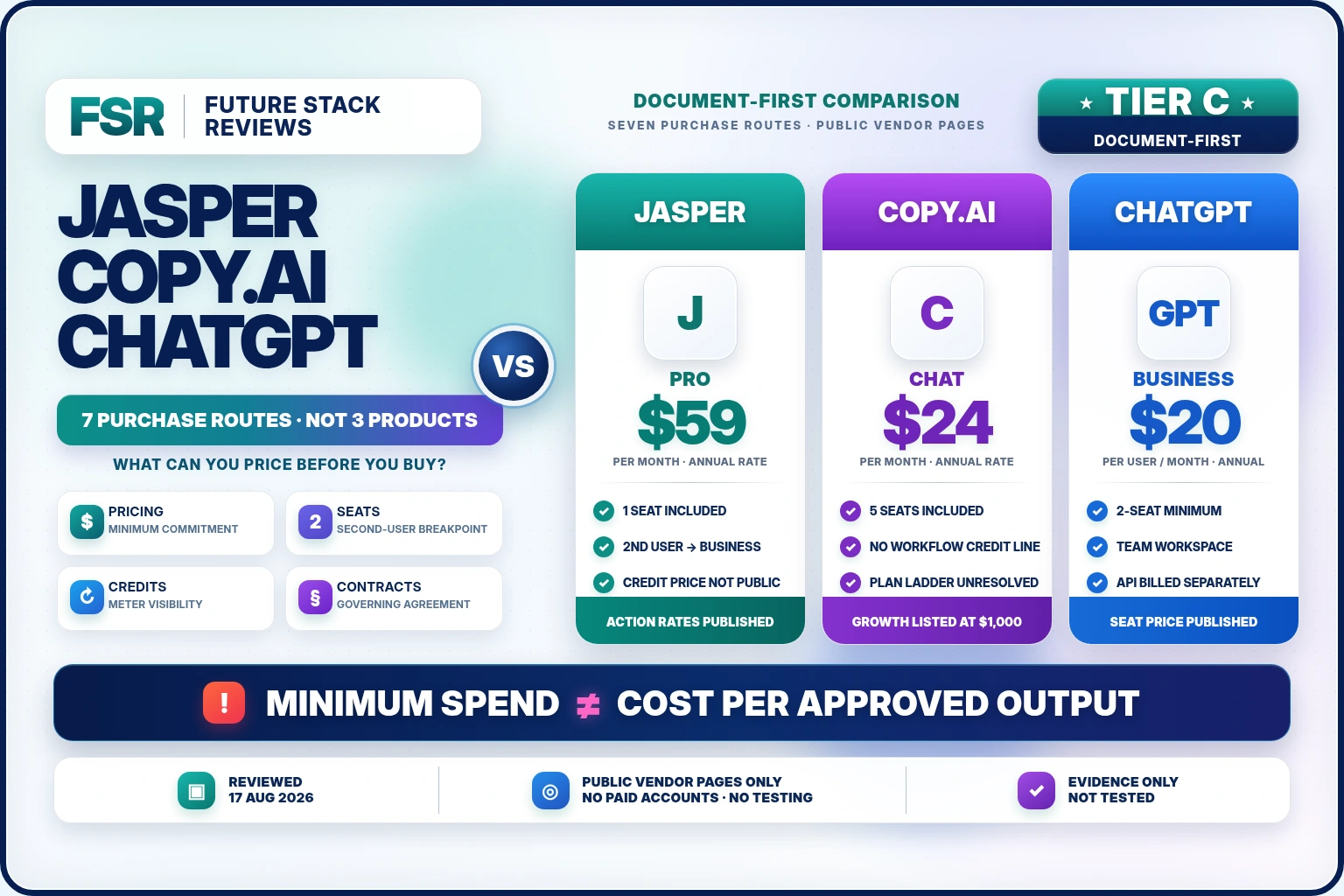
Jasper vs Copy.ai vs ChatGPT pricing comparison graphic showing entry plans, seat requirements, usage-meter transparency, and FSR Tier C document-first status.

Jasper vs Copy.ai vs ChatGPT (2026): What Each Purchase Route Lets You Price

Jasper, Copy.ai, and ChatGPT are seven purchase routes, not three products. This document-first briefing compares what each route publishes before checkout: minimum spend, seat rules, credit meters, governing agreements, and the places where each vendor's own pages disagree. No paid account was open…

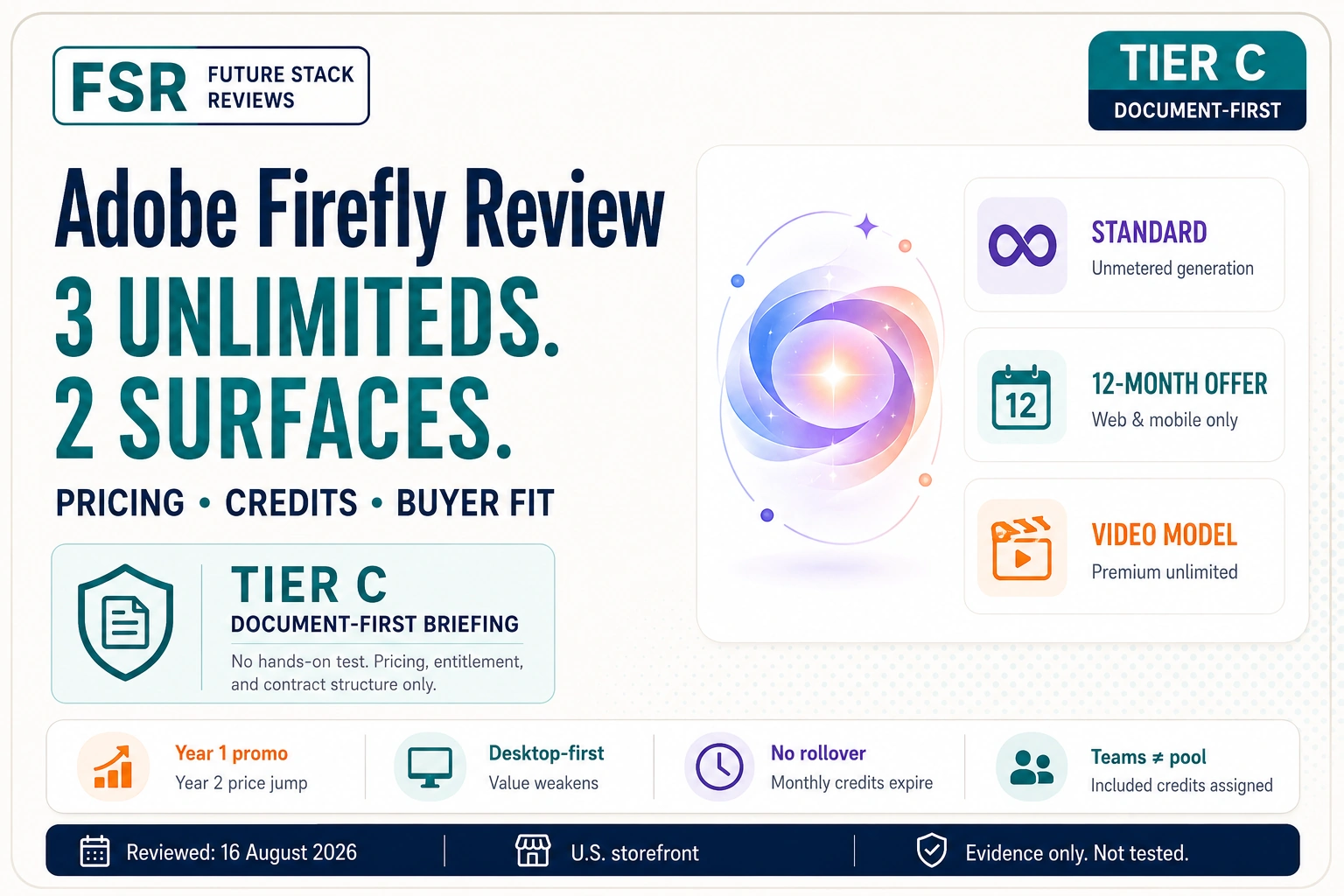
Adobe Firefly Review 2026 infographic showing three distinct unlimited entitlements, the web-and-mobile-only 12-month offer, pricing, credits, and buyer-fit risks.

Adobe Firefly Review 2026: Pricing, Unlimited Limits, and Buyer Fit

Adobe Firefly's plan card does not define what a buyer receives. This document-first briefing maps the entitlement stack behind the price: three separate meanings of unlimited, the surface where the first-year offer stops, credit cost by model and resolution, the export event that governs Adobe's in…

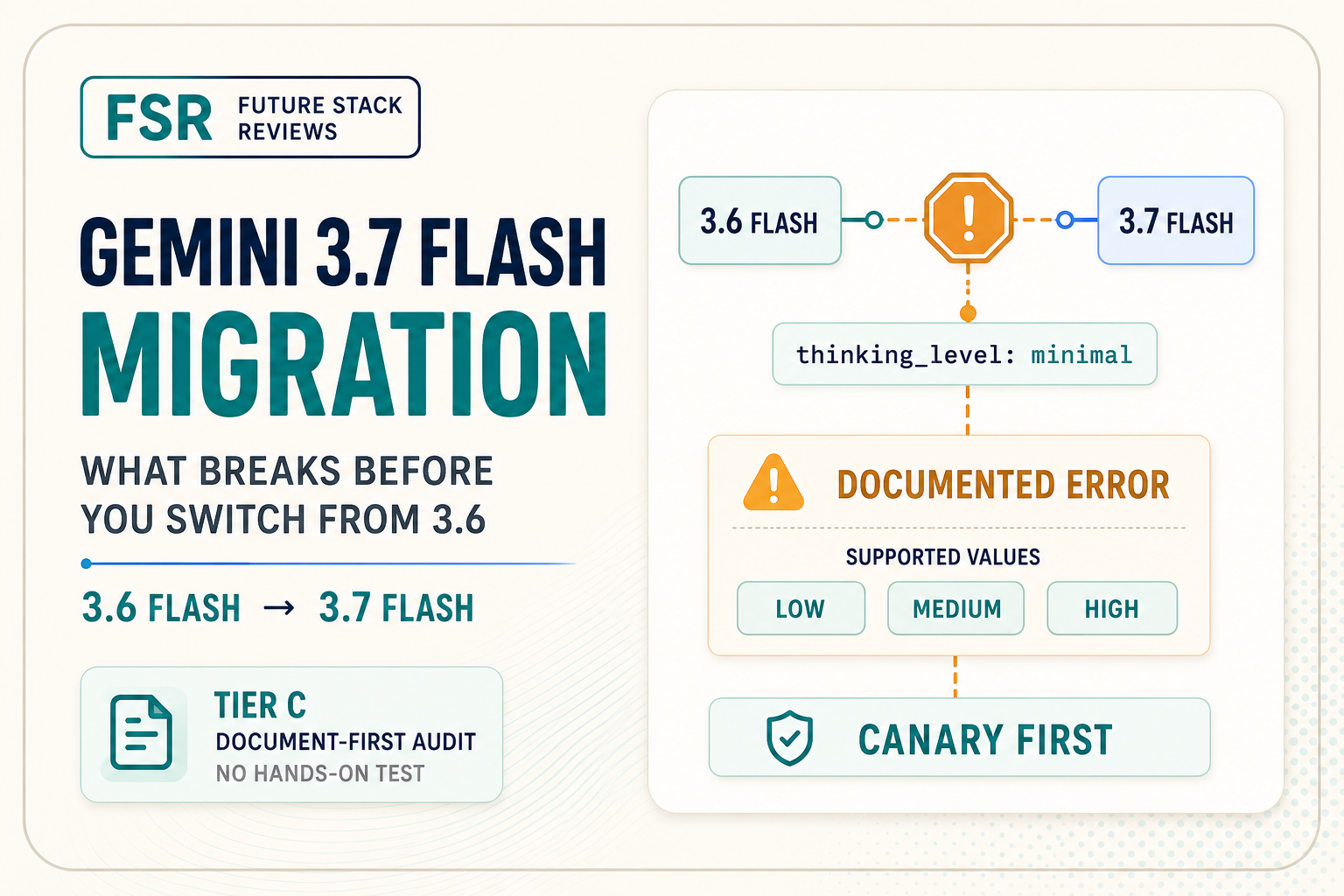
Gemini 3.7 Flash migration diagram showing that thinking_level minimal returns a documented error, with low, medium, and high supported.

Gemini 3.7 Flash Migration: What Breaks Before You Switch From 3.6

Gemini 3.7 Flash carries the same list price as the model it is built on and one fewer accepted thinking level. A 3.6 request that pins minimal returns an error. Seven more request dependencies must change, and Google states no failure mode for any of them. Document-first, no hands-on testing.

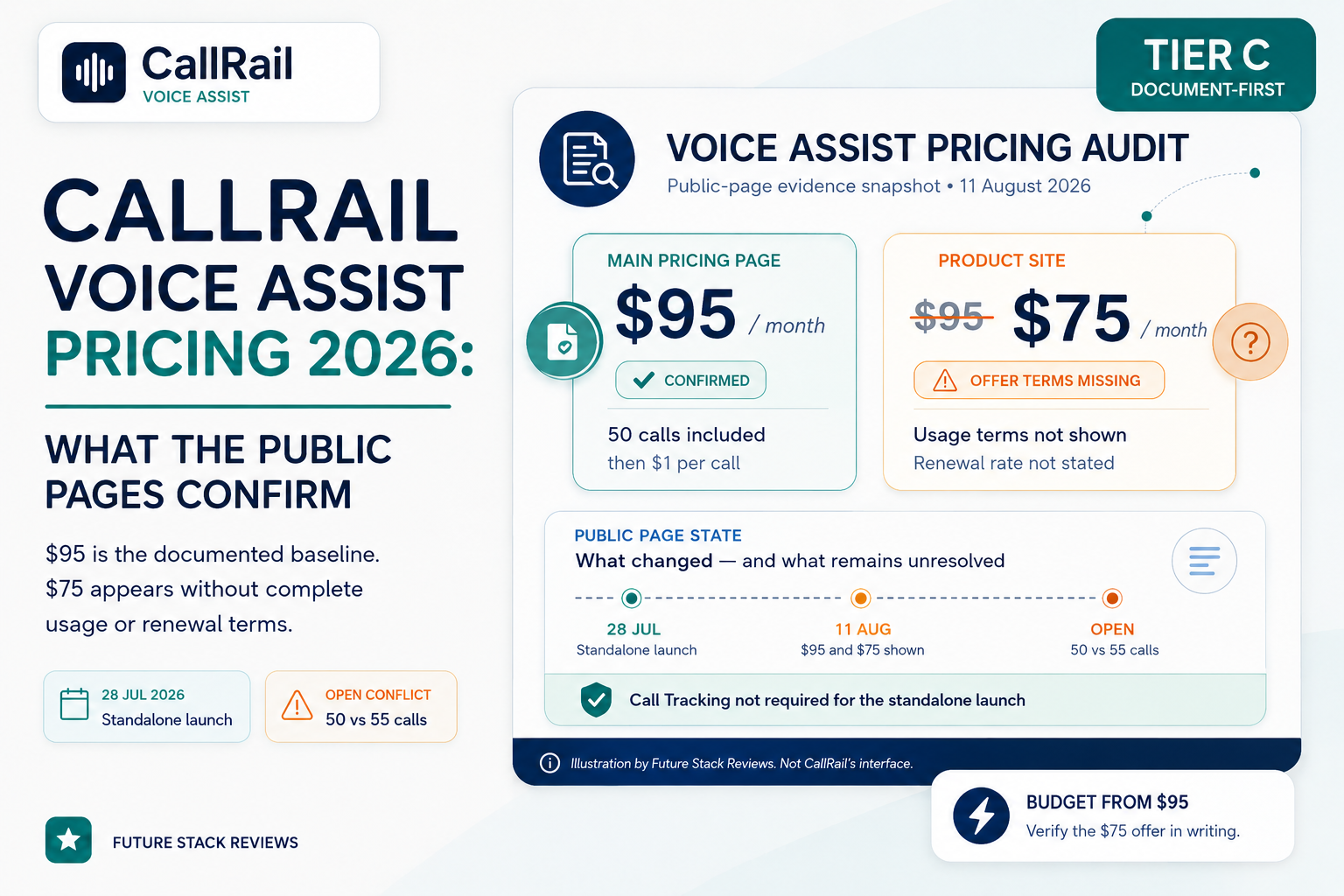
CallRail Voice Assist pricing audit featured image showing a confirmed $95 per month baseline on CallRail’s main pricing page, a separate $75 per month figure on the product site without complete offer terms, the 28 July 2026 standalone launch, and an open conflict over whether the plan includes 50 or 55 calls.

CallRail Voice Assist Pricing 2026: What the Public Pages Confirm

CallRail began selling Voice Assist without a call tracking subscription on 28 July 2026. Its main pricing page lists $95 per month with an included call quantity and an overage rate; its product site lists $75 and publishes neither. A document-first briefing on what the public pages confirm, what t…

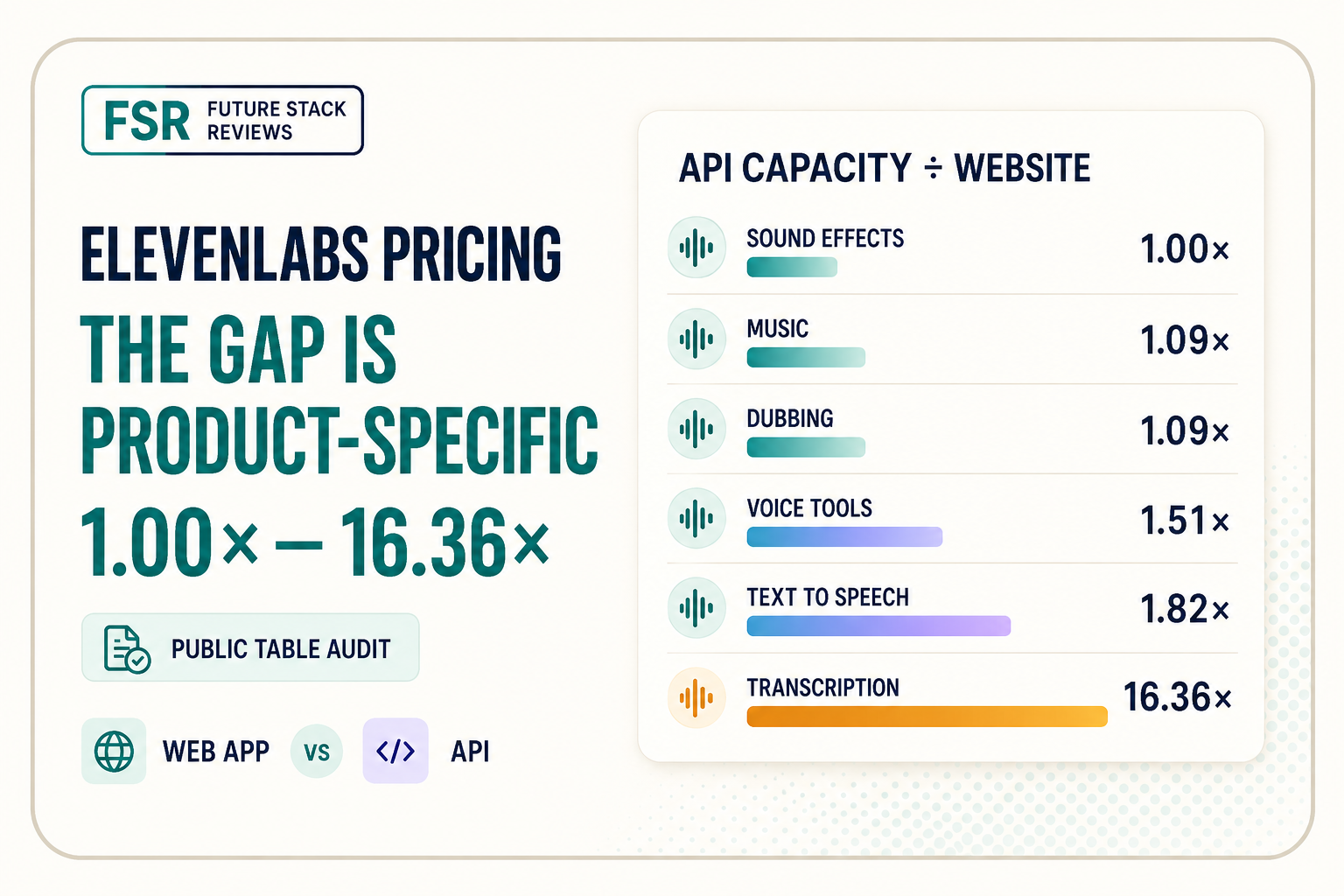
Future Stack Reviews graphic comparing ElevenLabs Creator plan API capacity with website capacity across six products: Sound Effects 1.00×, Music 1.09×, Dubbing 1.09×, Voice Tools 1.51×, Text to Speech 1.82×, and Transcription 16.36×.
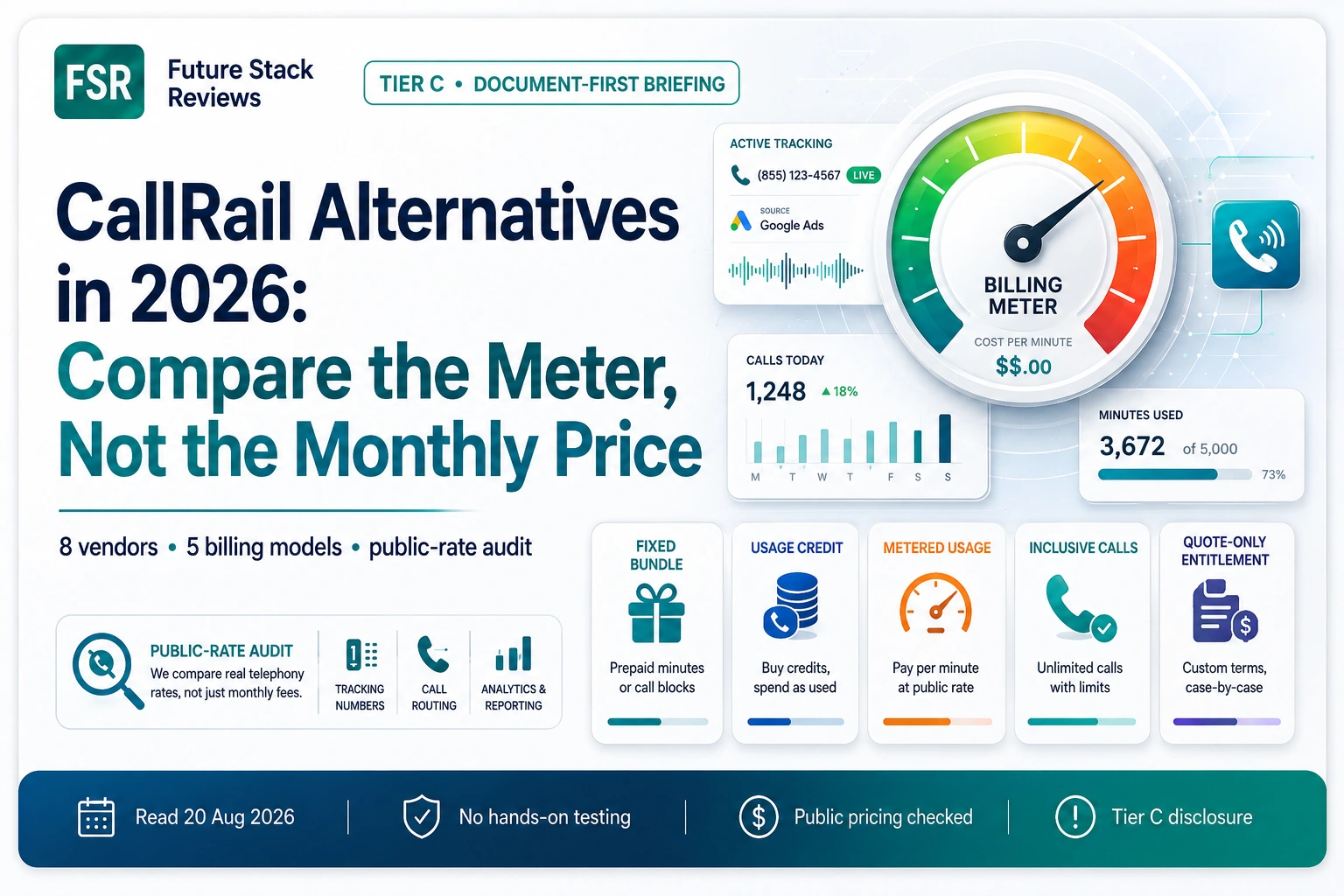
ElevenLabs Pricing: The Same Plan Buys 1x to 16x More Through the API

ElevenLabs publishes two capacity tables for the same subscription. Compare them product by product and the gap runs from nothing at all on sound effects to more than sixteen times on transcription. A document-first briefing on credits, API rates, and prepaid terms.

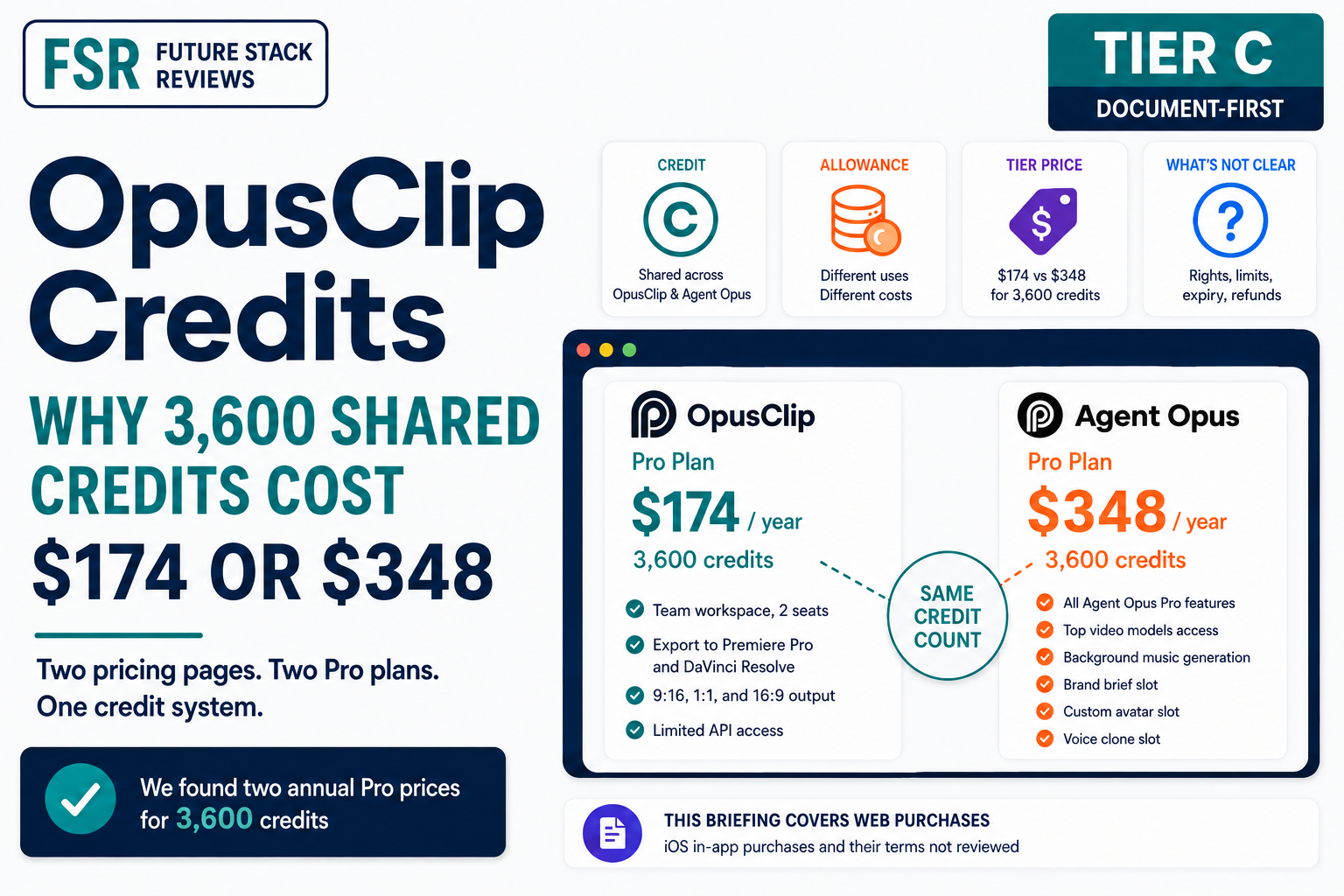
Future Stack Reviews Tier C briefing graphic comparing two annual Pro plans from Opusclip Inc.: OpusClip Pro at $174 a year and Agent Opus Pro at $348 a year, both listing 3,600 credits, with different feature bundles on each side

OpusClip Credits: Why 3,600 Shared Credits Cost $174 or $348

Opusclip Inc. runs two pricing pages, and 3,600 annual credits list at $174 on one and $348 on the other. A document-first briefing on what the published documents settle about OpusClip credits, and what they leave to the buyer.

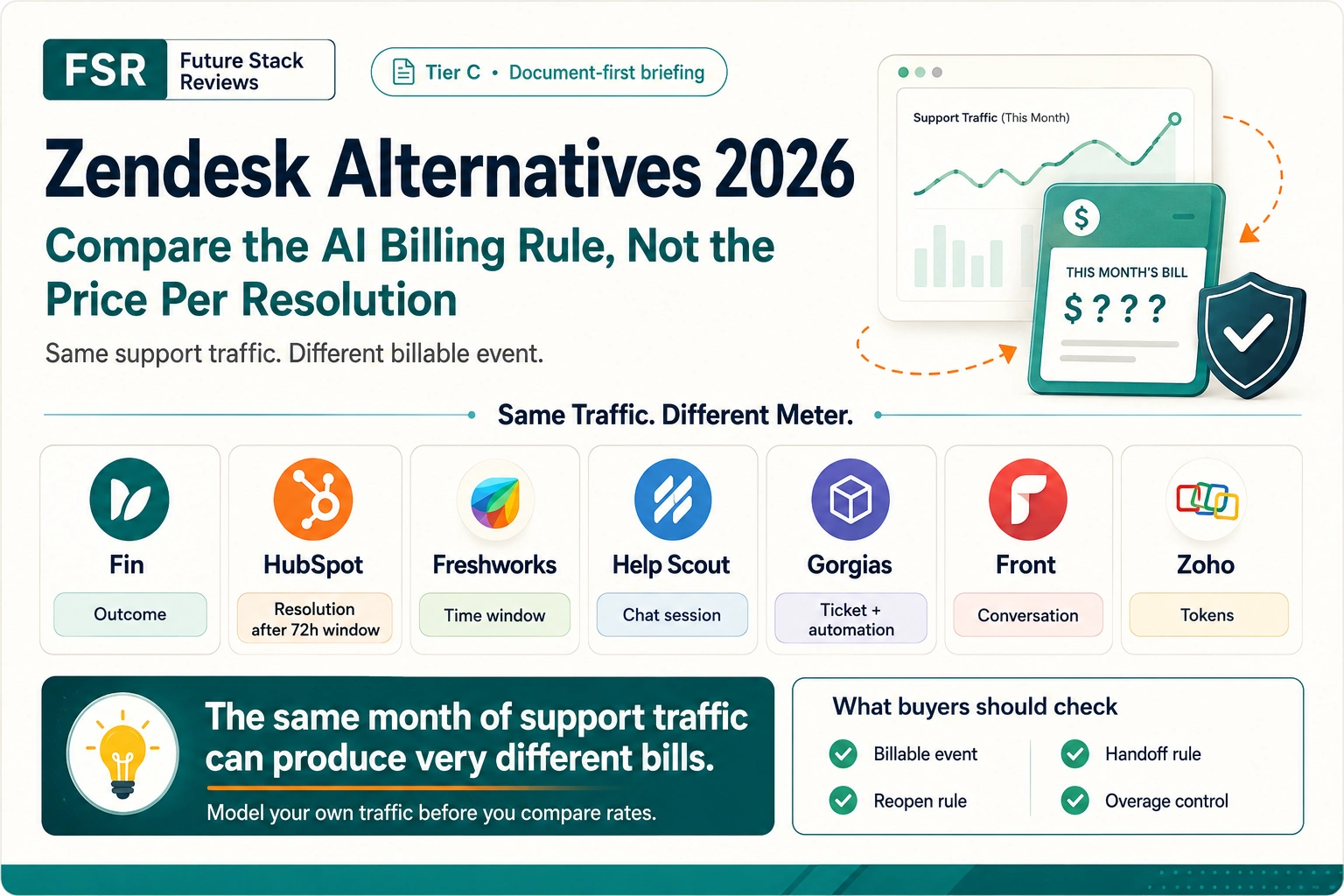
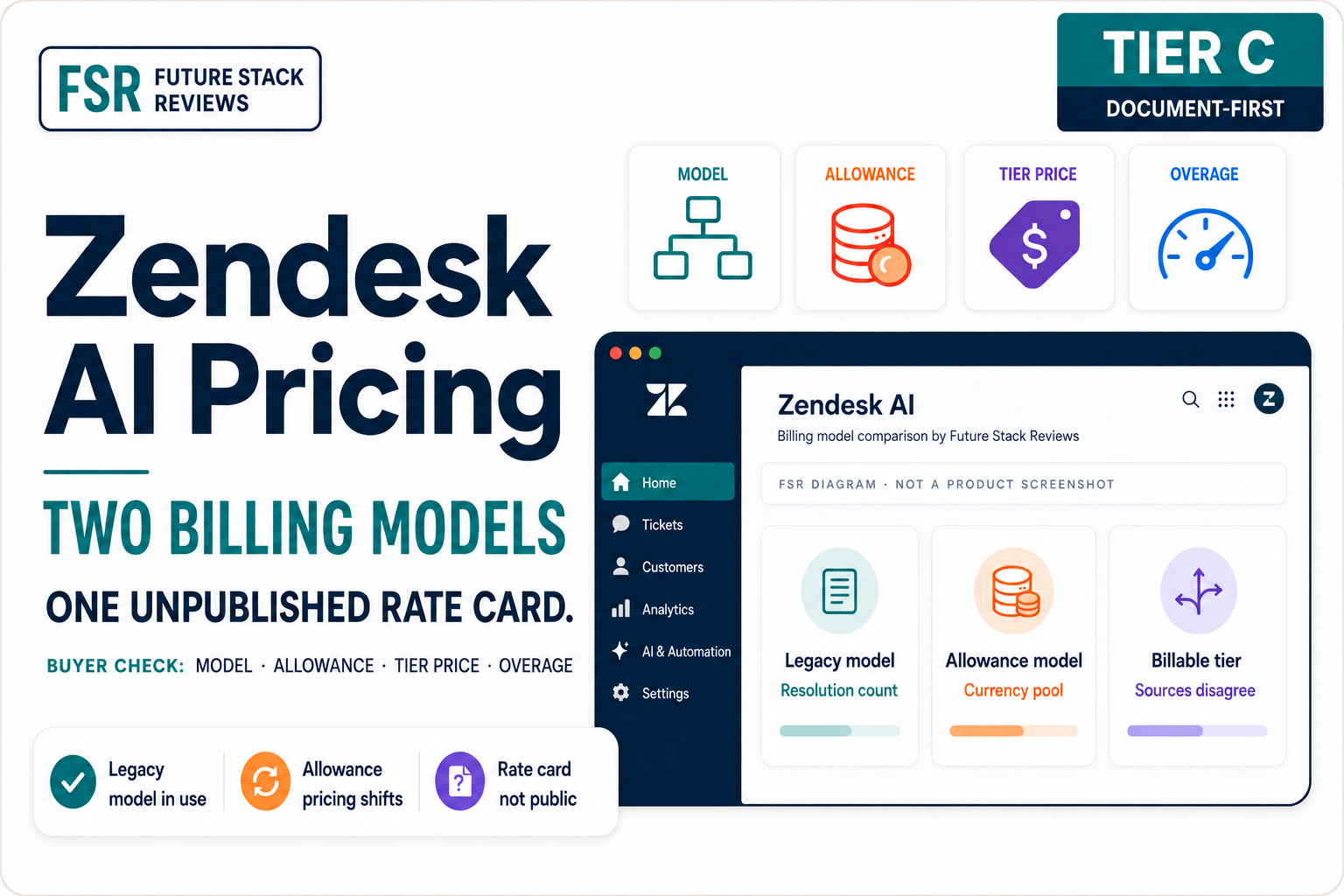
Illustrated cover graphic for a Future Stack Reviews Tier C document-first briefing, headlined Zendesk AI Pricing, Two Billing Models, One Unpublished Rate Card. Four buyer checks are labeled model, allowance, tier price, and overage. A diagram panel, marked as not a product screenshot, sets three cards side by side: a legacy model measured in resolution count, an allowance model funded by a currency pool, and a billable tier on which the sources disagree.

Zendesk AI Pricing in 2026: Two Billing Models, One Unpublished Rate Card

Zendesk is moving AI agent billing from counted automated resolutions to a currency-funded resolution allowance, and both models are live at the same time. A document-first look at what is billable, where Zendesk's own pages disagree, and why the tier price is not on the pricing page.