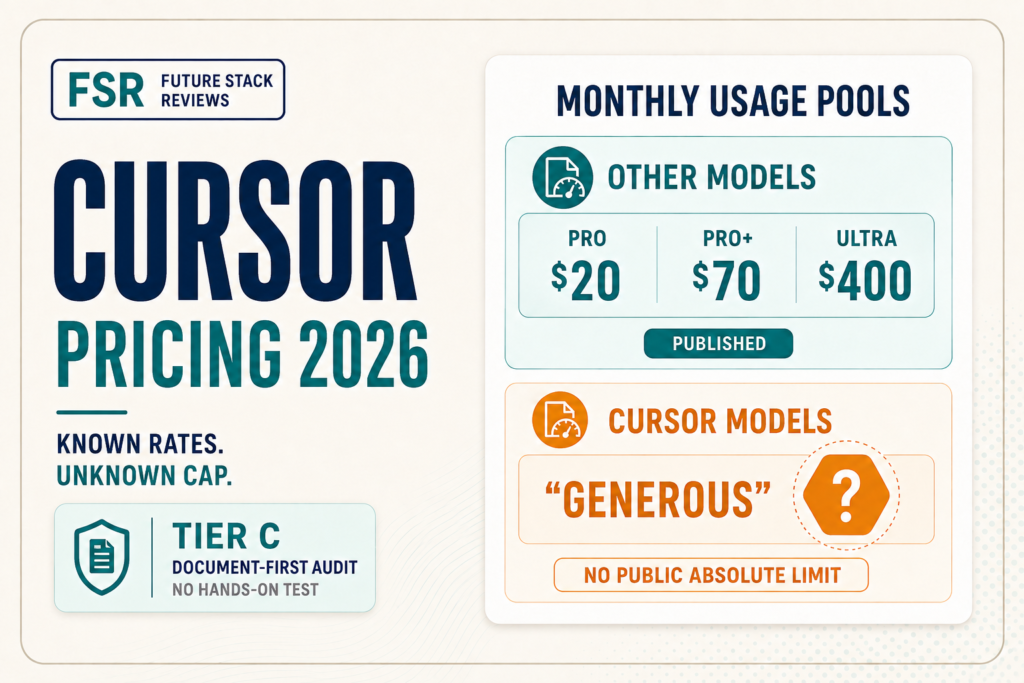
Cursor Pricing in 2026: Plans, Usage Limits, and What the Public Pages Do Not Quantify
Two monthly pools, three published third-party allowances, and no absolute Cursor Models allowance. A Tier C audit of what a buyer can verify before purchase.
Two monthly pools, three published third-party allowances, and no absolute Cursor Models allowance. A Tier C audit of what a buyer can verify before purchase.
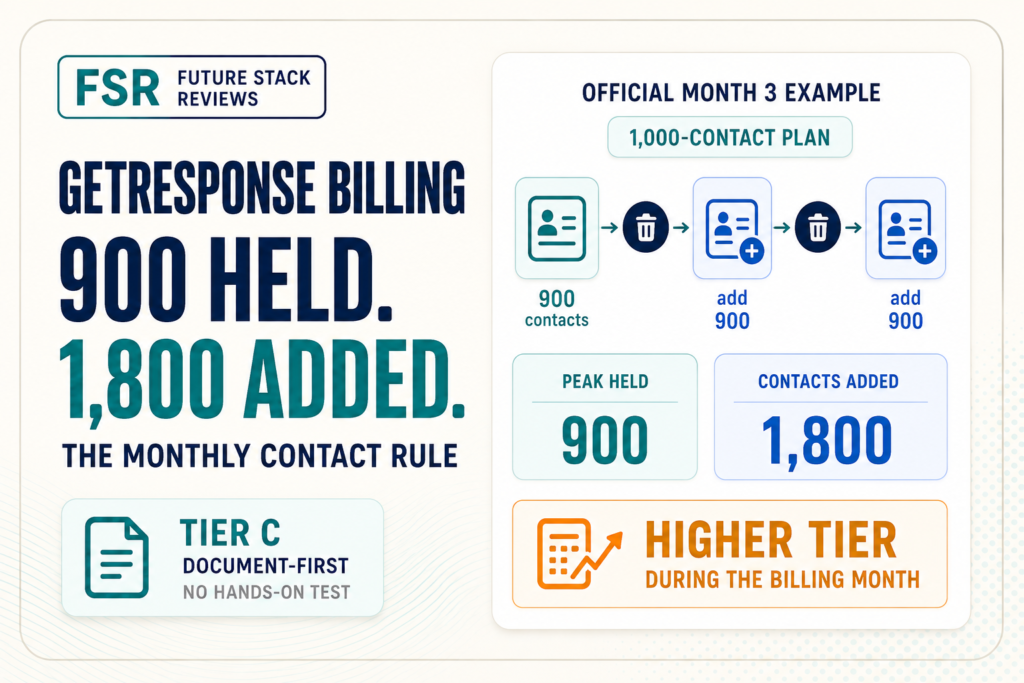
GetResponse sells plans against a contact bracket. Its contract counts something else: contacts stored, added, unsubscribed, deleted, or unconfirmed during the month, and one address once for every list it sits on. The vendor’s own worked example moves a 900-contact account to a higher plan. Tier C, document-first, no hands-on testing.
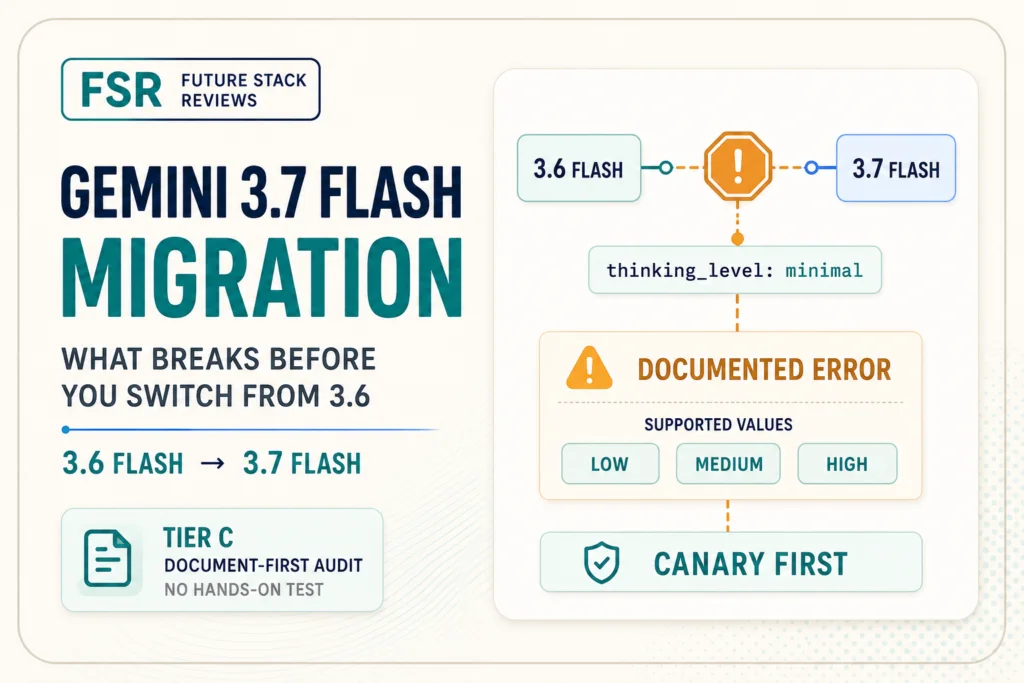
Gemini 3.7 Flash carries the same list price as the model it is built on and one fewer accepted thinking level. A 3.6 request that pins minimal returns an error. Seven more request dependencies must change, and Google states no failure mode for any of them. Document-first, no hands-on testing.
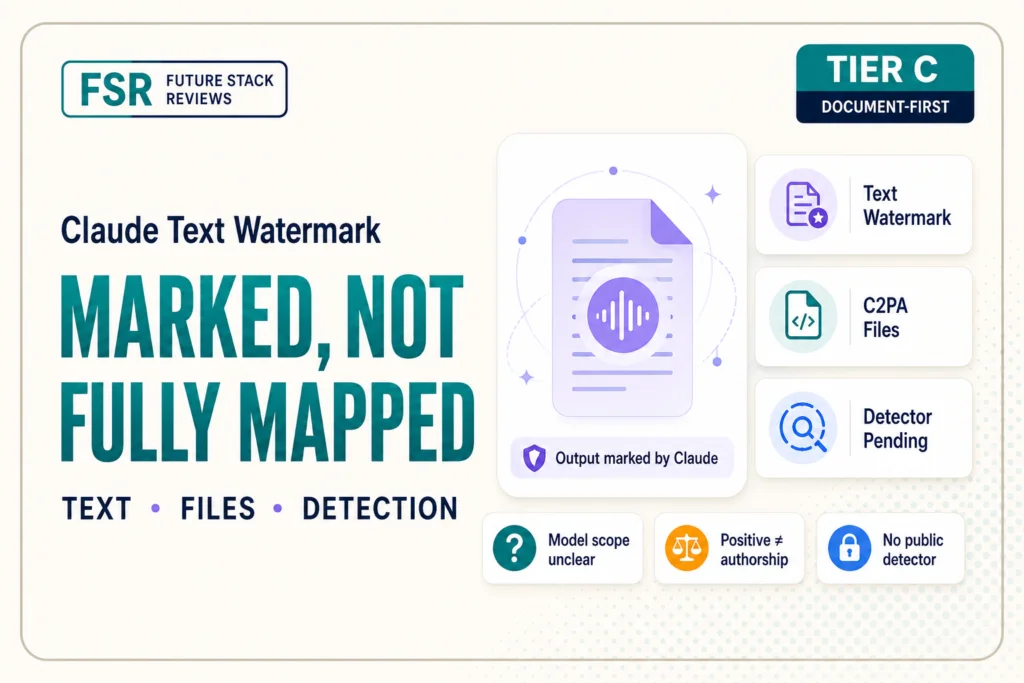
Anthropic has committed to embedding a machine-readable watermark in Claude’s generated text, and signed provenance metadata in supported files. As of 13 August 2026 it has not published which models carry the mark, a detector anyone can run, or any documented opt-out. This document-first briefing separates what Anthropic states from what a buyer can verify.
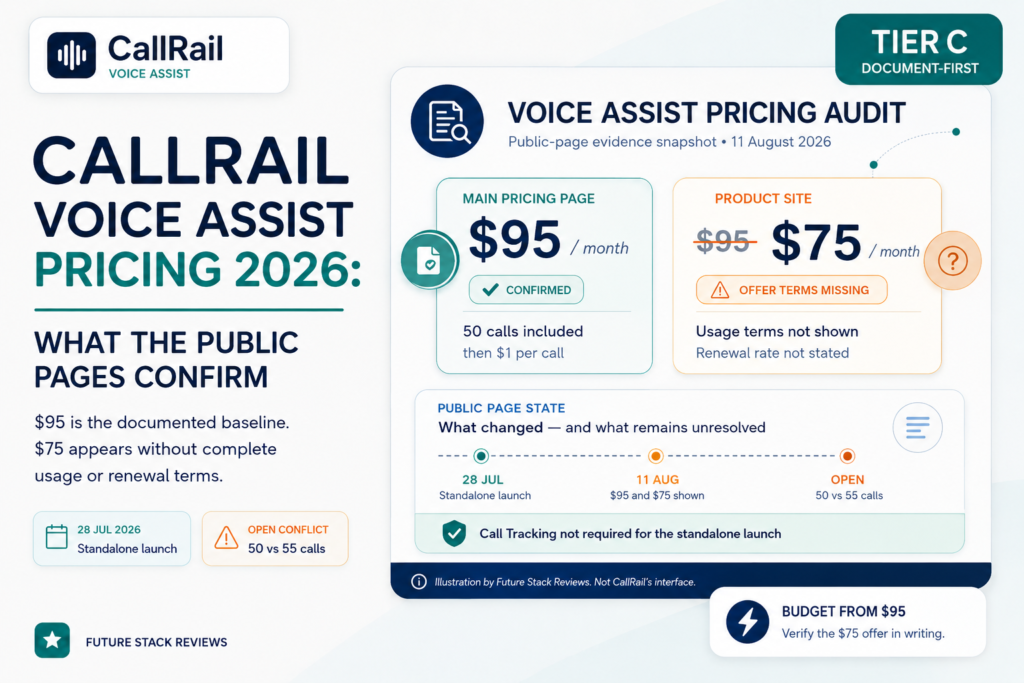
CallRail began selling Voice Assist without a call tracking subscription on 28 July 2026. Its main pricing page lists $95 per month with an included call quantity and an overage rate; its product site lists $75 and publishes neither. A document-first briefing on what the public pages confirm, what they leave open, and what to get in writing before the trial converts.
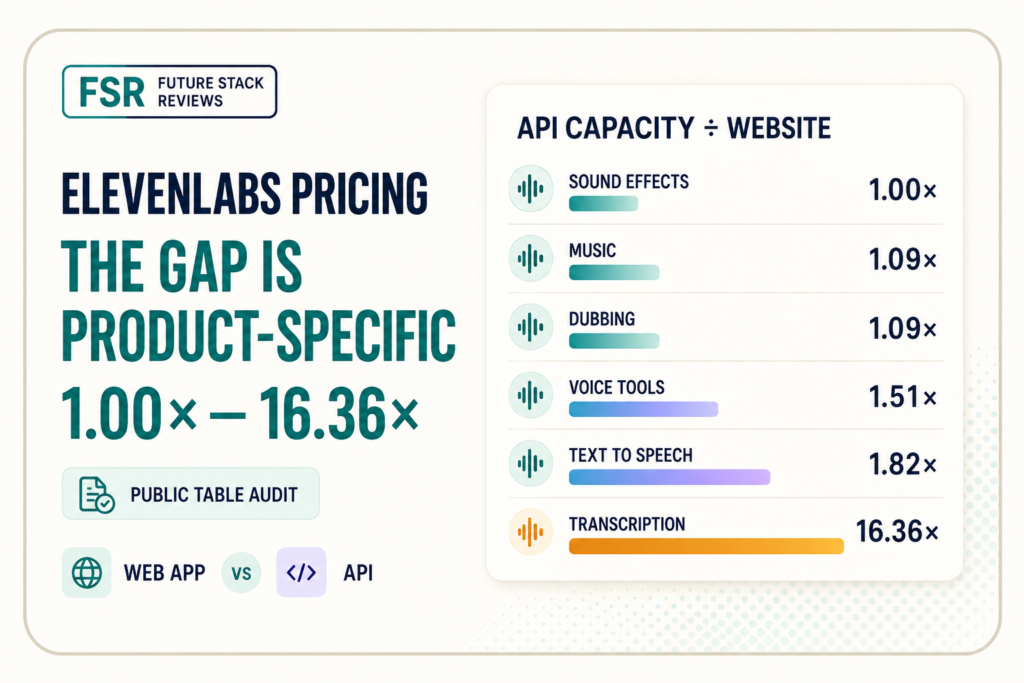
ElevenLabs publishes two capacity tables for the same subscription. Compare them product by product and the gap runs from nothing at all on sound effects to more than sixteen times on transcription. A document-first briefing on credits, API rates, and prepaid terms.
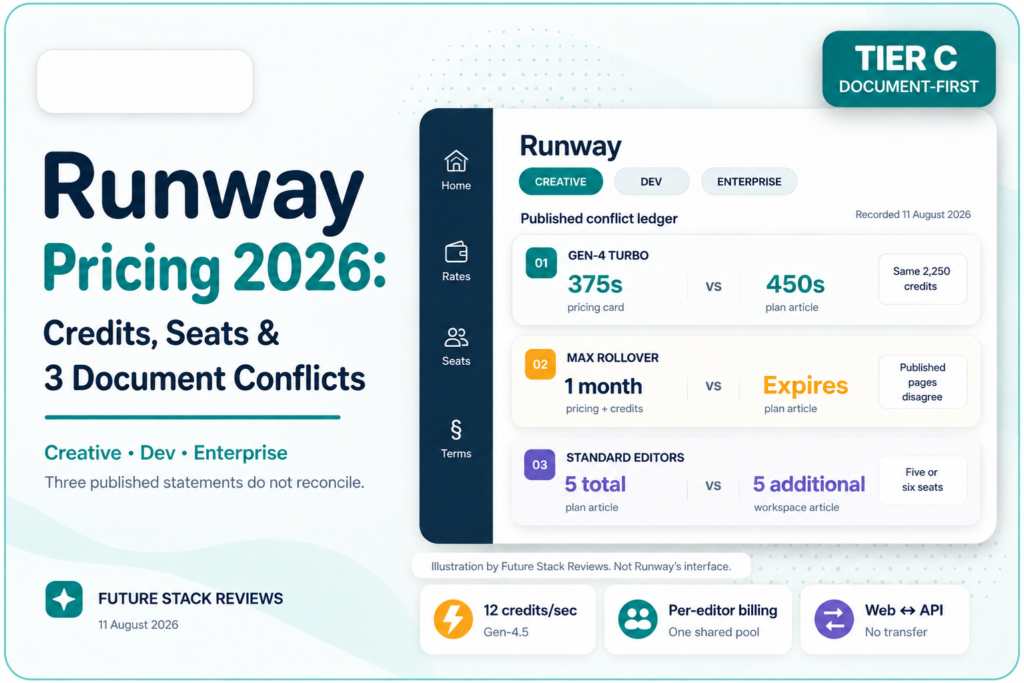
Runway sells through three commercial paths that do not share a credit balance or carry the same contract terms. On 11 August 2026, three of its published statements contradicted each other on credit conversion, rollover, and workspace size. A document-first briefing for buyers approving spend.
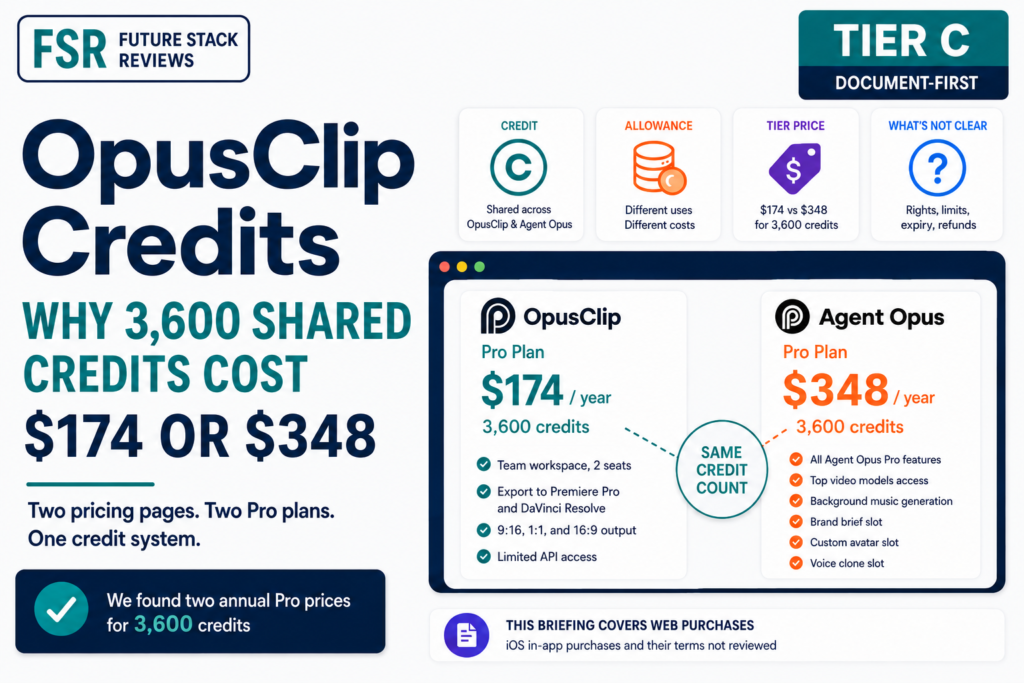
Opusclip Inc. runs two pricing pages, and 3,600 annual credits list at $174 on one and $348 on the other. A document-first briefing on what the published documents settle about OpusClip credits, and what they leave to the buyer.
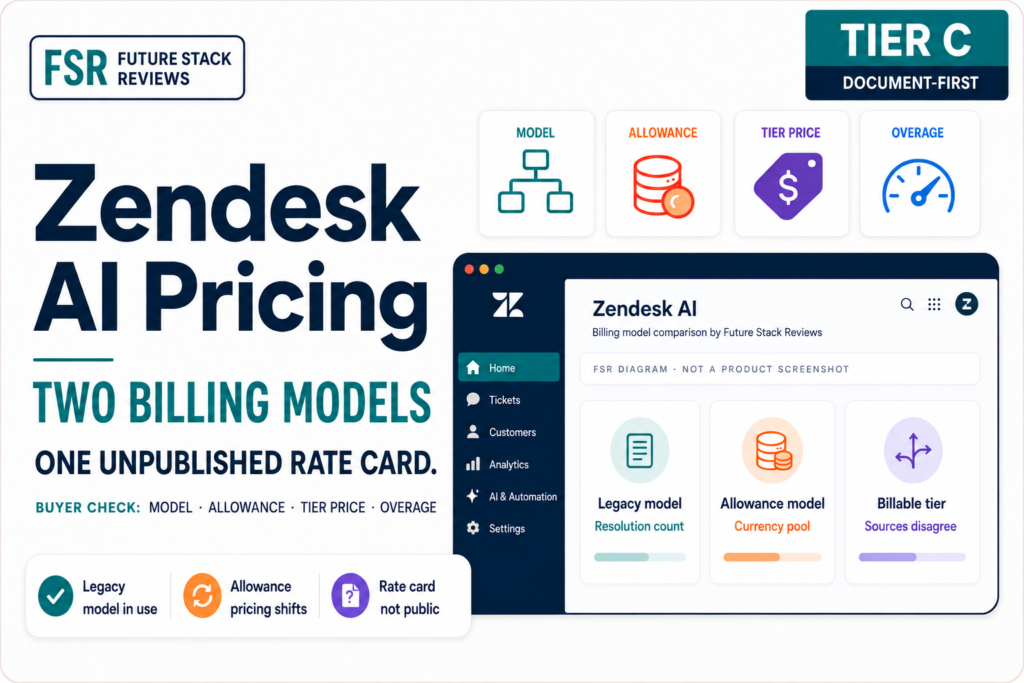
Zendesk is moving AI agent billing from counted automated resolutions to a
currency-funded resolution allowance, and both models are live at the same time.
A document-first look at what is billable, where Zendesk’s own pages disagree, and
why the tier price is not on the pricing page.
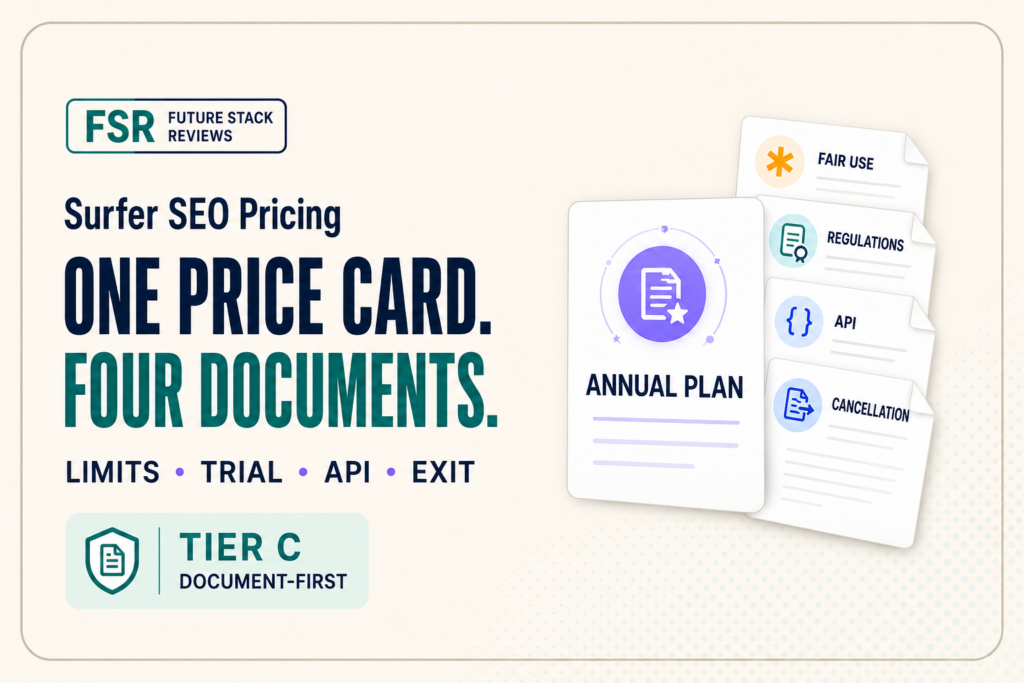
Surfer’s Unlimited resolves to 500 documents a month. A document-first read of the trial terms, the annual cancellation formula, and API entitlement.