Dark

Article library

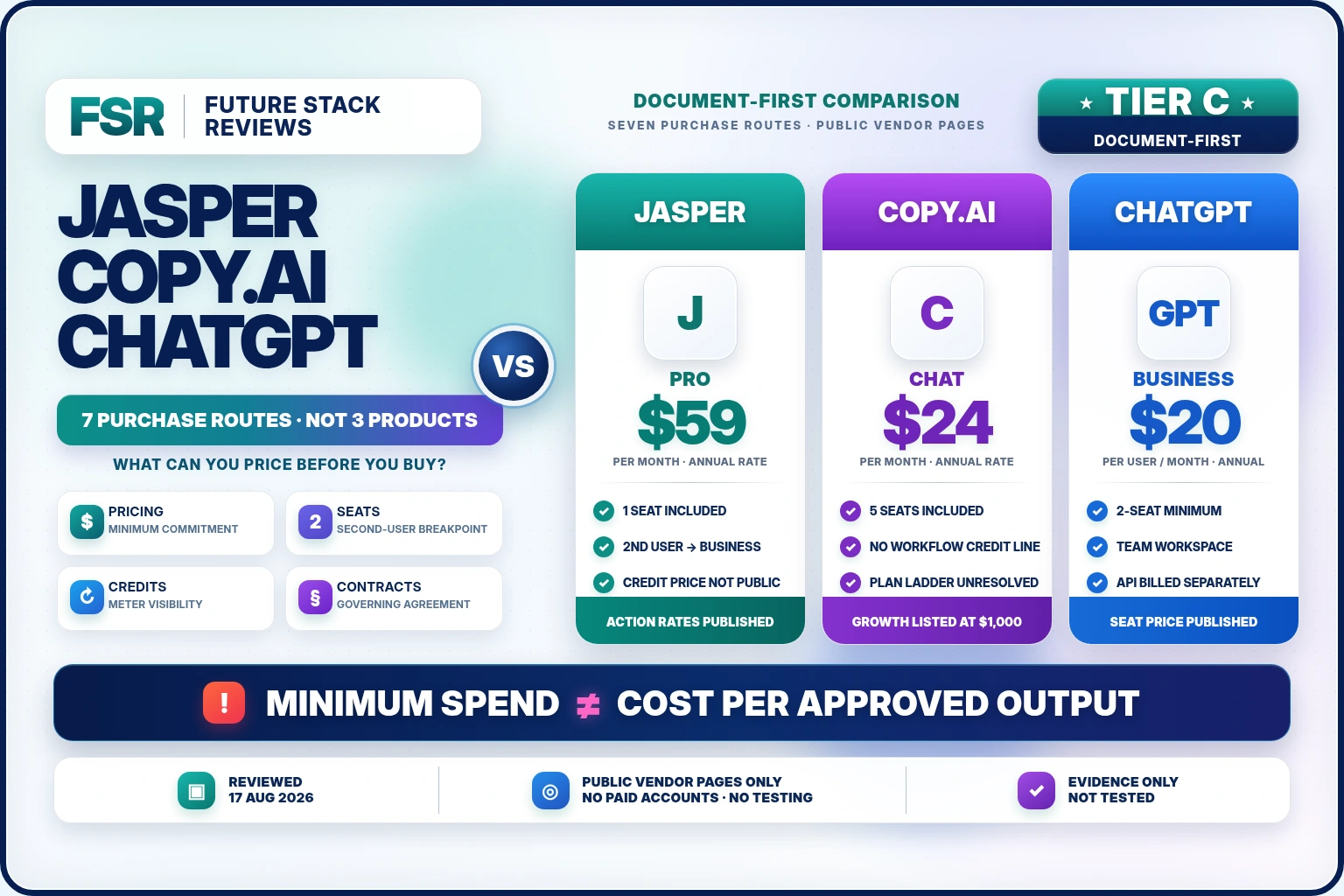
Jasper vs Copy.ai vs ChatGPT pricing comparison graphic showing entry plans, seat requirements, usage-meter transparency, and FSR Tier C document-first status.

Jasper vs Copy.ai vs ChatGPT (2026): What Each Purchase Route Lets You Price

Jasper, Copy.ai, and ChatGPT are seven purchase routes, not three products. This document-first briefing compares what each route publishes before checkout: minimum spend, seat rules, credit meters, governing agreements, and the places where each vendor's own pages disagree. No paid account was open…

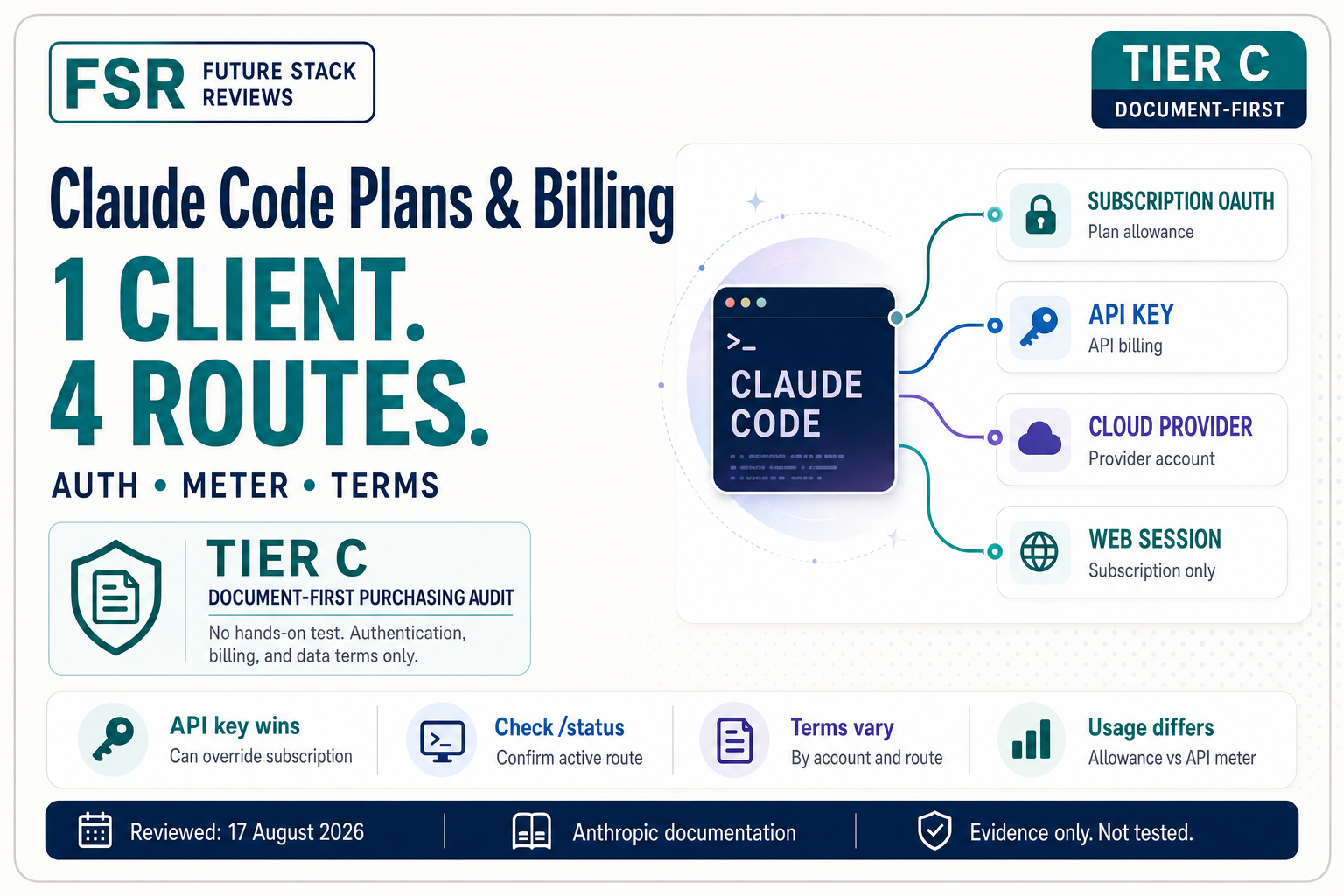
Claude Code plans and billing infographic showing four routes: subscription OAuth, API key, cloud provider, and web session.

Claude Code Plans and Billing: What Actually Controls a Session

A document-first audit of how Claude Code is bought, billed, and governed. A paid plan grants access, but the credential a session picks up decides which meter it draws from and which agreement applies. Includes a route matrix and a preflight check to run before approving a repository.

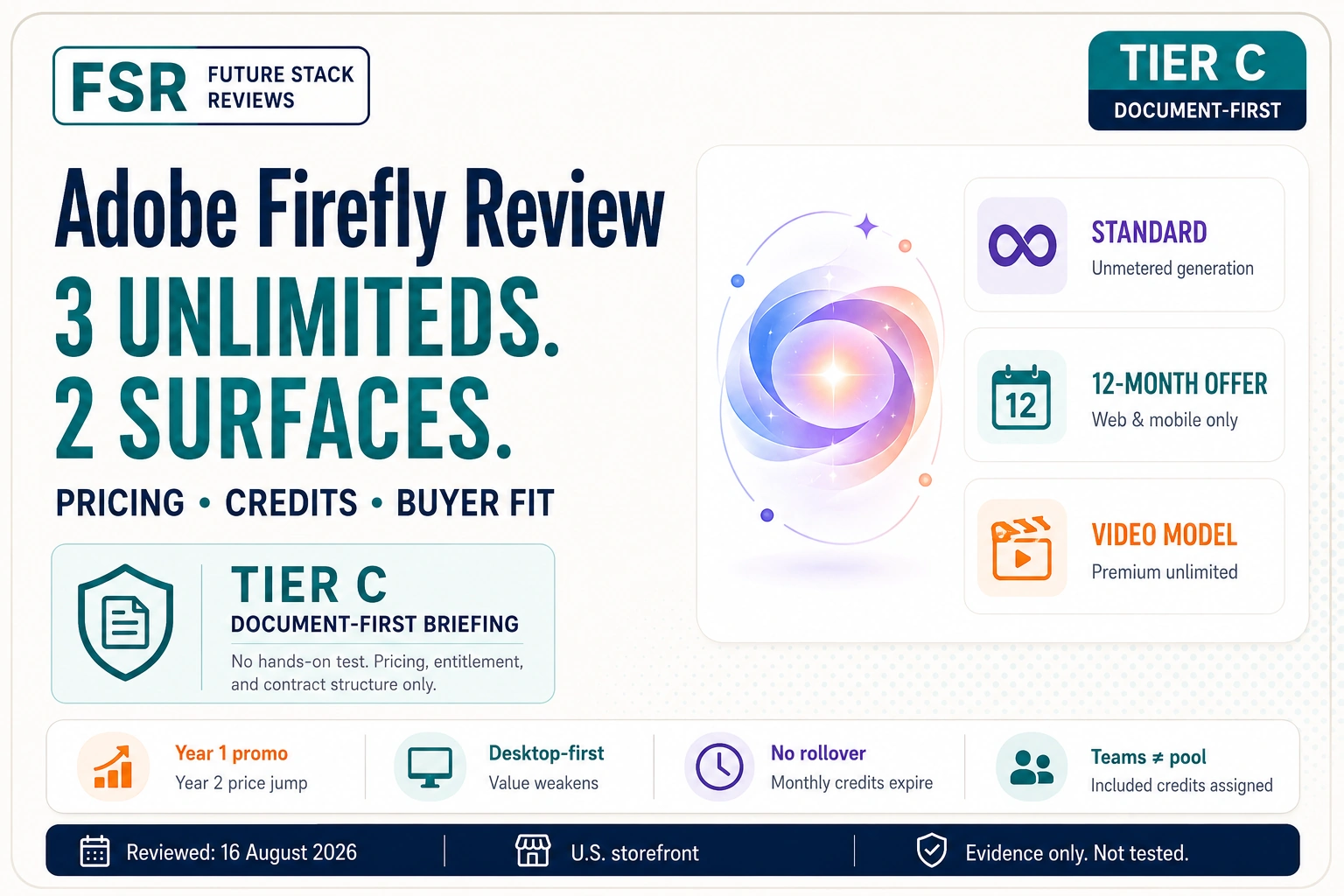
Adobe Firefly Review 2026 infographic showing three distinct unlimited entitlements, the web-and-mobile-only 12-month offer, pricing, credits, and buyer-fit risks.

Adobe Firefly Review 2026: Pricing, Unlimited Limits, and Buyer Fit

Adobe Firefly's plan card does not define what a buyer receives. This document-first briefing maps the entitlement stack behind the price: three separate meanings of unlimited, the surface where the first-year offer stops, credit cost by model and resolution, the export event that governs Adobe's in…

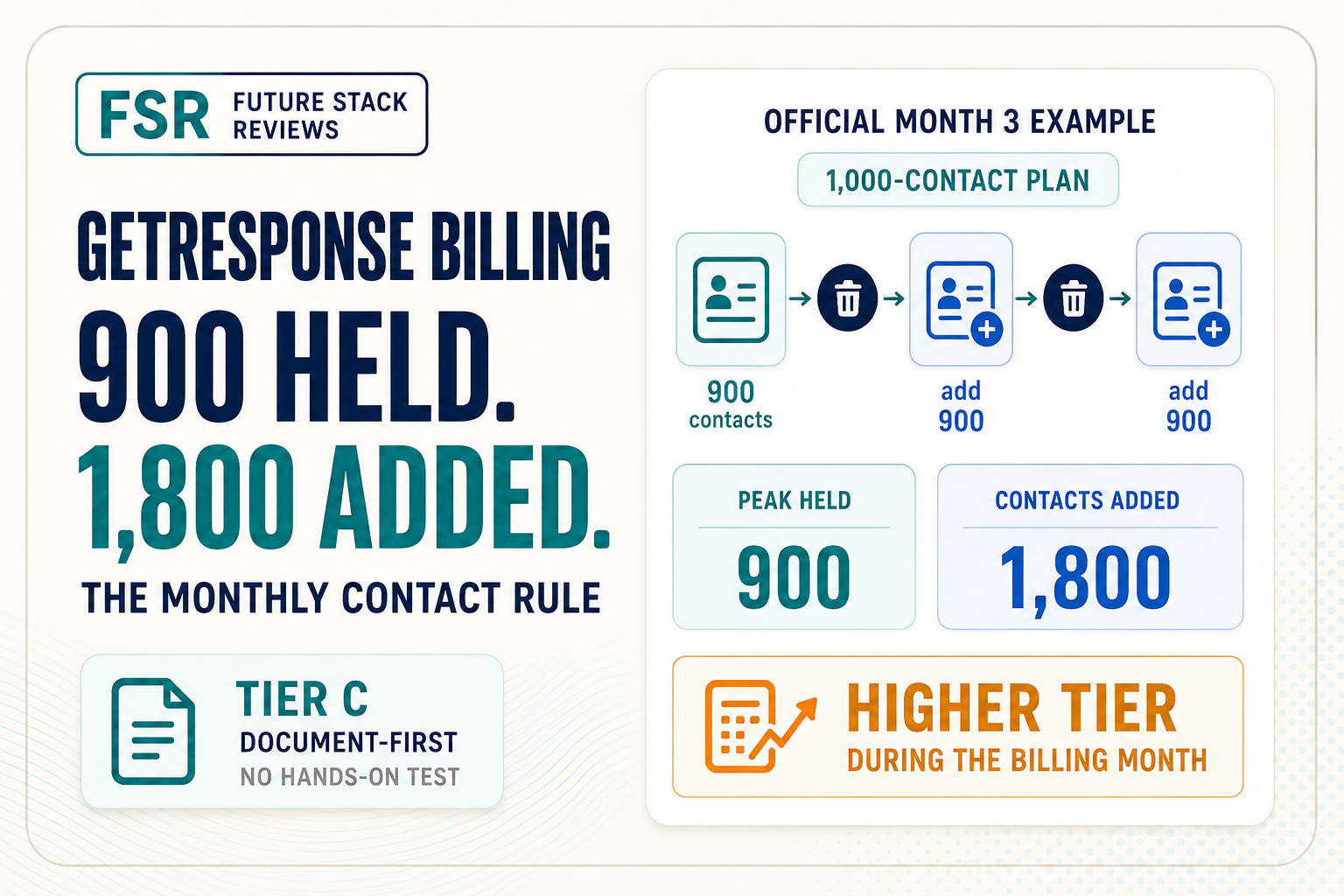
Infographic of GetResponse's official month three billing example. On a 1,000-contact plan, an account holding 900 contacts deletes them, adds 900, deletes those, and adds another 900. Peak held is 900 and contacts added is 1,800, which moves the account to a higher tier during the billing month. Marked Tier C, document-first, no hands-on test.

GetResponse Review 2026: What Counts Toward Your Bill

GetResponse sells plans against a contact bracket. Its contract counts something else: contacts stored, added, unsubscribed, deleted, or unconfirmed during the month, and one address once for every list it sits on. The vendor's own worked example moves a 900-contact account to a higher plan. Tier C,…

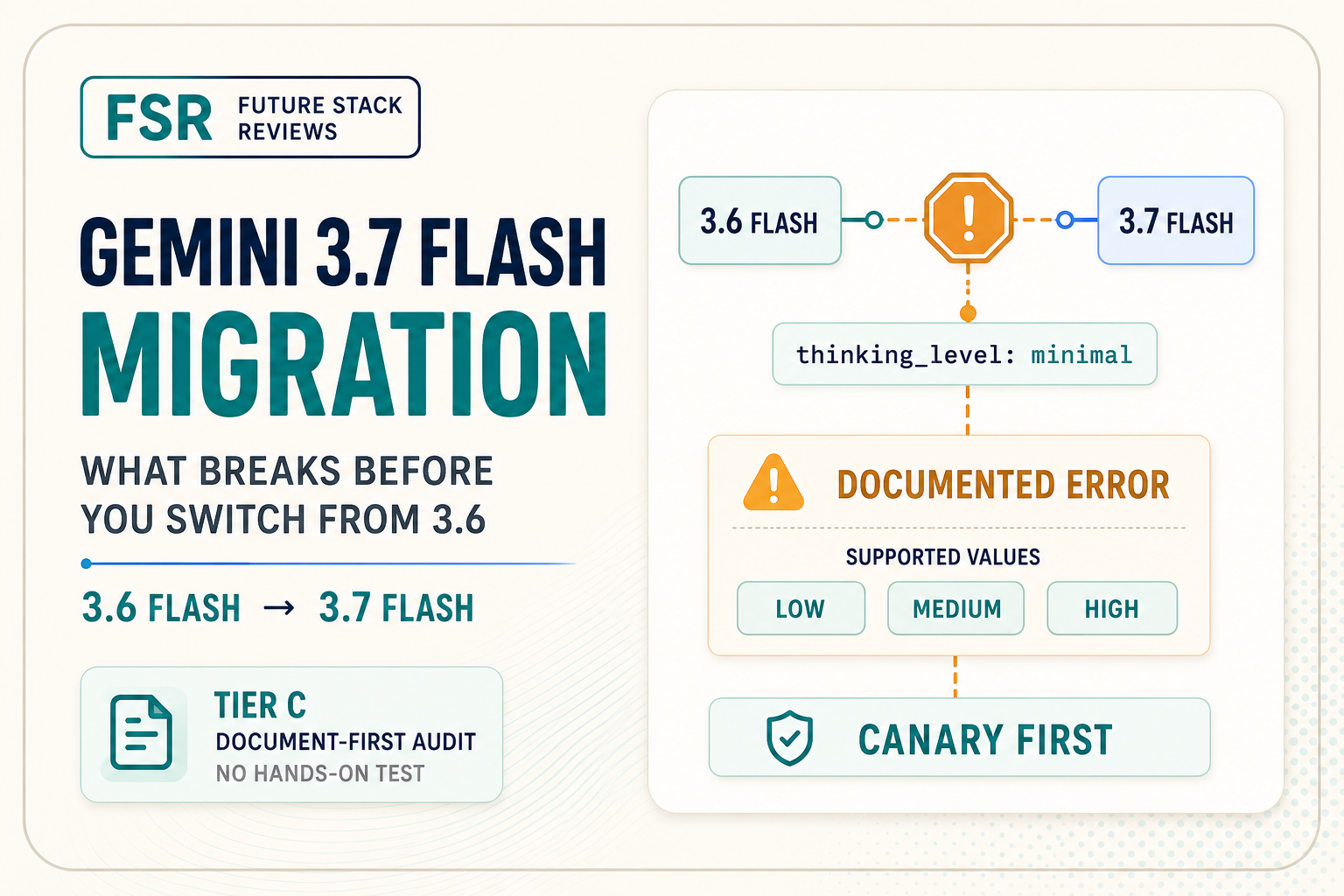
Gemini 3.7 Flash migration diagram showing that thinking_level minimal returns a documented error, with low, medium, and high supported.

Gemini 3.7 Flash Migration: What Breaks Before You Switch From 3.6

Gemini 3.7 Flash carries the same list price as the model it is built on and one fewer accepted thinking level. A 3.6 request that pins minimal returns an error. Seven more request dependencies must change, and Google states no failure mode for any of them. Document-first, no hands-on testing.

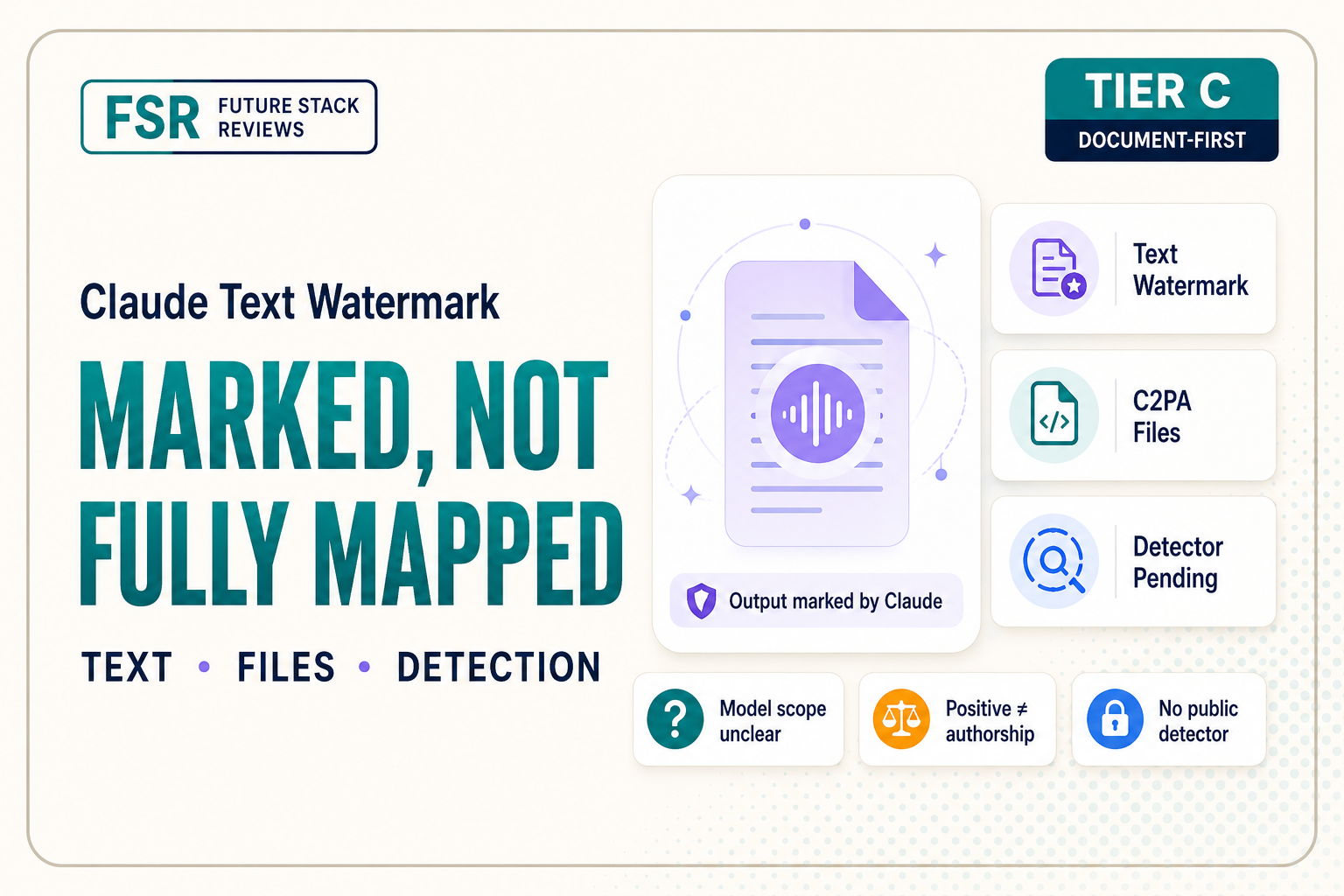
FSR featured graphic titled “Claude Text Watermark: Marked, Not Fully Mapped,” with cards for text watermarking, C2PA files, detector pending, unclear model scope, and positive detection not proving authorship.

Does Claude Watermark Text? What Anthropic Has Actually Documented

Anthropic has committed to embedding a machine-readable watermark in Claude's generated text, and signed provenance metadata in supported files. As of 13 August 2026 it has not published which models carry the mark, a detector anyone can run, or any documented opt-out. This document-first briefing s…

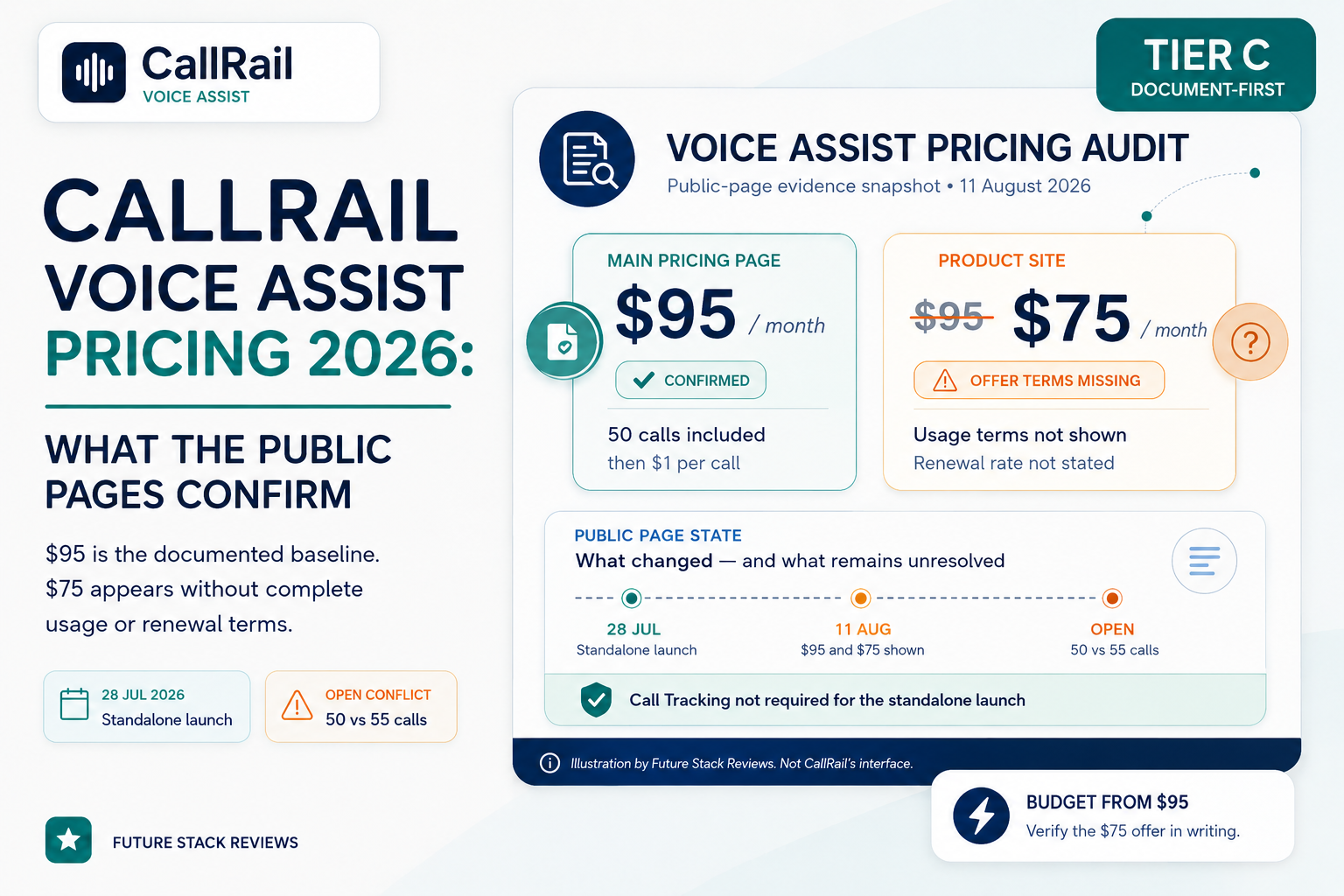
CallRail Voice Assist pricing audit featured image showing a confirmed $95 per month baseline on CallRail’s main pricing page, a separate $75 per month figure on the product site without complete offer terms, the 28 July 2026 standalone launch, and an open conflict over whether the plan includes 50 or 55 calls.

CallRail Voice Assist Pricing 2026: What the Public Pages Confirm

CallRail began selling Voice Assist without a call tracking subscription on 28 July 2026. Its main pricing page lists $95 per month with an included call quantity and an overage rate; its product site lists $75 and publishes neither. A document-first briefing on what the public pages confirm, what t…

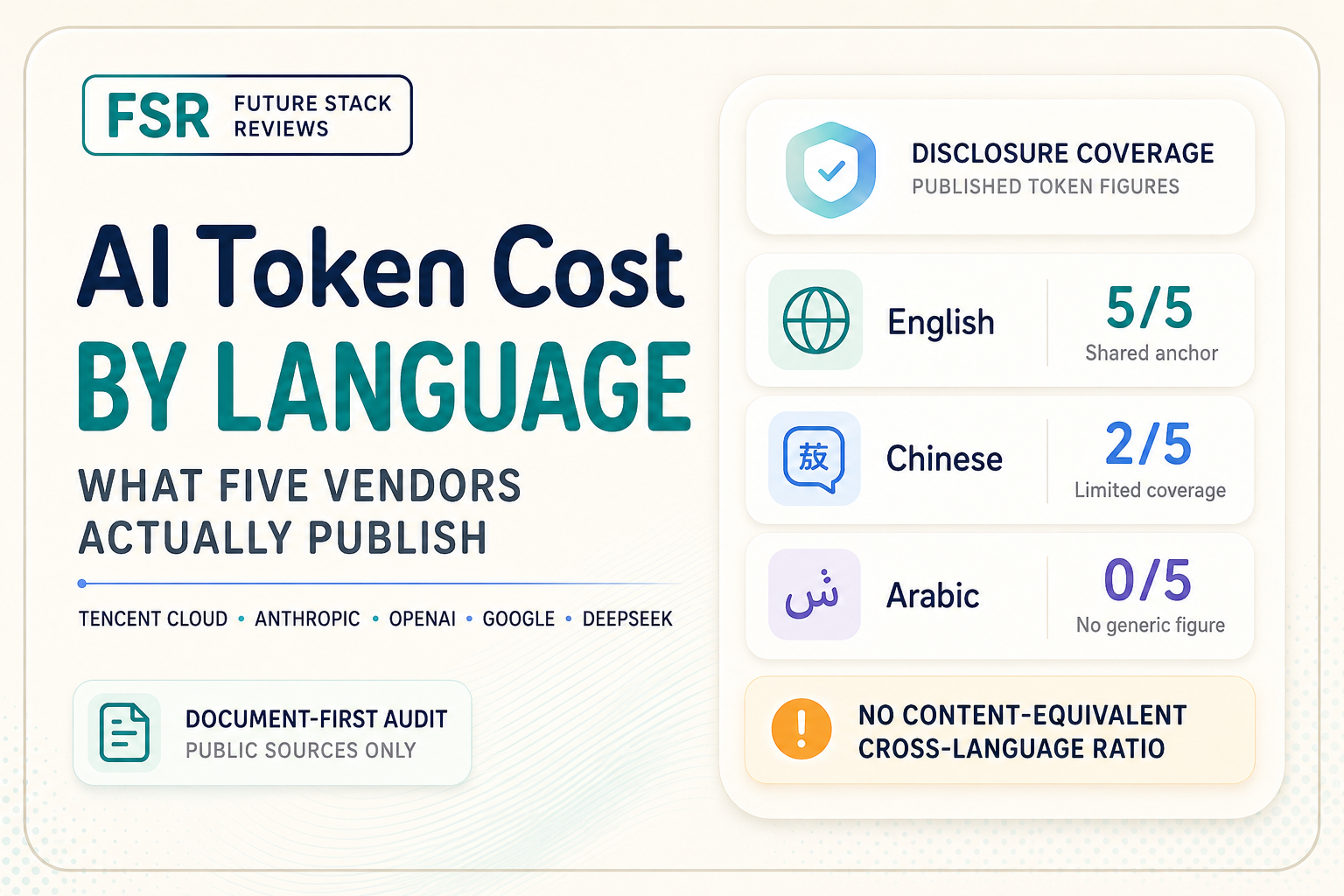
AI token cost by language infographic comparing five vendors: English 5/5, Chinese 2/5, and Arabic 0/5.

AI Token Cost by Language: What Five Vendors Actually Publish

Vendors converge on a single rule of thumb for English. Beyond it, the published record fragments, and for Arabic there is nothing to check against. Nine pages from five vendors, read on one date and sorted by what each figure actually measures.

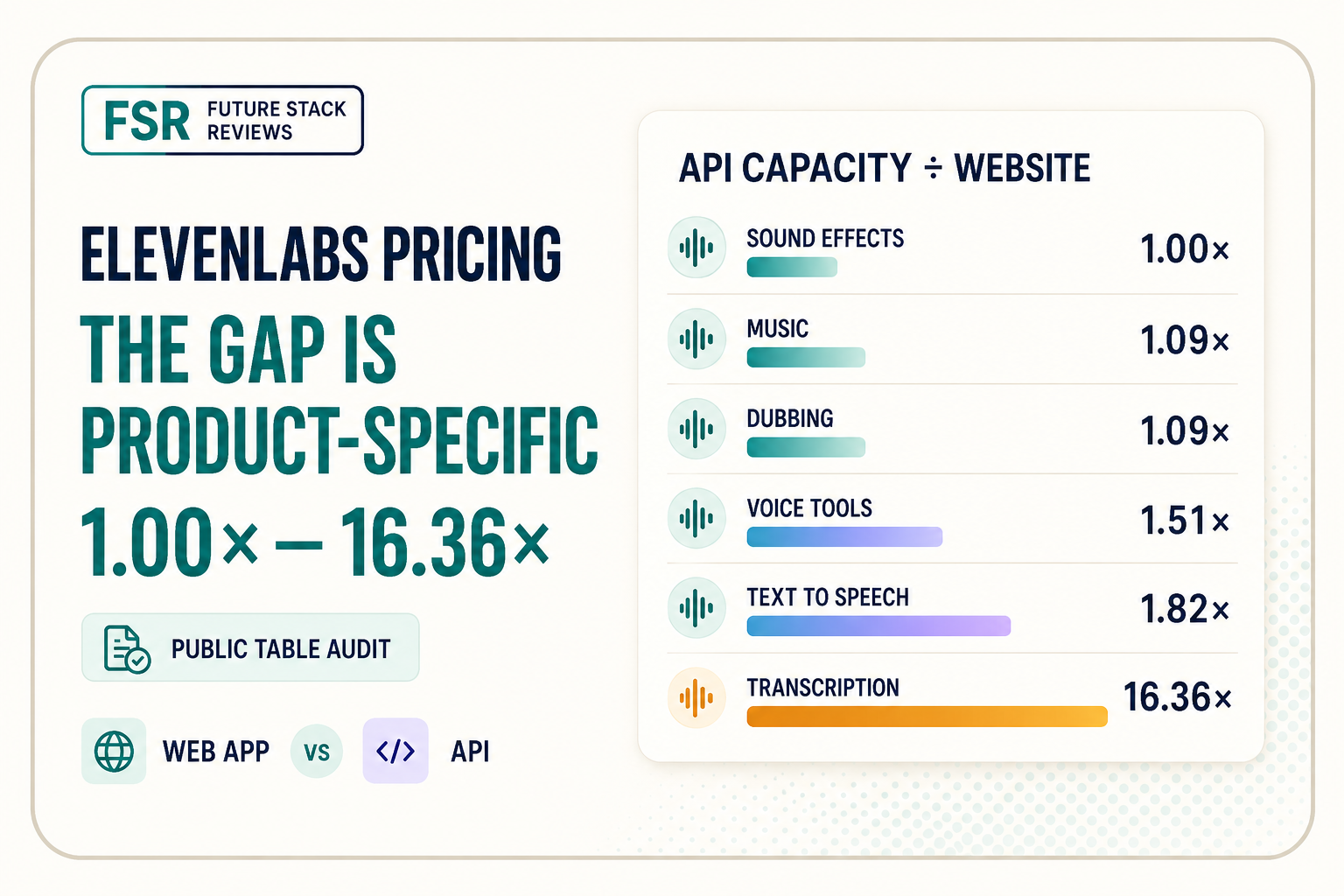
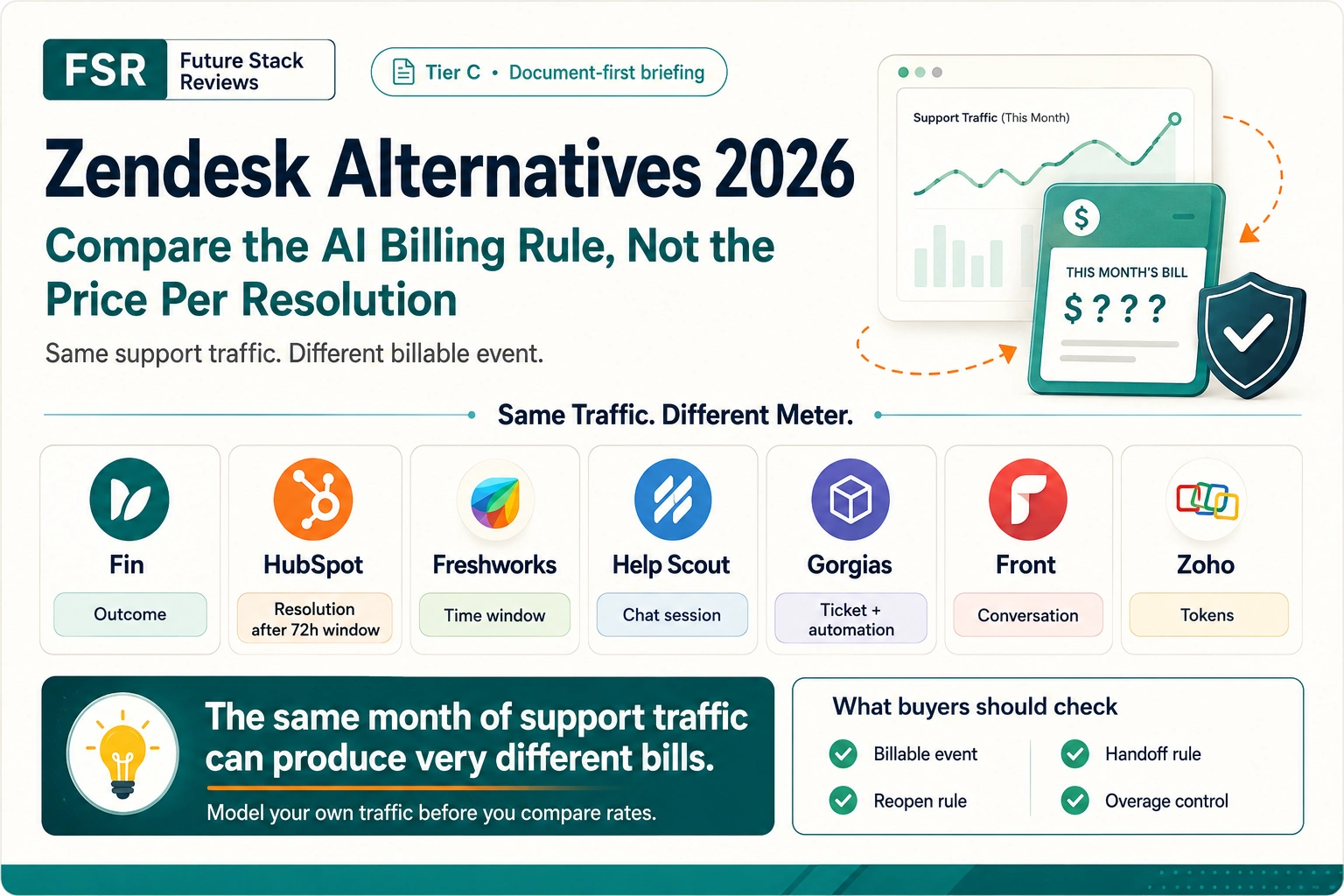
Future Stack Reviews graphic comparing ElevenLabs Creator plan API capacity with website capacity across six products: Sound Effects 1.00×, Music 1.09×, Dubbing 1.09×, Voice Tools 1.51×, Text to Speech 1.82×, and Transcription 16.36×.
ElevenLabs Pricing: The Same Plan Buys 1x to 16x More Through the API

ElevenLabs publishes two capacity tables for the same subscription. Compare them product by product and the gap runs from nothing at all on sound effects to more than sixteen times on transcription. A document-first briefing on credits, API rates, and prepaid terms.