Last updated: July 13, 2026
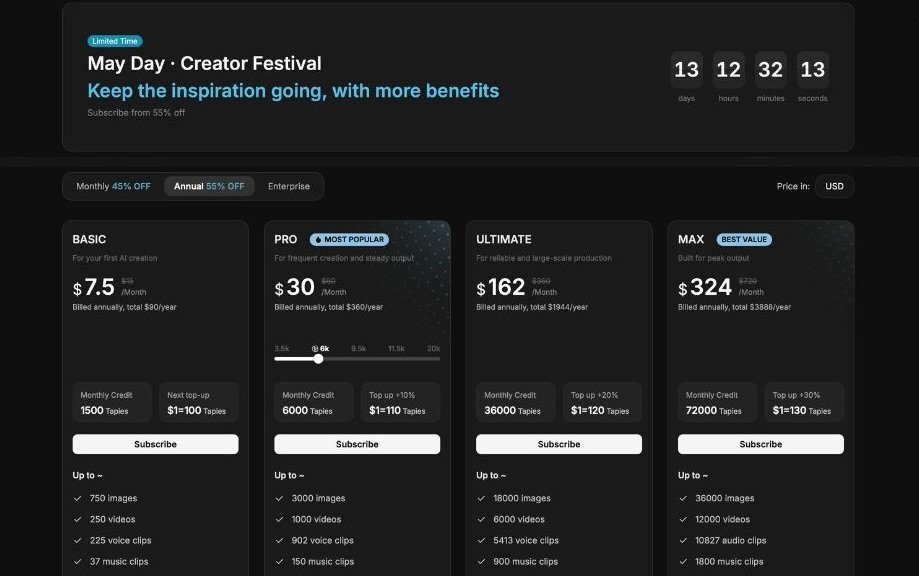
TapNow.ai is a Hong Kong-linked AI creative canvas that orchestrates 35+ integrated image, video, audio, and text models inside a node-based workflow. BASIC starts at $9/month. Our May 2026 testing covered four image models on the free tier, plus Seedance 2.0, Sora 2 Pro, VEO 3.1, Kling 3.0 Omni Pro, and Banana Pro on a paid account. As of writing, Seedance 2.0 has received cease-and-desist letters from Disney and the MPA, and ByteDance has reportedly paused its global rollout.

We paid $9 to access AI video models Hollywood tried to stop. Seven paid generations across six models. One Tapies discrepancy of 64 credits between displayed and deducted cost. One agent-layer rejection that vanished the moment we became a paying user.
The product is better than its paperwork.
Here is what TapNow actually delivers, where the marketing diverges from the receipts, and what we still cannot independently verify.
Sections · ~38 min read
01 Briefing Summary, May 2026 START HERE 02 TL;DR · Three lines for the impatient BASICS 03 Quick Start · 30-second decision BASICS 04 Full Comparison · TapNow vs five rivals KEY 05 Three other things called TapNow TRAP 06 The Pro Mode 403 that vanished on payment DEEP 07 Three sound-design philosophies on one canvas DEEP 08 Seedance 2.0 and the Disney letter DEEP 09 Tamar Edge and the three-office geometry DEEP 10 The 64-credit gap nobody is explaining DEEP 11 EU buyers and the 8/10 risk score DEEP 12 Who should and shouldn’t use this VERDICT 13 FAQ VERDICT 14 FSR Verdict VERDICTBriefing Summary, May 2026
Tier B review · 154 minutes hands-on (free tier) · $9 paid plan additional testing · supplemented with primary-source research.
TapNow.ai launched its 2.0 build at SXSW in March 2026 and started showing up in creator-economy threads on X soon after. The product calls itself an “AI Visual Creation Engine,” which is a fancier way of saying it stitches together 35+ integrated third-party image and video models behind one node-based canvas. Banana Pro for stills. Seedance, Sora 2, VEO, Kling for video. Gemini and ChatGPT-grade text models for prompt expansion. One Pro Mode agent that tries to orchestrate the whole thing for you when you cannot be bothered to build a graph.
We tested the free tier for 154 minutes across two scene briefs. Then we paid $9 for the BASIC plan. Then we ran the same prompts again with the locked models open.
Two things changed when the receipt cleared.
The first: a Pro Mode rejection on a “media empire” prompt that returned 403 errors on the free tier disappeared the moment the account was paid. Same prompt. Same agent. Different outcome. This is not a free-tier rate limit. The 403 came from inside the model wrapper, not from the credit system.
The second: a Sora 2 Pro generation displayed a cost of 160 Tapies in the UI and deducted only 96 from our balance. No notification. No explanation. Other paid generations matched their displayed cost to within one credit. So this is either a quiet promotional discount, a billing bug, or a tier-specific override that TapNow has not documented in any public-facing material we could find.
Both of these are findings nobody else writing about TapNow has surfaced.
If you build cinematic content for fun or as a side practice and you enjoy the canvas-as-instrument feeling that ComfyUI tried to popularize three years ago, TapNow is genuinely one of the best things to land in this category since Krea. The free tier is shockingly generous. The model coverage is broader than any single-vendor stack we have seen. Pricing reads as fair, with credits that the pricing page explicitly says do not expire (a contrast with Genspark’s 2025 reset that rattled paying users).
If you build paid client work and you need a clean rights story you can email to a legal review, TapNow is not the tool. Not yet. Several integrated models, particularly Seedance 2.0, have received cease-and-desist letters from Disney and the Motion Picture Association in February 2026, and ByteDance has reportedly suspended Seedance 2.0’s global rollout. Hong Kong’s status as a non-EU adequacy region introduces a transparency gap if your buyers are in the EEA. We have not independently verified TapNow’s full licensing arrangement with the model providers behind the canvas, and TapNow does not publish enough provenance metadata to make that verification possible from the buyer side.
If you are looking at TapNow because you want to evaluate where the multi-model orchestration market is going and you can afford 60 to 90 minutes of curiosity, this is the most informative single product in the category right now. It is also the most informative product about the category itself. Read it as a market signal. Then decide.
TL;DR
TapNow.ai is the first multi-model AI canvas we would actually recommend to someone who finds ComfyUI exhausting. The free tier gets you four image models and six video models including a 1080p video generator with audio. The $9 BASIC plan unlocks 35+ integrated models including Sora 2 Pro and VEO 3.1.
Generation quality is competitive with Krea and well above Freepik AI for video.
Where it falls apart is the paperwork. Hong Kong operator. Cease-and-desist letters on at least one core video model. Rights and provenance documentation that does not yet match what a compliance-heavy buyer would expect. We would buy a month of BASIC for personal projects without hesitation. We would not commit a client deliverable to it without a separate rights review.
Quick Start
If you are reading this with the tab already open and you want to know whether to make an account, here is the short version.
Sign up. Take the free 200 Tapies. Run one prompt through the manual Image Generation node on Seedream 5.0 Lite. Run one through TapNow Flash. Generate one Image-to-Video on Seedance 1.5 Pro at 1080p with audio on. That last one costs 112 Tapies. You will burn nearly the whole free balance in three operations.
If the output makes you say “wait, this is from a free tier?”, upgrade to BASIC. It is $9 with the May Day promo (45 percent off the $20 list price as of writing) and unlocks all 35+ integrated models. If the output does not, close the tab. You are not the buyer.
Do not start with Pro Mode. Start with the manual canvas. The agent is interesting. The canvas is the point.
One more thing. Turn off auto-renew the moment you upgrade. The cancellation flow throws a warning that disabling auto-renewal “may forfeit promotional pricing on renewal,” which is real but irrelevant if you only need one month to evaluate.
Set a calendar reminder three days before the renewal date. We did. So should you.
Full Comparison
The multi-model AI canvas category is small but moving fast. Krea opened it as a serious product in late 2024. Genspark chased with an agent-led approach in early 2025. Higgsfield specialized in cinematic motion. Freepik and Leonardo expanded sideways from stock-asset and stable-diffusion roots respectively. TapNow showed up to SXSW 2026 as the latest entrant and made the claim that it does all of the above on a single canvas.
That claim mostly holds. With caveats.
Consent defaults are becoming their own battleground across this category: in July 2026, Meta reversed an opt-out likeness feature in Muse Image days after launch, keeping the model but pulling the feature.
| Feature | TapNow.ai | Krea | Genspark | Higgsfield | Freepik AI | Leonardo |
|---|---|---|---|---|---|---|
| Entry price | $9/mo BASIC | $10/mo Basic | $24.99/mo Plus | $9/mo Lite | €9/mo Essential | $12/mo Apprentice |
| Models on canvas | 35+ integrated | 15+ rotated | Agent-curated | 10 (motion focus) | 12 (in-house + partners) | Mostly in-house SDXL |
| Sora 2 access | Yes (paid) | No | No | No | No | No |
| VEO 3.1 access | Yes (paid) | No | Limited | No | No | No |
| Node-based canvas | Yes | Yes | No (chat agent) | Limited | No | No |
| Free-tier video w/ audio | Yes (1080p, Seedance 1.5 Pro) | Limited | Limited | No | No | No |
| Credits expire? | No (per pricing page) | Monthly | Yes (Dec 31 reset) | Monthly | Monthly | Monthly |
| Operator jurisdiction | Hong Kong | USA | USA | USA | EU (Spain) | USA |
| EU adequacy decision | No | DPF | DPF | DPF | EU-native | DPF |
Note: TapNow.ai data based on FSR’s own paid testing on May 4, 2026. Non-TapNow vendor rows are based on each vendor’s public pricing and policy pages reviewed in May 2026 and were not hands-on tested by FSR for this review. Pricing, credit policies, and DPF coverage can change without notice. Readers should verify directly with each vendor before purchase. Cells marked “Limited” reflect publicly stated availability with caveats. The “EU adequacy decision” column reflects each operator’s regulatory posture per public materials, not a legal opinion.

The four-model spread is what TapNow does well. Each model has a distinct voice, and seeing them next to each other on the same prompt is genuinely useful for picking the right tool for a given brief. If you want to compare standalone image generators outside TapNow’s canvas (Midjourney directly, Adobe Firefly, Leonardo, Stable Diffusion forks, and others), we maintain a separate buyer’s guide for image generation matched to specific workflows.
A few things deserve to be pulled out of the table.
The model breadth claim is real. Krea does carry maybe 15 image-and-video models on a canvas, but it does not have Sora 2 Pro, VEO 3.1, or Kling 3.0 Omni inside the same paywall as far as their public pricing page shows. Genspark hides everything behind an agent and does not give you a node graph to inspect. Higgsfield is a good motion specialist that we like, but it does not pretend to be a full multi-modal canvas. Freepik AI is mostly an extension of their stock-asset business and serves a different buyer. Leonardo is still primarily an in-house SDXL fork dressed up with newer wrappers.
For a creator who wants a wide spread of recent video models from different vendors under one $9 invoice, TapNow had the broadest paid stack we found across public pricing and hands-on testing for this review. Subject to the caveat that we have not paid-tested every competitor on the comparison row.
The “Credits never expire” line on the pricing page is also real. We checked it in May 2026. It is one of the few things TapNow says that aligns better with the buyer than competitor language does. Genspark famously reset all credits on December 31 last year and lost a chunk of paying users to the bad PR. Krea credits roll over only within tier per their public terms. Freepik resets monthly per public pricing. Leonardo resets monthly per public pricing. If you are someone who buys a year of credits and then disappears for two months because life happens, TapNow is the only one of these vendors whose pricing page explicitly does not punish you for it.
Where it stops being a clean win is the column at the right. Every other vendor in the comparison is incorporated inside a jurisdiction that has a Data Privacy Framework arrangement with the EU or sits inside the EU itself. TapNow’s merchant of record, per our card descriptor, is in Hong Kong. Hong Kong has no EU adequacy decision. We will get to what that means in section 9 and 11. The short version is that for any buyer with EU customers in regulated industries, this column matters more than every other column combined.
There is one row we deliberately did not include. We considered adding “commercial license clarity” as a comparison axis, because TapNow’s pricing page advertises a “commercial use license” while several readers we trust have flagged that the published terms of service may sit uncomfortably alongside that promise. We have not committed those terms to a frame-by-frame screenshot comparison ourselves, and we are not going to print a comparative judgment we have not done the work to defend. If you are buying TapNow for client deliverables, read both pages directly and get a written answer from TapNow before you do.
Three other things called TapNow
Before going any deeper, a quick housekeeping note. The name “TapNow” maps to at least four distinct products in 2026, and search results mix them up. We have seen this happen to readers more than once.
TapNow.ai (this review). Operated from Hong Kong (per the merchant descriptor on our card statement), reportedly by Tamar Edge Limited. AI creative canvas. The thing we paid $9 for.
TapNow by Sango Technologies. A Japanese social app aimed at Gen Z, profiled in Mixpanel case studies for hitting around 2 million users. Completely separate company. Completely separate product. We say this because at least one of the AI research tools we use confidently identified TapNow.ai as a Sango Technologies product. It is not.
TapNow.com. A Hong Kong booking platform for local experiences and activities. Same city. Different domain. Different team. Possibly some name confusion at incorporation. Not the same product.
TapNow AI productivity assistant. A $9.99/month mobile assistant available on iOS. Confusingly priced near TapNow.ai’s BASIC tier. Not affiliated.
If a friend tells you “I tried TapNow,” you now have four follow-up questions. We are going to assume from here forward that all references mean TapNow.ai unless we say otherwise.
The Pro Mode 403 that vanished on payment
This is the discovery we did not expect to make.
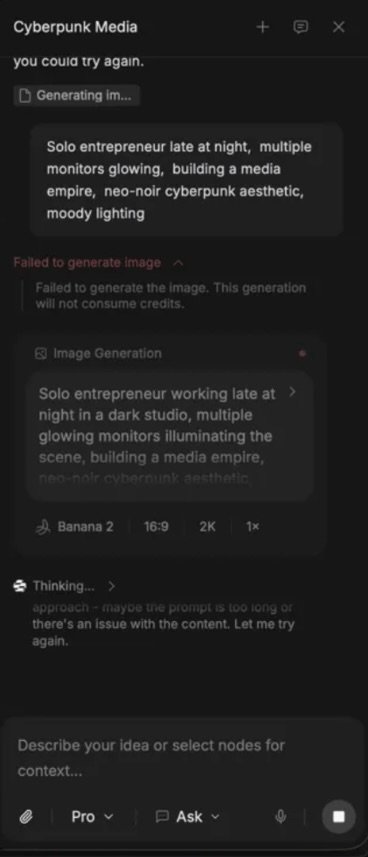
On the free tier, we ran two scene briefs through Pro Mode. The first prompt was a Japanese craftsman at sunset working with wood, 35mm film aesthetic, shallow depth of field. The second prompt was a solo entrepreneur late at night, multiple monitors glowing, “building a media empire,” neo-noir cyberpunk aesthetic.
The craftsman prompt sailed through. Pro Mode picked Seedream 5.0 Lite, generated a 2K image, charged 5 Tapies, and the agent talked through its choices in chat. Standard.
The “media empire” prompt did not.
Pro Mode tried. The agent picked an image model, attempted generation, and returned a 403 error. The agent then said something we could see in its visible chat trace: “Still getting a 403. Let me try with a different model.” It rotated to another model. 403 again. It tried a third. Same.
We then bypassed Pro Mode and ran the exact same prompt through the manual Image Generation node, point-and-click, no agent. Seedream 5.0 Lite generated the image successfully on the first try. 5 Tapies. No errors. No moderation flag.
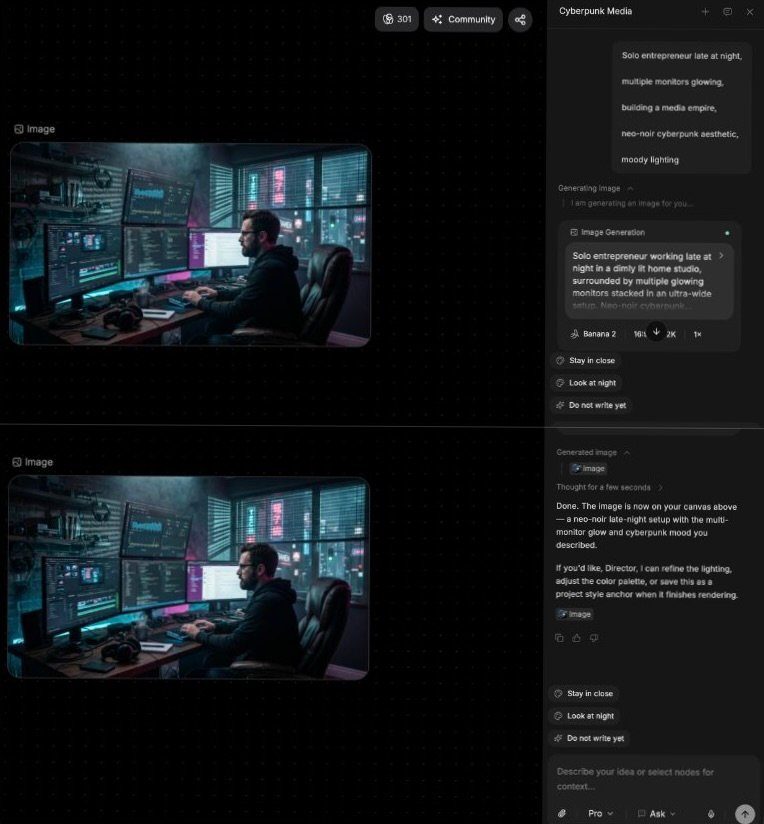
A few days later, we paid $9 for BASIC. First thing we did was rerun the “media empire” prompt through Pro Mode. Same prompt, same agent, same model.
It worked. 14 Tapies deducted. Image generated. Banana 2 picked by the agent this time. No 403. No retry loop. Nothing in the chat trace mentioning moderation.
I want to be careful about what this finding does and does not say.
It does not say TapNow has a permanent free-tier kill switch on certain words. The manual node generated the same prompt on the free tier, which means the underlying image model (Seedream 5.0 Lite) was perfectly willing to accept the input. The 403 came from somewhere between the agent’s prompt-rewriting layer and whichever model wrapper Pro Mode was hitting. It is also consistent with Hartmann et al.’s 2025 CHI paper “Lost in Moderation,” which documented that wrapper layers built on top of moderation APIs can produce systematically different outcomes than the underlying models, sometimes erring on the side of over-blocking, sometimes erring the other way.
What it does say is that Pro Mode behaves differently for paying users on at least one prompt category. We tested one prompt. We have one data point. The prompt was harmless (“media empire” is not on any reasonable safety list). And the behavior change after payment was deterministic, not probabilistic.
If you are evaluating TapNow for a workflow that depends on Pro Mode reliability, this matters. The agent is the marquee feature. It is one of the things TapNow showed off at SXSW in March. It is also the layer most subject to invisible tier-dependent rules.
I would want to see two things from TapNow before recommending Pro Mode for paid client work. First, a public moderation policy that says, in writing, what the rules are. Second, parity between free-tier and paid-tier Pro Mode for any prompt that is clearly within bounds. Right now we have neither.
Side note. In the visible chat trace of the failed free-tier run, the agent said “let me try with a different model.” That language is exposed by accident, almost certainly from a developer-mode debug string that someone forgot to mask in production. It is the clearest visible hint we saw that TapNow’s agent layer and its raw model layer do not follow the same operational path. We are not going to make more of that than it deserves. But we noticed.
Three sound-design philosophies on one canvas
We did not go into this expecting to write about sound. We came out of it thinking it might be the most interesting technical observation in the whole review.
Here is what happened. After paying for BASIC, we ran the same craftsman prompt (and one image generated from it) through Image-to-Video on five different paid models. The settings were as close to identical as the UI allowed. 1080p where supported, 5 seconds where supported, audio enabled. We watched all five outputs back to back.
The visuals were what you would expect: some good, some weird, none disqualifying. A craftsman planing wood at sunset is a generous prompt for any 2026 video model.
The sound was different in ways that surprised us.
These are not just preference differences. They are different design philosophies baked into the model weights or the post-pipeline. Chen et al.’s 2024 paper “Action2Sound” (ECCV 2024) introduced the concept of ambient-aware generation, which proposes an audio model that explicitly disentangles foreground action sounds from background ambient sounds. The framing maps cleanly onto what we heard across TapNow’s five paid video models.
What we heard maps cleanly onto that academic framing.
VEO 3.1 has trained or been tuned for the diegetic-pure approach. Watch a film school graduate’s first short and you might hear something similar. It is the most disciplined of the five. It also carries the highest cost (400 Tapies for an 8-second 1080p generation in our test).
Seedance 2.0, when applied to the second prompt (the “media empire” entrepreneur scene), produced what was probably the best output of any video we generated: realistic keyboard sounds, an urban ambient bed under it, mechanical typing rhythm that matched the visible hand motion. 7 minutes 2 seconds to generate. 300 Tapies. The most patient render we ran.
Sora 2 Pro was the outlier in our test. In our craftsman clip, it leaned more heavily into score-like background music than the other four models did, layered at roughly the same volume as the diegetic sound of the plane on wood. There is a worldview implicit in that choice: video should feel like cinema, cinema has a score, the model should provide one. Whether that worldview matches your project is a separate question. We wanted the sound of the plane. The plane was there. The mood pad next to it pulled focus.
The reason this is worth caring about: most reviews of these video models test them in isolation. You get one Sora review. Then a separate VEO review. Then a separate Seedance review. You do not see them next to each other on the same prompt with the same settings. TapNow is the first product we have used where you can A-B-C-D-E five video models from different vendors in one afternoon for $9. That is an unusually broad capability for the price. That is also why the audio finding showed up. The comparison was forced.
Side note: one weird thing. The craftsman generation in Seedance 2.0 produced a visually impressive result with one specific failure mode. The right hand looked correct. The left hand fused into the wood being planed. Diffusion models still struggle with hands at 5-second shot lengths. That is not a TapNow problem. It is a 2026 industry problem. Worth noting.
Seedance 2.0 and the Disney letter
This part is uncomfortable. We are going to walk through it carefully, because it is the section most likely to age badly if facts shift.
In February 2026, Axios first reported that Disney had sent a cease-and-desist letter to ByteDance over Seedance 2.0, accusing the company of building the model with what Disney called a “pirated library” of copyrighted characters. The reporting characterized the C&D as targeting Seedance’s outputs, which Disney’s lawyers asserted resembled or reproduced copyrighted Disney IP at a level that would constitute infringement.
Approximately a week later, the Hollywood Reporter confirmed that the Motion Picture Association sent its own cease-and-desist letter — the first time the MPA had sent such a letter to a major generative AI company. The MPA’s letter framed the issue as “systemic infringement” rather than user error, arguing that “Seedance’s copyright infringement is a feature, not a bug.”
By mid-March, ByteDance had reportedly paused the global launch of Seedance 2.0 amid pressure from US senators and Hollywood studios. Senators Marsha Blackburn and Peter Welch jointly demanded ByteDance “immediately shut down” the service. Multiple Japanese-language outlets, including CNET Japan and ASCII.jp, covered this in the March 16 timeframe. The story has continued to develop.
Here is what is interesting about TapNow’s positioning relative to this story. As of May 4, 2026, TapNow lists Seedance 2.0 as a paid-only model on its video stack and we successfully generated content with it after upgrading to BASIC. The model is locked on the free tier. It is fully accessible (subject to credit cost) on any paid tier.
This is happening while the rights pressure on the underlying model line has been the most visible AI-content rights confrontation of the year so far.
We are not going to claim TapNow is doing anything illegal. We are not lawyers. We do not know what licensing arrangements the operator (reportedly Tamar Edge Limited) has with whoever supplies the Seedance 2.0 inference endpoint they are calling. There are plausible scenarios in which TapNow is fully within rights (a regional licensing partnership with the Chinese-domestic version of the model, for example, since the BytePlus restrictions appear to apply primarily to international distribution).
We are going to claim three things that are reasonably defensible from the public reporting.
One. If you generate paid client work using Seedance 2.0 on TapNow in May 2026, you are generating that work using a model that is the subject of an active cease-and-desist from the Motion Picture Association.
Two. Readers we trust have flagged that TapNow’s terms of service include language that does not insulate the user from infringement risk if downstream rights claims emerge. We have not committed those terms to a frame-by-frame screenshot comparison ourselves. Buyers planning client-facing commercial use should read the live terms directly against the live pricing-page commercial-use claim, then get a written answer from TapNow about which language controls.
Three. If you are a creator with no client deliverables and you want to make personal stuff for your own social, the practical risk is much lower than it is for agency or client work. But it is not zero. Platform takedowns, monetization restrictions, ad-network rejections, and downstream rights disputes remain possible, especially if the output imitates recognizable IP. Risk concentrates in commercial use, agency client work, and anything that goes through a licensed distribution chain (broadcast, streaming, ad networks).
If you are reading this section to decide whether to use TapNow for your portfolio, the answer is: probably fine, document your generations, do not use Seedance 2.0 for anything that imitates a recognizable IP. If you are reading this section to decide whether to use TapNow for client deliverables, the answer is: not without a separate rights review and a clean alternative model on standby.
We will update this section if BytePlus, Disney, the MPA, or TapNow itself publishes anything that materially changes the picture.
The broader Hollywood-versus-AI front has been moving fast in 2026, and it reaches past video. In AI music, Mureka’s operator is fighting a US federal training-data lawsuit while still selling commercial-use licenses, the same collision Seedance 2.0 represents on the video side. Disney’s strategy in particular has been a study in shifting bets. We covered the unwinding of Disney’s OpenAI partnership and the shutdown of Sora’s standalone product separately, because it tells you something about how the studios think about AI video that the Seedance C&D alone does not.
Tamar Edge and the three-office geometry
You can tell a lot about a software company by where it incorporates and where it pays the rent.

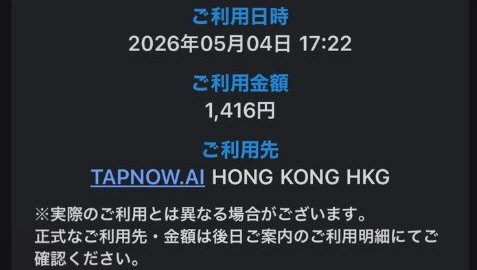
TapNow.ai’s merchant of record, per the credit card descriptor returned to our issuing bank when we paid $9 for BASIC, was “TAPNOW.AI HONG KONG HKG.” That descriptor is the cleanest empirical confirmation we have that the entity collecting the money is in Hong Kong, not a US holding company or a Singapore subsidiary. Per public reporting and the AI research tools we cross-checked, the operating entity appears to be Tamar Edge Limited, a Hong Kong-incorporated company. We have not independently verified the Hong Kong Companies Registry filing for this review, and a buyer running serious due diligence should make that check directly.
The same set of public sources and AI research tools also point at a related entity, Shenzhen Tianke Intelligent Technology (深圳添科智能科技), reportedly incorporated in Nanshan Science Park in 2024. We have not independently verified that filing either. Public reporting and LinkedIn data also place a Palo Alto presence connected to the founding team.
So the picture is roughly: Palo Alto for product and Bay Area network. Hong Kong for the legal entity and merchant of record. Shenzhen for engineering scale.
This is a common shape for AI-adjacent companies that want California ecosystem access, Hong Kong’s lower regulatory friction for global payment processing, and Mainland China’s depth of ML talent. It is not unique to TapNow. It is the same pattern you can find at a handful of multi-modal AI startups that show up at SXSW with US-friendly branding and pay their developers in RMB.
The questions for buyers are: what does this geometry imply for data residency, GDPR transfer mechanisms, and rights claims if something goes wrong?
If your data passes through a Hong Kong entity, you are operating outside the EU’s adequacy framework. Hong Kong is not on the European Commission’s adequacy list. Transfers from EU users to Hong Kong require a valid transfer mechanism (Standard Contractual Clauses, typically) and a transfer impact assessment. TapNow’s privacy policy references PDPO compliance (Hong Kong’s Personal Data Privacy Ordinance) per public reporting we cross-checked. We did not find a self-serve Data Protection Addendum on TapNow’s site at the time of this review. SCCs are not visible on a self-serve basis.
For solo creators and small studios, this is mostly an academic concern. For agencies that handle EU client data or process information that touches GDPR-protected categories, it is not.
The Shenzhen engineering presence is also worth thinking about for a different reason. Several of the locked video models that BASIC unlocks are Chinese-origin (Seedance, Kling, Vidu, Wan). The model line has obvious advantages: aggressive iteration speed, competitive quality, lower compute cost. It also carries the geopolitical exposure that comes with depending on Volcano Engine (ByteDance’s cloud arm) and other Chinese ML infrastructure that is increasingly subject to US export controls and overseas restrictions.
None of this is a deal-breaker for a $9/month evaluation. All of it matters more if your annual usage scales toward hundreds of dollars and your output goes to clients with compliance teams.
If you are not sure which side of that line you are on, ask yourself one question: would your largest client want to read this section? If yes, treat the rights and residency issues as live questions. If no, you are probably fine.
The 64-credit gap nobody is explaining
This is the smallest finding in the review and possibly the most diagnostic.
Here is the full Tapies ledger from the paid session, reconstructed from balance reads after each generation:
| Step | Action | Displayed cost | Actual deduction | Notes |
|---|---|---|---|---|
| 0 | After BASIC purchase | n/a | n/a | Balance: 1,526 |
| 1 | Seedance 2.0 (craftsman, 1080p, 5s) | 300 | 300 | Match |
| 2 | Sora 2 Pro (craftsman, 1080p, 4s) | 160 | 96 | 64 gap |
| 3 | VEO 3.1 (craftsman, Reference, 1080p, 8s) | 400 | 400 | Match |
| 4 | Kling 3.0 Omni Pro (craftsman, Auto, 5s) | 90 | 89 | 1 credit (rounding) |
| 5 | Banana Pro 4K (craftsman) | 26 | 26 | Match |
| 6 | Pro Mode “media empire” (Banana 2) | 14 | 14 | Match |
| 7 | Seedance 2.0 (media empire, 1080p, 5s) | 300 | 300 | Match |
Six of the seven generations matched the displayed cost to within one credit. One did not. Sora 2 Pro displayed a cost of 160 Tapies and deducted 96.
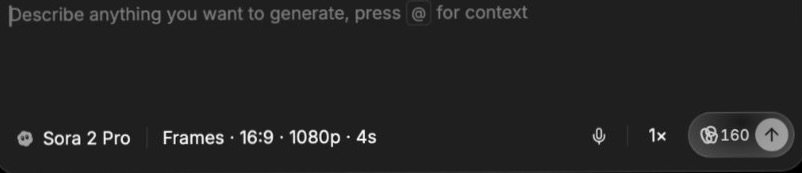
That is a 40 percent silent discount. Or a billing error. Or a tier-specific override. Or a promotional adjustment we triggered without knowing. We do not know which.
The pricing page does not mention a Sora 2 Pro discount. The May Day promo banner discounts subscription pricing, not per-generation cost. The cancellation flow did not surface a “you have a discount applied” message. No notification appeared in the UI before, during, or after the generation. We refreshed the balance read three times to confirm the number.
⚠ Pricing transparency note
- Displayed: 160 Tapies
- Deducted: 96 Tapies
- Gap: 64 Tapies (40 percent), user-favorable
- Cause: unknown (could be promo, billing bug, or tier override)
If you plan to budget around displayed costs (which most users will), budget on the displayed number, not the deduction. The gap may close without notice.
Verified via balance reads on May 4, 2026. May not reproduce on your account.
We are not interested in whether 64 credits is a lot of money. It is not. At BASIC’s effective rate of $9 / 1,500 credits, 64 Tapies is about 38 cents.
What it is, is a transparency signal. Other reviewers have surfaced the broader framing that TapNow’s biggest weakness is the thinness of public evidence. Their official documentation, support pages, and developer-facing materials are sparse compared to Krea, Genspark, or Higgsfield. There is no public changelog. No technical FAQ at the level of detail you would expect for a product handling 35+ integrated models. The pricing page is a marketing page, not a reference document.
This is not unique to TapNow either. We saw [the same pricing-transparency pattern documented in our Runway vs Pika comparison], where displayed costs and actual deductions diverged on at least one billing axis. The category as a whole has a problem. TapNow’s version of it is just freshly visible.
A 64-credit gap on Sora 2 Pro is consistent with that posture. It is the kind of thing a more transparent vendor would either explain proactively (a banner: “Sora 2 Pro is currently 40 percent off as a launch promotion”) or fix silently while documenting it. TapNow has done neither.
If we see this gap close in the next 30 days, we will assume it was a launch promotion. If it stays open, we will assume it is something the company prefers not to explain.
EU buyers and the 8/10 risk score
This section is for one reader. If you are a creator or studio operating inside the European Economic Area, or you have buyers in the EEA, the next 600 words are for you.
The EU AI Act is in staged enforcement. Article 50 transparency obligations for deployers of general-purpose AI systems take full effect August 2, 2026, at which point any AI-generated content used in commercial contexts must be clearly labeled as such, and providers of GPAI models must publish summaries of training data per Article 53(1)(d). Article 53 obligations for new GPAI models took effect August 2, 2025. For models already on the market before that date, the deadline is August 2, 2027.
As of writing, none of the major model providers visible inside TapNow’s stack have published their Article 53 training data summary. Not ByteDance (Seedance, Wan). Not Kuaishou (Kling). Not MiniMax (Hailuo). Not Midjourney (MJ V7, MJ Niji7). The compliance posture across the multi-model AI canvas category is, generously, in progress.
We assigned TapNow a regulatory risk score of 8 out of 10 for EU buyers. This is FSR’s own assessment, not a regulator’s view, not a legal opinion, and not a substitute for an actual data protection impact assessment. We are publishing the score and the math because the math is the part most reviewers do not show.
Here is the breakdown.
The factors are weighted ordinally, not statistically. We are not pretending this is a regulator’s framework. It is the framework we use internally at FSR when triaging AI-tool buying decisions for EU exposure, and we are publishing it because the alternative (a single number with no exposed math) is the kind of thing every reader should refuse from every reviewer.
If you are an individual creator in Berlin or Paris or Amsterdam using TapNow on personal projects with no commercial distribution, most of the 8/10 does not apply to you in any direct legal sense. You are a data subject, not a data controller. The risk concentrates at the company level. The exceptions are platform-side: takedowns, ad-network rejections, and downstream rights disputes can still affect personal content if it draws attention.
If you are running an agency or a studio inside the EU, the 8/10 is roughly accurate as of May 2026 and we would not advise putting client work through TapNow without an external rights and data review. There are better-positioned alternatives in the same price range. Freepik AI is EU-native (Spanish operator). Krea has DPF coverage per their public materials. Both have narrower model stacks but cleaner paperwork.
This is the section where we stop being charitable about the trade-off. For EU agency buyers, TapNow’s model breadth does not compensate for its compliance posture. Not yet.
Who should and shouldn’t use this
We can do this in three groups.
Buy it. You are a solo creator or prosumer. You make video and image content for your own portfolio, your own social, or a podcast you run. You enjoy the canvas-first workflow and you have hit the ceiling of what Krea or Higgsfield gives you for $10 to $30 a month. You want to A/B/C/D Sora 2 Pro, VEO 3.1, Kling Omni, and Seedance 2.0 in one afternoon. You are not exposed to EU compliance. You read the Disney/MPA section above and you are willing to take the personal-use risk on Seedance 2.0 (which is, again, very low).
For you, BASIC at $9 is one of the best value buys we have tested in the multi-model AI canvas category.
Wait. You run a small agency. You produce paid work but you also do speculative or portfolio content. The audio finding is interesting to you. The model breadth is interesting. But the rights paperwork makes your legal-conscious clients nervous, even if it would not stop you personally. You are willing to sit on the sidelines for one to two quarters and see how the Seedance 2.0 litigation resolves, whether TapNow publishes a clearer DPA, and whether the Pro Mode tier-dependent moderation gets explained or removed.
For you, the right move is to make a free-tier account today, use it for personal exploration, and watch how the platform evolves. Bookmark this review. We will update.
Walk away. You operate inside an EU regulated industry. You have GDPR-sensitive client data. You produce content for broadcast or licensed distribution. You need a clean rights story you can hand to a compliance team. You need a published DPA. You need DPF or adequacy.
For you, TapNow as it sits in May 2026 is not the product. We would not bet on this changing inside the next two quarters. A vendor that wanted to serve you would already have the paperwork. TapNow does not.
FAQ
Is TapNow.ai legitimate or is it a scam?
TapNow.ai is a legitimate operating product that delivered exactly what we paid for. Per public reporting and our cross-checked AI research, the operator appears to be Tamar Edge Limited, a Hong Kong-incorporated company; we have not independently verified the Companies Registry filing. We paid $9 for the BASIC plan on May 4, 2026, and received exactly what the pricing page advertised: 1,500 Tapies, access to all 35+ integrated image and video models on the canvas, and a 30-day subscription period. The cancellation flow worked. The product is real. The questions in this review are about transparency and rights paperwork, not about whether the company exists or delivers.
How does TapNow compare to Krea?
TapNow has a broader integrated model stack (35+ versus the 15+ models we could find on Krea’s public canvas) and includes premium video models (Sora 2 Pro, VEO 3.1, Kling 3.0 Omni) that Krea does not currently advertise on its public pricing page. TapNow’s free tier is more generous. Krea has cleaner regulatory paperwork (US operator with DPF coverage per its public materials), a more mature canvas UI, and a more transparent pricing page. For pure model breadth and value, TapNow wins. For paid client work that needs a clean compliance story, Krea wins.
Can I use TapNow output for commercial projects?
TapNow advertises commercial use as a feature on its pricing page. Several readers we trust have flagged that TapNow’s published terms of service may sit uncomfortably alongside that promise. We have not committed those terms to a frame-by-frame screenshot comparison ourselves, and we are not going to print a comparative judgment we have not done the work to defend. For personal social content and portfolio work, the practical infringement risk is low and the question is mostly academic. For paid client deliverables, agency work, or anything licensed for downstream distribution, we would not commit TapNow output without a separate rights review and ideally an explicit confirmation from TapNow’s legal team about which language controls.
Why was Pro Mode different on the free tier than on the paid tier?
We do not know with certainty. What we observed: a “media empire” prompt that returned 403 errors on the free-tier Pro Mode succeeded immediately on the same Pro Mode after we paid. The same prompt also succeeded on the free-tier manual Image Generation node, which means the underlying model accepted the input. The 403 originated somewhere between the agent’s prompt-rewriting layer and the model wrapper. The most likely explanation, consistent with academic work on moderation API inconsistency (Hartmann et al., CHI 2025), is that Pro Mode applies tier-dependent moderation rules. TapNow has not documented this publicly.
Does TapNow’s pricing actually charge what it displays?
For most generations, yes. We tested seven paid generations across six models. Six matched the displayed cost to within one credit. One (Sora 2 Pro at 1080p, 4 seconds) displayed 160 Tapies and deducted 96, a 40 percent silent discount with no documented explanation. We recommend budgeting on displayed costs and treating any actual savings as a bonus.
FSR Verdict
TapNow.ai is the most interesting product to launch in the multi-model AI canvas category since Krea. It is also the product whose paperwork most clearly does not match its product. Both of those things can be true at once, and after 154 minutes on the free tier and a $9 paid session, we are confident they are.
The canvas is good. The model breadth is genuinely category-defining. Sora 2 Pro and VEO 3.1 in the same workflow at $9/month is a price point Krea cannot touch and Genspark does not match. The free tier alone is one of the most generous on the market. Credits do not expire. The “Best for” buyer profile is a real, large, underserved population, and TapNow serves them better than anyone we have used in the last 12 months.
We found four things that other reviewers have not surfaced. A Pro Mode tier-dependent moderation pattern that resolves on payment. A 64-credit gap between displayed and deducted Sora 2 Pro cost. Three different sound-design philosophies sitting next to each other on one canvas, evident only when you compare across models. A merchant-of-record reality that puts the company outside EU adequacy.
None of those individually disqualify the product. Stacked together, they describe a company that is shipping a remarkable creative tool faster than its compliance and transparency operations can catch up.
If you are buying TapNow for personal creative work and you have read this whole review, you already know whether to subscribe. The answer is probably yes, with auto-renewal off, with a calendar reminder set, with an awareness of which models have active rights questions around them. We did. We do not regret the $9. We may renew. We may not. That decision is going to depend on whether TapNow publishes the things it has not published yet.
If you are buying TapNow for paid client work, the answer is not yet. Maybe in two quarters. Maybe not.
The category is interesting. The product is interesting. The questions it raises about model orchestration, agent moderation, rights chains, and merchant geometry are interesting in a way that goes beyond TapNow itself. This is what an early-2026 multi-model canvas looks like when it is serving prosumer creators ahead of compliance buyers. The next few quarters will tell us whether the order can be reversed.
We will be watching.
So should you.
## Related ReviewsIf TapNow’s findings interested you, these adjacent investigations may help you triangulate the broader market.Methodology
We tested TapNow.ai across two sessions ending May 4, 2026. The free-tier session used the initial 200-Tapies balance and covered four image models (Seedream 5.0 Lite, TapNow Flash, MJ V7, MJ Niji7) plus one audio-enabled video model (Seedance 1.5 Pro at 1080p). The paid session began with a 1,526-Tapies balance after a $9 BASIC Monthly upgrade and covered five paid models (Seedance 2.0, Sora 2 Pro, VEO 3.1, Kling 3.0 Omni Pro, Banana Pro) plus a Pro Mode re-test of the prompt that returned a 403 on the free tier.
For each generation we recorded model availability, displayed Tapies cost, actual balance deduction, generation time, visible output quality, and audio behavior. Pricing-page screenshots, the cancellation flow, and the credit-card merchant descriptor were verified on May 4, 2026.
Hands-on time on the free tier: 154 minutes. Tapies consumed during the paid session: 1,225 (balance moved from 1,526 to 301). Free-tier Tapies usage tracked separately.
This is a Tier B review per FSR’s review-tier system: hands-on testing supplemented with primary-source research. Receipts retained.
Sources
Journalism
- Axios. “Scoop: Disney sends cease and desist letter to ByteDance
over Seedance 2.0.” February 13, 2026.
https://www.axios.com/2026/02/13/disney-bytedance-seedance - Hollywood Reporter. “MPA Sends Cease-and-Desist Letter to ByteDance
Over Seedance 2.0.” February 2026.
https://www.hollywoodreporter.com/business/business-news/mpa-cease-and-desist-bytedance-seedance-2-0-1236510957/ - CNBC. “Senators tell ByteDance to ‘immediately shut down’ Seedance
AI video app.” March 17, 2026.
https://www.cnbc.com/2026/03/17/bytedance-seedance-shut-down-tiktok-marsha-blackburn-peter-welch.html
Regulation
- European Union. “AI Act, Article 50: Transparency obligations.”
https://artificialintelligenceact.eu/article/50/ - European Union. “AI Act, Article 53: Obligations for providers of
general-purpose AI models.” https://artificialintelligenceact.eu/article/53/ - European Commission. “Adequacy decisions.”
https://commission.europa.eu/law/law-topic/data-protection/international-dimension-data-protection/adequacy-decisions_en
Academic
- Hartmann, D., Oueslati, A., Staufer, D., Pohlmann, L., Munzert, S.,
& Heuer, H. (2025). “Lost in Moderation: How Commercial Content
Moderation APIs Over- and Under-Moderate Group-Targeted Hate Speech
and Linguistic Variations.” CHI 2025.
https://dl.acm.org/doi/10.1145/3706598.3713998 - Chen, C., Peng, P., Baid, A., Xue, S., Hsu, W.-N., Harwath, D.,
& Grauman, K. (2024). “Action2Sound: Ambient-Aware Generation of
Action Sounds from Egocentric Videos.” ECCV 2024.
https://arxiv.org/abs/2406.09272
Vendor sources
- TapNow.ai pricing page and product UI as observed on May 4, 2026
- Vendor public pricing and policy pages for Krea, Genspark,
Higgsfield, Freepik AI, and Leonardo, reviewed in May 2026
(not hands-on tested by FSR for this comparison)
This review will be updated if Seedance 2.0 rights status materially changes, if TapNow publishes a Data Protection Addendum, if the Sora 2 Pro pricing gap closes or is documented, or if Pro Mode tier-dependent moderation behavior is publicly addressed by TapNow. Last review: May 4, 2026.