Last updated: June 5, 2026
Mureka is an AI music generator operated by Skywork AI Pte. Ltd., a Singapore company. It writes songs from a prompt, exports stems and MIDI, builds music videos, and issues an ownership certificate for what you make. On a paid Premier account, FSR did not find it best read as a flat $27 monthly subscription. It behaved like a metered production system, billed in an internal currency called Gold.
Here is the number that changed how I read the whole product.
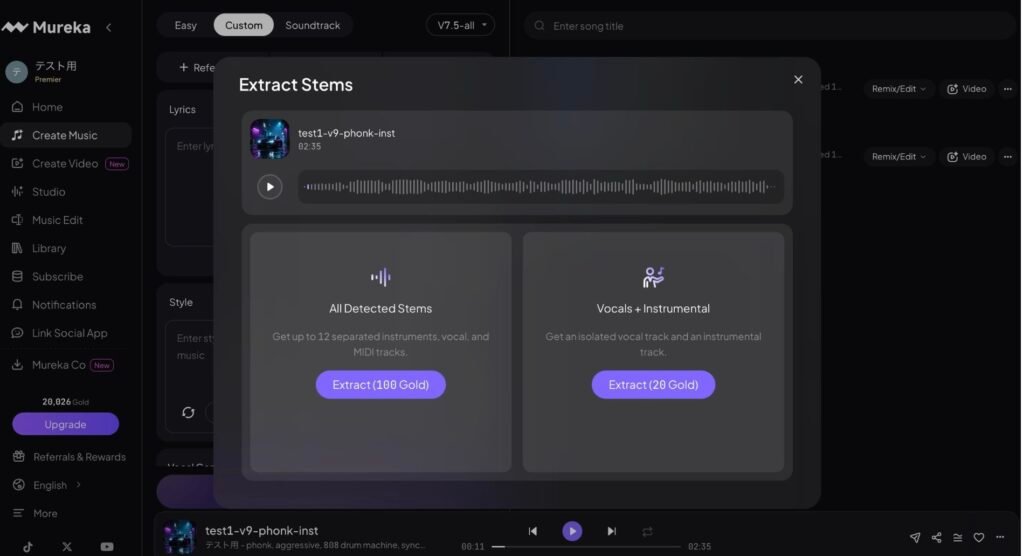
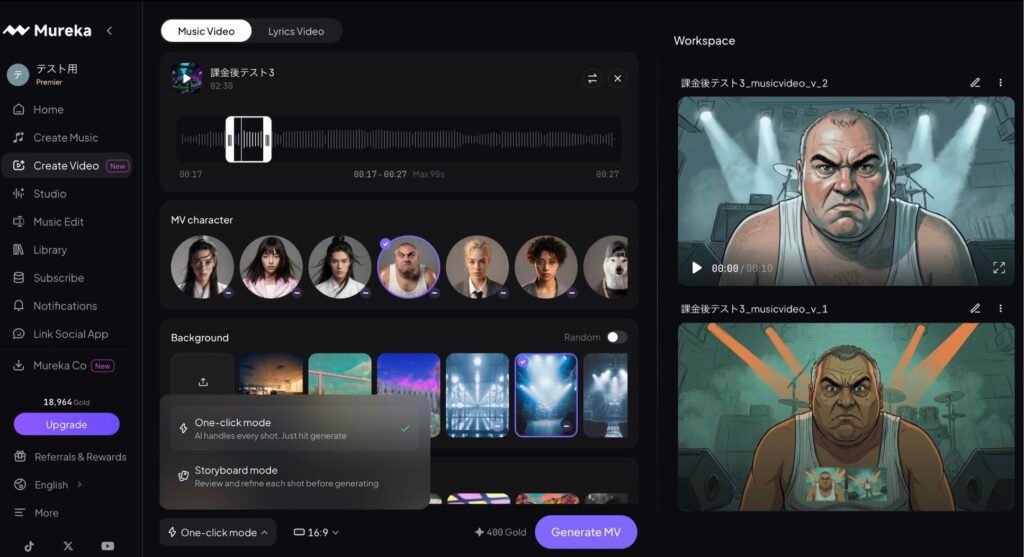
One V9 generation cost 24 Gold and returned two songs. Pulling stems and MIDI out of a single track cost 100 Gold. One music video cost 400 Gold.
The gap between the sticker price and what real output costs is the review.
This review is based on hands-on testing of a paid Mureka Premier account, primary-source review of Mureka’s published policies, and multi-source research. Gold balances were recorded before and after each action. It is not a 30-day production deployment test, and Mureka Co (the separate desktop agent) was not fully sandbox-tested for this article. Where FSR could not confirm something firsthand, the text says so.
Affiliate disclosure: FSR may earn a commission if you subscribe to Mureka through links on this page, at no extra cost to you. The verdict is independent and based on FSR’s own hands-on testing of a paid Premier account.
Briefing summary — June 2026
Mureka is more capable than most quick reviews give it credit for, and more conditional than its pricing page suggests. Two paid tiers matter. Pro at $9 a month is a real finished-song tier with a commercial license. Premier at $27 a month unlocks the production-export layer: WAV files, stems, MIDI, the Studio editor, and voice cloning.
The catch sits underneath both. Almost every meaningful action spends Gold, the internal credit Mureka issues with each plan. Songs cost 10 to 20 Gold each. Stem and MIDI extraction costs 100 Gold per track. A music video costs 400. So the question for a buyer is not “can I afford $27.” It is “how fast does my actual workflow drain 20,000 Gold.”
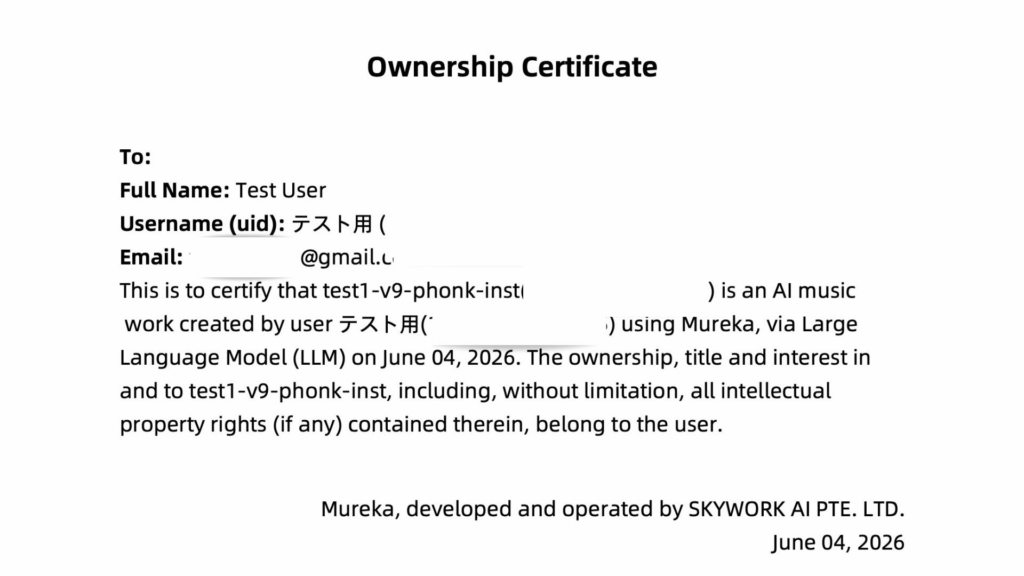
There are three more facts a buyer should carry in before paying. Mureka’s exported audio came out clean in our test, with no audible tag. Its exported music video carried a visible “Made with Mureka” watermark, even on Premier. And the ownership certificate Mureka issues assigns “intellectual property rights (if any),” while a US federal lawsuit over Mureka’s training data is currently pending. No liability has been decided.
That combination is the article. The rest is receipts.
TL;DR
Mureka is worth testing, and the $27 Premier price is only the visible layer. Pro ($9) is a genuine finished-song tier with a commercial license. Premier ($27) adds production exports: WAV, stems, MIDI, Studio, and voice cloning.
But stems, MIDI, video, and Studio regenerations all run through Gold. A Premier plan ships 20,000 Gold a month, and a production workflow burns that far faster than raw song generation does. In our test, downloaded audio was clean; exported music video carried a visible Mureka watermark even on Premier.
Commercial buyers should read the ownership language and the pending litigation before treating Mureka output as clean, exclusive music inventory. Hobbyists and fast-output creators have much less to worry about.
Pricing and the Gold meter
Start with the part Mureka’s own pricing page is honest about, then the part it isn’t.
The plans are flat and cheap on paper. Pro is $9 a month and ships 5,000 Gold a month. Premier is $27 a month and ships 20,000 Gold a month. Annual billing drops the headline rate (Pro to roughly $7.17 a month, Premier to roughly $21.59), which matters later when we get to cancellation.
So far this reads like any subscription. It isn’t one. Mureka’s pricing page sells plans. The product itself meters actions.
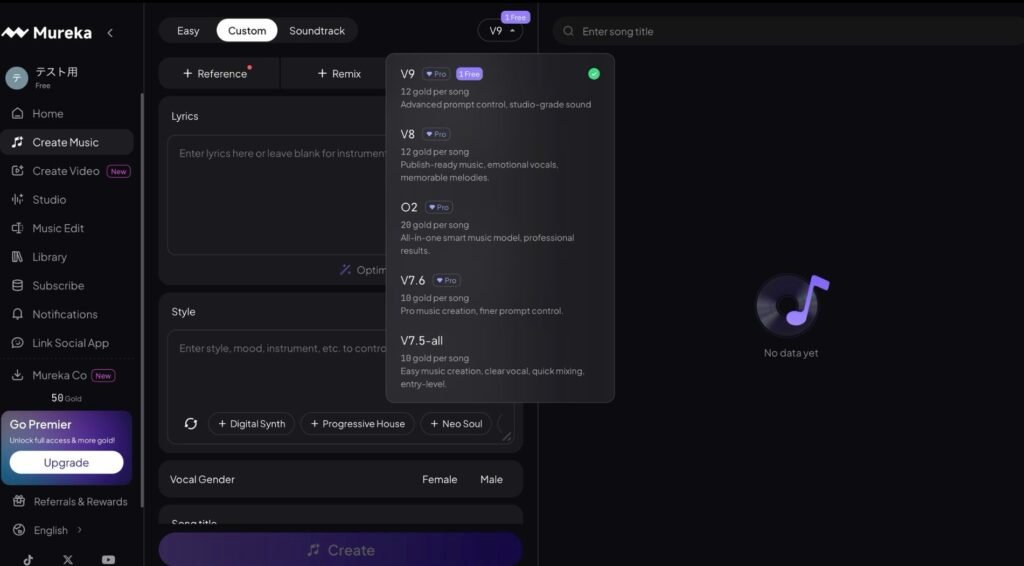
Here is what each action cost in FSR’s testing, recorded off the Gold balance before and after.
| Action | Gold cost (observed) | Why it matters |
|---|---|---|
| Song, V7.5 / V7.6 | 10 / song | Cheapest song path |
| Song, V8 / V9 | 12 / song | Flagship, default-feeling path |
| Song, O2 | 20 / song | Higher-cost quality path |
| One generation | returns 2 songs | So a V9 generation is 24 Gold for the pair |
| Stem + MIDI extraction | 100 / track | The production-asset toll |
| Studio “Replace” (regenerate) | 10 | Editing inside Studio still spends Gold |
| Music video | 400 | Video drains the balance fast |
| Lyric video | 40 to 920 (observed range) | Variable, and we could not pin the logic |
Now do the division Mureka’s marketing won’t. A Premier plan’s 20,000 Gold is not “20,000 of one thing.” Every action competes for the same pool. Spend it on one workflow and you can’t spend it on another.
| If you only did this | Approx. monthly ceiling |
|---|---|
| Cheapest 10-Gold songs | ~2,000 songs |
| V8 / V9 songs (12 Gold) | ~1,666 songs |
| O2 songs (20 Gold) | ~1,000 songs |
| Stem + MIDI extractions (100 Gold) | ~200 tracks |
| Music videos (400 Gold) | ~50 videos |
These are illustrative ceilings, not a usage forecast. A real workflow mixes them, which is the point. Generate a song, like it, pull its stems and MIDI, build a video around it, and that single finished asset has cost you 24 + 100 + 400, around 524 Gold, before any retries. The headline “2,000 songs” feeling collapses the moment you produce anything finished.
At the absolute cheapest end (Premier monthly rate, 10-Gold songs, full utilization, nothing wasted) the per-song floor lands near 1.35 cents. Treat that as a best-case floor, not a real production cost. Nobody’s real workflow is that lean.
A note on topping up. Mureka does sell additional Gold when you run out. FSR has not confirmed the current top-up price or expiry rules directly at Mureka’s purchase page, so any figure you see quoted elsewhere, including ours in earlier notes, should be treated as unverified until checked against the live page. That is the last hole in the hidden-cost map, and it is an open one.
The developer’s escape hatch
If you are a developer or a high-volume builder, the Gold model is the wrong economics for you, and the alternative is not subtle.
The stem separation Mureka charges 100 Gold for is the same job Demucs, Meta’s open-source separator, does for free on your own machine. Audio-to-MIDI is what Spotify’s Basic Pitch does, also free. Voice cloning has free open-source options. Open generation models exist that run for cents per song on serverless compute rather than per-action credits.
The exact per-song figures for the newest open models move quickly and need source verification before anyone quotes them, so FSR is not putting a single number on the floor. The direction is the finding: a self-hosted stack collapses the marginal cost of these production actions by something on the order of 90 to 99 percent versus paying Mureka in Gold. You trade convenience and a polished UI for control and near-zero unit cost. For a builder shipping volume, that trade is usually obvious.
For everyone who is not a developer, the convenience is real and the UI is good. Just go in knowing what you are renting.
Credit-metered media tools share this exact shape, and InVideo’s plans are a clean example of the trap.
Free vs Pro vs Premier, and the mistake we’re correcting
Let me get our own record straight first, because FSR covered Mureka before and got the plan split wrong.
The earlier version of this review framed Pro as little more than “MP3 plus a commercial license” and pushed readers toward Premier or a competitor. That was wrong, and it contradicted facts elsewhere in our own body copy. Pro is not a stripped tier. It is a real finished-song tier.
Here is the accurate split.
| Tier | What it really is | What you get |
|---|---|---|
| Free | Audition only | Gold expires in 24 hours, downloads blocked. You can hear the product, not keep it. |
| Pro, $9/mo | Finished-song tier | All models, MP3 export, commercial license, remix, reference tracks, extend, edit, TTS, priority queue, 500 songs, 5,000 Gold/mo. |
| Premier, $27/mo | Production-export layer | Everything in Pro, plus WAV, stems, MIDI, the Studio editor, and voice cloning. 20,000 Gold/mo. |
So the honest framing is not “Pro is useless, buy Premier.” It is this: Pro makes finished songs you can legally use. Premier turns those songs into production assets you can edit and re-export. If you only need a finished track to post, Pro is genuinely enough. If you need the multitrack underneath, you are on Premier, and you are spending Gold to get it out.
The plan table describes entitlement. The Gold balance describes use. Those are two different things, and conflating them is how a $27 plan ends up feeling expensive.
Stems, MIDI, and Studio: what’s free, what isn’t
This is where Premier earns its premium, and where the metering gets subtle enough that most reviews miss it.
Premier unlocks the production layer. It does not make every production action free.
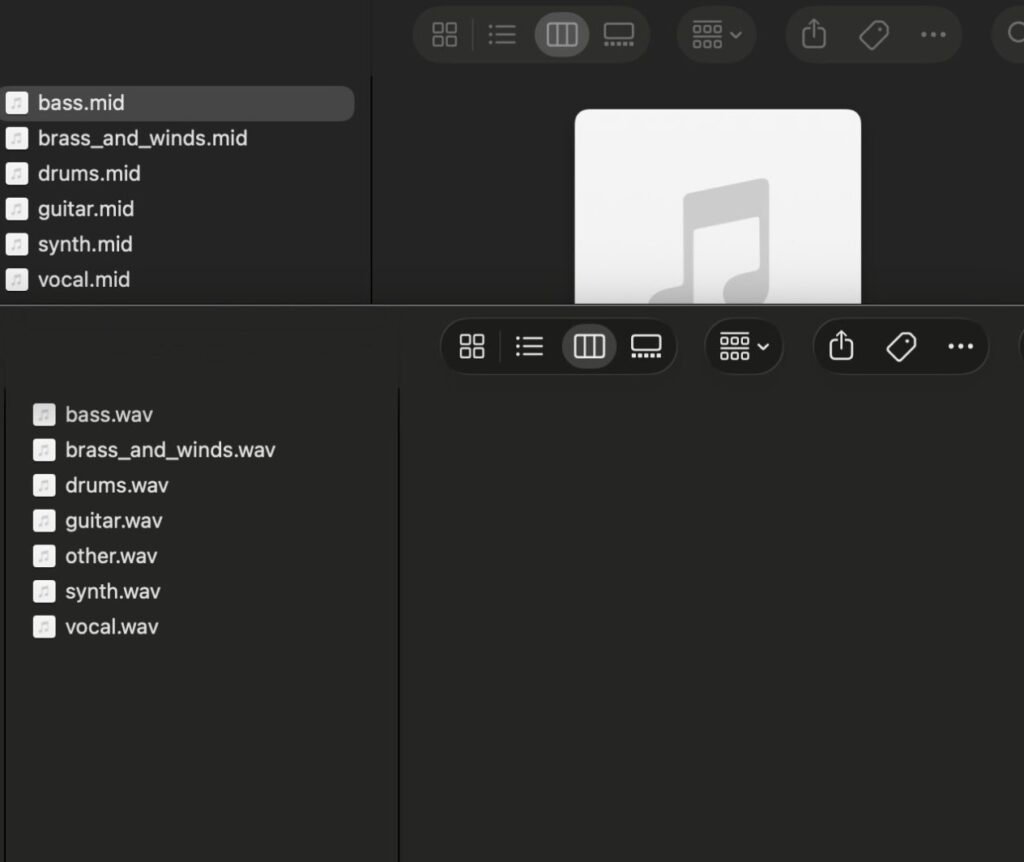
Stem and MIDI extraction is the clearest example. The feature is included with Premier. The act of extracting still costs 100 Gold per track. The MIDI is real, by the way, not a token gesture, which I checked by opening it.
Studio is the part that surprised me in a good way. Exporting out of Studio is free. I pulled a full multitrack package down, a 214MB zip, and the WAV, the stems, the MIDI, the MP3, and the PDF commercial license inside it were all re-downloadable at zero Gold. You are not charged again to grab what you already made.
What does cost you inside Studio is regeneration. The “Replace” action, where you ask Mureka to redo a part, runs 10 Gold each time. So the editor is free to export from and metered to iterate in. If you are the kind of producer who replaces a section fifteen times to get it right, that is 150 Gold you didn’t plan for.
The mental model that held up across testing: unlock versus use. Premier unlocks the production surface. Gold governs how much you use it.
Workflow reality: the instrumental leak, the watermark, the video
Three things showed up in hands-on use that you will not find on the pricing page.
“Instrumental” did not mean voice-free
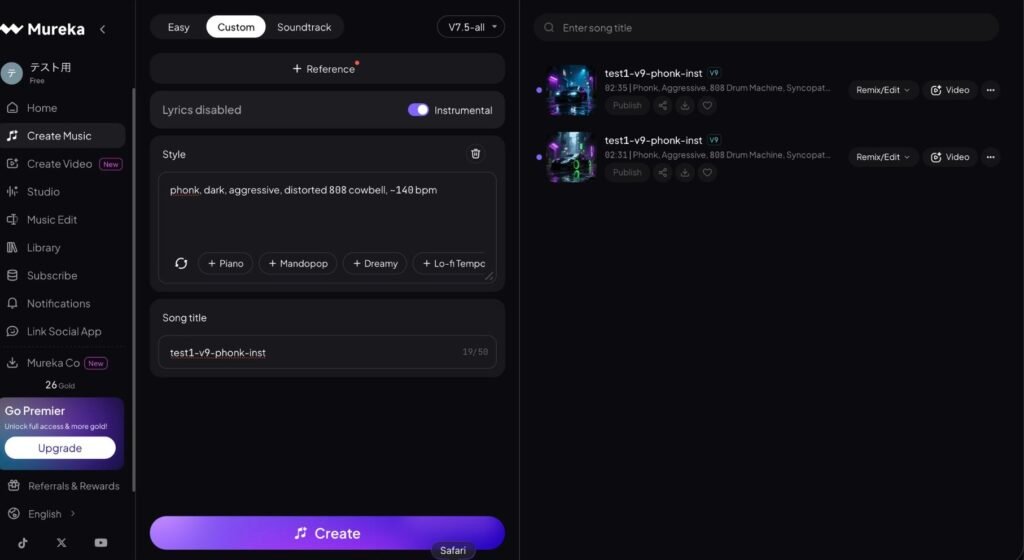
I ran a batch of phonk tests with the instrumental toggle on. Across the models I tried, Mureka still produced vocal chops and vocal-like textures in tracks that were supposed to have no vocals.
I want to be careful about how I state this. This is FSR’s firsthand observation on a specific set of prompts. When I went looking, I did not find enough public reports to call it a broad, confirmed community complaint, so I am not going to dress it up as one. It is what happened in our tests. Treat it as a behavior to check yourself if a clean instrumental is non-negotiable for your use, not as a settled defect.
Clean audio, branded video
Mureka gave us clean audio, but branded video.
The downloaded MP3 and WAV files carried no audible Mureka tag that I could hear. The exported music video carried a visible “Made with Mureka” watermark burned into the frame. That asymmetry held even on Premier, the paid production tier.
So the audio is yours to use without a Mureka stamp on it. The video is not, at least not without the brand mark. For a creator posting to social that may be fine. For anyone delivering video to a client or selling it as inventory, a burned-in vendor watermark on the paid tier is a real limitation, and it is not flagged where you’d expect it to be.
One honest caveat. I tested for an audible watermark and did not hear one. Whether Mureka embeds an inaudible or forensic watermark in the audio is a different question, and I did not test for that. The category as a whole has the lab capability to do it. Whether Mureka does is unknown from the outside.
Video is real motion, mostly
The one-click music video produced a genuine motion video, an actual .mp4 that played as moving footage when I opened it, not a still with audio glued on.
Storyboard mode was less clear. What I observed there looked like a static two-shot slideshow. Whether the final render adds motion that the preview didn’t show, I could not confirm, so I’m flagging it rather than calling it. And a music video costs 400 Gold, which a Mureka user on X corroborated when they noted that roughly five videos drained their credits. Five videos at 400 is 2,000 Gold. The math lines up.
Rights and the pending lawsuit
This section needs the most care, so I’m going to be precise about what is marketing, what is fine print, and what is an unproven allegation in an active case. FSR is not a law firm, and nothing here is a legal conclusion.
What Mureka markets
Mureka’s marketing presents output as commercial and copyright-friendly, the paid plans include commercial-use rights, and the product issues an ownership certificate for what you generate. On its face, that reads as “make music, own it, sell it.”
What the fine print says
The fine print is more guarded than the marketing.
The ownership certificate, by the wording FSR reviewed, assigns “intellectual property rights (if any).” That parenthetical is doing heavy lifting. It is not a warranty that copyright exists in the output; it is a transfer of whatever rights might exist, which in AI-generated music is itself an open legal question in several jurisdictions.
Mureka’s Terms, in the version FSR reviewed, appear to retain a broad non-exclusive license to user content, state that copyright registration is not guaranteed, and take a license to the user’s username, image, voice, and likeness. There also appears to be a distribution-service path where opting into Mureka’s distribution flips the default non-exclusive arrangement into an exclusive one.
I have to add a flag here. Mureka has revised its Terms before, and the version FSR studied closely was not the live page at the time of writing. Treat the specific clauses above as the documented prior state, to be confirmed against the current Terms before anyone relies on them. The privacy policy FSR reviewed also predates Mureka’s desktop agent and does not appear to cover it, which is a separate gap worth noting.
What the lawsuit alleges
There is an active US federal case. Stating it carefully:
Plaintiffs in Attack the Sound LLC v. Kunlun Tech Co., Ltd., filed December 17, 2025 in the Northern District of Illinois, No. 1:25-cv-15354, allege that Mureka was trained on copyrighted recordings without authorization. The complaint brings counts including copyright infringement, DMCA violations, the Illinois Biometric Information Privacy Act, the Illinois Right of Publicity Act, and unjust enrichment. The plaintiffs allege, among other things, that Mureka’s “royalty-free” and “copyright-friendly” marketing is false, that the system was trained on a large scraped dataset described in the operator’s own research, and that the ownership certificate’s rights-management information is false under the DMCA.
Every one of those is an allegation, not a finding. As of this writing the case is still early, and no liability has been decided. The defendants are based in China and Singapore, so the plaintiffs are still working through international service, and the court has the parties filing status reports rather than ruling on the case itself. One of the named plaintiffs has also brought suits against other AI music generators.
The context that keeps this fair
Here is what stops this from being a pile-on. The entire category is under litigation. Suno and Udio are in ongoing label litigation. Mureka is not a uniquely toxic outlier; it is one instance of a category-wide legal fight over training data.
Mureka’s actual distinguishing features are narrower and more useful to a buyer: its case is unsettled, and unlike at least one competitor whose downloads are currently broken, it still exports. That is the real decision input, not “is Mureka evil.”
What the research actually supports
For balance, FSR checked the academic ground under the strongest claims.
The biometric angle has real support. Voiceprints are sensitive, can be cloned, are vulnerable to inversion, and the defenses around them are brittle. That body of work lends weight to the privacy-law concern, in the US case and in any EU analysis.
The infringement theory is on softer empirical ground. Whether and how much music-generation models memorize and reproduce training data has not been well quantified in peer-reviewed work. That gap cuts against the strongest version of the copying claim, and honesty requires saying so. Economic-harm arguments against AI music are mostly modeled or qualitative rather than measured. None of this resolves the case. It just means a careful reader shouldn’t treat either side’s strongest framing as established fact.
Before you use Mureka output for paid work
- The ownership certificate assigns “intellectual property rights (if any)”, not a guarantee that rights exist.
- A US federal lawsuit over Mureka’s training data is pending. No liability has been decided. The whole category faces similar suits.
- Exported music video carries a visible Mureka watermark, even on Premier. Audio did not, in our test.
- The Terms can change, and a distribution path may convert a non-exclusive license to exclusive. Confirm the live Terms.
- For hobby and social posting, most of this is low-stakes. For client delivery, content libraries, advertising, or music sold as exclusive inventory, it is the decision.
Quality and how it stacks up
Quality first, then the comparison, because the comparison only matters once you know Mureka can actually hold a tune. It can.
On the Artificial Analysis Music Arena, Mureka’s V8 ranks second, behind Suno’s V5.5, in both the instrumental and the vocals categories. That is a strong placement. It is also why you should ignore any “Mureka is number one” claim floating around. It isn’t. Second in a serious public arena is a real result that doesn’t need inflating.
On lyric accuracy, a Tencent benchmark (attributing it to Tencent, since it’s their measurement and includes their own model) reported Mureka at a 9.96 percent phoneme error rate, Suno at 12.4 percent, and Tencent’s own SongGeneration best at 8.55 percent. Read that as “Mureka pronounces lyrics well, better than Suno on that test, not the absolute best measured.”
One framing note, not a Mureka-specific claim: listener research finds AI music is technically close to human-made, but listeners discount it on authenticity once it is labeled “AI,” with at least one study finding the labeling effect cuts the other way on perceived emotion. Useful nuance for anyone planning to disclose AI involvement. Not evidence about Mureka itself.
Now the field. FSR compares on decision axes, not vibes, because “which sounds better” is the least useful question a buyer can ask.
| Tool | Export & production | Rights posture | The catch |
|---|---|---|---|
| Mureka ($9 / $27) | WAV, stems, MIDI, Studio, video on Premier | Commercial license, “(if any)” certificate, pending suit | Gold meter on every action; watermarked video |
| Suno (~$10 / ~$30) | 12 stems, Studio + DAW | Litigation ongoing, but label licensing deals point to a clearer path forming | Also in litigation; quality leader |
| Udio ($10 / $30) | Strong on paper | Settlement context | Downloads reportedly disabled; verify, but a broken export is a dealbreaker for production |
| Google Flow Music ($6 / $18 / $48) | Music, video, stems, agent | Also litigating (early 2026) | Google ecosystem lock-in; same legal cloud |
| ElevenLabs (~$0.80/min) | API, not a DAW | Procurement-oriented | Different shape entirely; built for integration, not for sitting and producing |
| OSS / self-host | Stems (Demucs), MIDI (Basic Pitch), voice clone, open generation | You own the stack | No UI hand-holding; setup and maintenance on you |
| Chinese tools | Tencent SongGeneration (open, free self-host); ByteDance Seed Music; MiniMax (~$0.03/song API) | Varies | Posture and access vary; evaluate per use |
For another hands-on music-tool teardown, see our Soundful review, tested against nine competitors.
Short version of the field. Suno is the quality benchmark and may have the clearer rights road forming, while carrying its own suits. Udio’s value collapses if its export really is broken, so confirm that before comparing on price alone. Google Flow brings video and an agent and the same legal weather. ElevenLabs is a different tool for a different job. And if you can self-host, the open stack undercuts all of them on unit cost.
A precision point that gets mangled everywhere: Mureka is not “a Chinese app.” It is global-first. Chinese parent (alleged), Singapore operator, US servers, San Francisco Bay Area R&D, USD billing, a global product. The China angle is the parent and the litigation and the data-destination questions, not the market it sells to. We’ll come back to the data-destination part under EU.
Cancelling, refunds, and the money exit
Cancelling did not wipe the account. After I turned off auto-renew, the plan still showed as Premier, valid until July 4, with the full Gold balance of 18,914 still sitting there and still spendable. Mureka’s site footer changed from “Manage Subscription” to “Reactivate subscription,” so the door stays open until that date.
The honest limit: FSR confirmed the cancel path, that the plan and the Gold balance run to July 4, and that the door to reactivate stays open. What FSR has not confirmed is what happens to the Gold and the generated songs once July 4 passes. That is the open question, and it is what FSR will check when the date arrives.
EU and regulated-buyer questions
If you’re buying from inside the EU or for a regulated organization, Mureka raises specific questions. FSR is raising them as questions, not answering them as compliance findings, because that’s the honest limit of what can be said without each vendor disclosure in front of us.
The sharpest one is the EU AI Act’s training-data transparency requirement. General-purpose AI providers are expected to publish a summary of training data, including use of copyrighted works. Given that the litigation centers on a large scraped dataset, the concrete question for an EU buyer is simple: has Mureka published that summary, and what does it say? FSR did not find enough disclosure to resolve it.
The AI Act’s content-disclosure expectation cuts in an interesting direction. AI-generated content is meant to be disclosed as such. That burned-in “Made with Mureka” video watermark, annoying as it is to creators, may actually function as a disclosure mechanism. Two-sided feature.
On GDPR, voiceprints are special-category biometric data, which raises an explicit-consent question around the voice-cloning feature. On data transfer, US servers plus a corporate structure reaching into other jurisdictions makes the transfer destination a fair question under the post-Schrems II regime. China is not named in Mureka’s materials; the alleged Chinese parent is simply what turns “where does the data go” into a question a procurement team will ask.
And the desktop agent gap returns here. A privacy policy that predates Mureka’s local-file-touching desktop product leaves the data handling for that product undisclosed, which an enterprise reviewer will flag.
One thing FSR will not do is hand you a list of “EU-compliant alternatives.” Names get thrown around (AIVA, Soundraw, Boomy), but FSR has not verified any vendor’s compliance posture against its own current disclosures, and asserting compliance we didn’t check would be exactly the error this whole review is built to avoid.
Who should use Mureka, who should not
✓ Use it if
- You want fast finished songs for hobby, social, or non-exclusive background music
- Pro’s finished-song tier covers you
- You need WAV, stems, or MIDI and you understand the Gold cost of getting them out
- You use output commercially but not as exclusive, warrantied inventory
✕ Skip it if
- You deliver to clients and need a clean rights warranty
- You need unwatermarked video
- You extract stems and MIDI at high volume (the OSS stack is far cheaper)
- You’re a developer who can self-host
- You need predictable, painless cancellation today
⏳ Wait if
- Mureka fits, but the pending lawsuit or the rights terms hit your specific use
- You actually want Mureka Co (the desktop agent), which we haven’t sandbox-tested
- You need confirmed cancellation evidence or live-Terms clarity before committing
If Mureka fits your case, you can start on its site here.
Affiliate link. FSR may earn a commission at no extra cost, and it does not change the verdict above.
FAQ
Is Mureka worth it? Yes for hobbyists and creators who want fast finished songs, especially on Pro at $9 a month. It gets harder to recommend for professional workflows unless you understand the Gold meter, the watermarked video, the “(if any)” ownership language, and the pending lawsuit. Test on a cheap month before committing to anything annual.
What are Mureka’s hidden costs? The Gold meter. Songs cost 10 to 20 Gold each, stem and MIDI extraction costs 100 Gold per track, and a music video costs 400. Premier ships 20,000 Gold a month, but a finished production workflow burns that far faster than raw song generation. Top-up pricing exists but FSR has not verified the current figure.
Does Mureka watermark its output? In FSR’s test, downloaded MP3 and WAV audio had no audible Mureka tag, but exported music video carried a visible “Made with Mureka” watermark even on the paid Premier tier. Whether Mureka embeds an inaudible or forensic watermark in the audio was not tested and is unknown from the outside.
Can I use Mureka music commercially? Paid plans include commercial-use rights and Mureka issues an ownership certificate, but the certificate assigns “intellectual property rights (if any),” the Terms appear to retain broad rights, and a federal lawsuit is pending. Treat Mureka output as usable media, not automatically exclusive inventory. For client work, this distinction matters.
Is Mureka involved in a lawsuit? Yes. Plaintiffs in a US federal case filed December 2025 (N.D. Illinois, No. 1:25-cv-15354) allege Mureka was trained on copyrighted recordings without authorization, with copyright, DMCA, and Illinois biometric and publicity claims. The case is pending and no liability has been decided. Suno, Udio, and Google’s music tool face comparable suits.
Is Mureka better than Suno? On the Artificial Analysis Music Arena, Mureka V8 ranks second, behind Suno V5.5, in both instrumental and vocals. Mureka’s strengths are exportable audio, MIDI and stems, Studio, and built-in video. The right pick depends on whether you weight output quality, production exports, licensing posture, or per-action workflow cost more heavily.
Who owns Mureka? Mureka is operated by Skywork AI Pte. Ltd., a Singapore company. A US federal complaint alleges a link to Kunlun Tech, a Shenzhen-listed company, but that ownership chain should be described as alleged unless confirmed in corporate filings. Infrastructure is US-based; the product is global. It is not a China-only app.
What’s the difference between Pro and Premier? Pro ($9) is a finished-song tier: all models, MP3, commercial license, editing tools, 500 songs. Premier ($27) adds the production-export layer: WAV, stems, MIDI, the Studio editor, and voice cloning. Both run on Gold, and production actions on Premier spend it quickly. Pro is enough if you only need finished tracks.
Does Mureka include stems and MIDI? Premier includes the stem and MIDI feature, but extraction is not free. It costs 100 Gold per track. The MIDI is real and usable. Files you’ve already extracted re-download from Studio at zero Gold; it’s the extraction itself, and Studio regenerations at 10 Gold each, that spend the balance.
Is Mureka safe for EU buyers? FSR raises this as a question, not a finding. Open EU questions include whether Mureka has published an AI Act training-data summary, explicit consent for voiceprint biometric data under GDPR, and data-transfer destination under the post-Schrems II regime. FSR did not find enough disclosure to resolve these and did not verify compliance either way.
How FSR tested this
This is a Tier B review. What that means in practice:
FSR tested a paid Mureka Premier account in a browser, generating across all available song models, and recorded the Gold balance before and after each action to derive the costs in this article. FSR downloaded MP3, WAV, stems, MIDI, a full Studio multitrack export, a music video, and the ownership certificate, and opened the files to confirm what they actually were.
Policy claims come from Mureka’s published Terms, privacy policy, and pricing pages as FSR reviewed them, with the caveat noted above that Terms can change and the closely-studied version was not the live page at writing. Litigation details come from the public federal complaint and docket. Quality placements come from the Artificial Analysis Music Arena and an attributed Tencent benchmark. Comparison pricing reflects published rates and should be reverified before anyone relies on it.
Multi-source research informed the search-intent, legal, EU-regulatory, social-sentiment, academic, China-market, and developer-cost angles. Where a claim originated from a single source or a tool FSR could not independently verify, the text flags it.
What FSR did not test: the refund flow itself (FSR cancelled but did not request a refund), and what happens to Gold and saved songs once July 4 passes; whether the audio carries an inaudible or forensic watermark; payload-level data handling; Mureka Co, the desktop agent, under sandbox conditions; the live current Terms against the version studied; the current Gold top-up price; the official API terms; and whether generated video is editable in-product. This is hands-on research, not a 30-day production deployment, and it is not a professional audio-engineering quality verdict.
FSR verdict
Mureka is good, and better than our earlier coverage gave it credit for. Pro is a legitimate finished-song tier. Premier is the right tier if you need production exports. The product places second in a serious quality arena and pronounces lyrics well. None of that is in dispute.
What a buyer has to internalize is that the subscription price is the entry fee, not the cost. The cost is the Gold meter, and it scales with what you make, not how many songs you generate. A finished, exported, video-wrapped asset can run past 500 Gold before retries. The video comes out watermarked on the paid tier. The ownership certificate hedges with “(if any).” And the legal weather over the entire category, Mureka included, is unsettled.
We hit the same gap pricing out Ahrefs Agent A, where a $99 plan turned into an $827 bill.
So the verdict splits.
Worth testing for hobbyists and fast-output creators, who hit almost none of the walls. Worth it on Premier for solo producers who need the multitrack and accept paying Gold to iterate. Cautious for commercial and procurement buyers, who should read the rights terms and the litigation as the actual decision layer, not a footnote. Skip or wait for developers and teams that need clean, scalable, exclusive production assets, because a self-hosted stack does the expensive parts for a fraction of the cost and without the rights overhang.
Mureka sells like a subscription. It behaves like a production meter. Buy it knowing which one you’re actually paying for.
Mureka Co, the desktop DAW agent Skywork launched in late May 2026, changes the trust picture because it touches local files and runs as an agent. It is a separate product and gets its own FSR review. This article does not audit it.