Last updated: June 25, 2026
Instantly Credits buy AI and data actions, not a complete outbound system.
Use this block to decide whether the full review is worth your time. The deeper audit below covers pricing tabs, credit burn, AI agents, data terms, cancellation, screenshots, and the exact limits of FSR’s test.
What it is
A credit-metered AI and data layer for SuperSearch, enrichment, Copilot, and AI sales/reply agents inside Instantly.ai. Email sending is a separate product line.
Best for
- Teams that already run healthy sending infrastructure.
- Buyers who need enrichment and AI drafting, not native sending.
- Operators who understand 5-credit agent actions.
Not for
- Anyone expecting $9 or $47 to run AI outbound end to end.
- Teams without sending-account governance or external API keys.
- EU or regulated buyers without DPA, subprocessor, and AI data-flow answers.
Cost reality
- $9 Nano gives 150 credits, not sending capacity.
- AI Sales Agent and AI Reply Agent meter at 5 credits per generated item.
- Sending requires Outreach or a Bundle, not Credits alone.
What FSR tested
FSR bought the $9 Nano Credits plan, enriched one lead, configured the AI Sales Agent, opened the AI Reply Agent flow, used Copilot, and cancelled the plan.
What FSR did not test
FSR did not send email, connect a sending account, connect a CRM or inbox, enter API keys, measure deliverability, or test reply rates.
Deep dive continues below: pricing tabs, credit rates, agent gates, BYO keys, data terms, cancellation, and methodology.
Instantly AI is not a single feature. It is a credit-metered layer over Instantly.ai that covers prospect search, enrichment, a Copilot assistant, and AI sales and reply agents. Email sending is a separate product line. So the real buying question is not whether the AI can write outreach. It is what a credit balance actually buys, and what you must still provision before any of it sends an email.
FSR bought the cheapest paid entry point, the $9 Nano Credits plan, and pushed it until it stopped.
Here is what stopped it. With 150 credits sitting in the account, the AI Sales Agent would not start. Pressing Start returned a campaign diagnostic with the status campaign_accounts_unhealthy and a plain-English message that no sending account was healthy, connected, or usable. No credits were spent on the blocked attempt. The credit balance was never the gate. The sending infrastructure was, and Nano Credits do not include any.
That gap, between a funded credit balance and an operational outbound system, is the whole story.
Contents
Briefing summary: June 2026
Review depth: Tier B. Hands-on testing on a paid account plus primary-source verification. FSR purchased the $9 Nano Credits plan, configured the AI Sales Agent and entered the AI Reply Agent setup flow, ran one SuperSearch work-email enrichment, used Copilot, read the pricing page, the Instantly Credit System documentation, the Privacy Policy, and the AI Sales Agent Terms, then cancelled the plan. FSR did not send any email, did not connect a sending account, CRM, or inbox, did not enter any API key, and did not run a deliverability, inbox-placement, or reply-rate test. Treat anything about live sending performance as untested.
The finding in one line: Instantly Credits buy access and metered actions, not an operational outbound system. A credit balance lets you search, enrich, and configure AI agents. It does not buy sending capacity, it does not grant Autopilot, and it does not absorb the external API costs or the compliance burden that real campaigns carry.
TL;DR
Instantly is a capable, broad outbound platform, and the credit model is more transparent than most competitors describe it. The risk is not the product. It is reading “150 credits for $9” as a turnkey AI sales rep.
- Credits and email sending are sold separately. A Credits plan alone cannot send.
- The AI Sales Agent and AI Reply Agent each cost 5 credits per generated item, charged on generation, not on success. So 150 Nano credits is roughly 30 agent-generated leads, or 30 generated replies, before a top-up.
- The cheapest credit plan, $9 Nano, is documented in the help center but is not shown on the public pricing page, which starts Credits at $47.
- The agent will not run without a healthy sending account, which requires a separate Outreach subscription. FSR hit that wall directly.
- The platform is, by its own Privacy Policy, a data-marketing business that compiles and licenses personal data. It does publish a real privacy and GDPR framework. What it does not publish is a standalone DPA, a named subprocessor list, or which AI model providers receive your reply content.
Buy it if you already run healthy sending infrastructure and understand credit burn. Skip it if you expect $9, or even $47, to make AI run your outbound for you.
Quick start: what you actually need
To run an AI-assisted outbound campaign on Instantly, a buyer needs three separate things, and credits are only one of them.
First, an Outreach subscription for sending capacity and connected email accounts. Second, a Credits balance for lead search, enrichment, and the AI agents. Third, healthy connected sending accounts, plus any CRM or inbox connections the workflow depends on.
The platform sells a fourth path, Bundles, that combines sending and credits in one plan. If your goal is “AI runs a campaign end to end,” a Bundle (or an Outreach plan paired with credits) is the real entry point, not a Credits-only plan.
A Credits-only plan like Nano is the right purchase only if you already send through something else and you want Instantly purely for its 450M-record lead database, enrichment, and AI drafting.
At a glance: verified prices and credit rates
All figures below were read directly from Instantly’s pricing page and Instantly Credit System documentation on June 18, 2026. Pricing is volatile in this category. Reconfirm before relying on any number.
Verified key facts
read from source · Jun 18 2026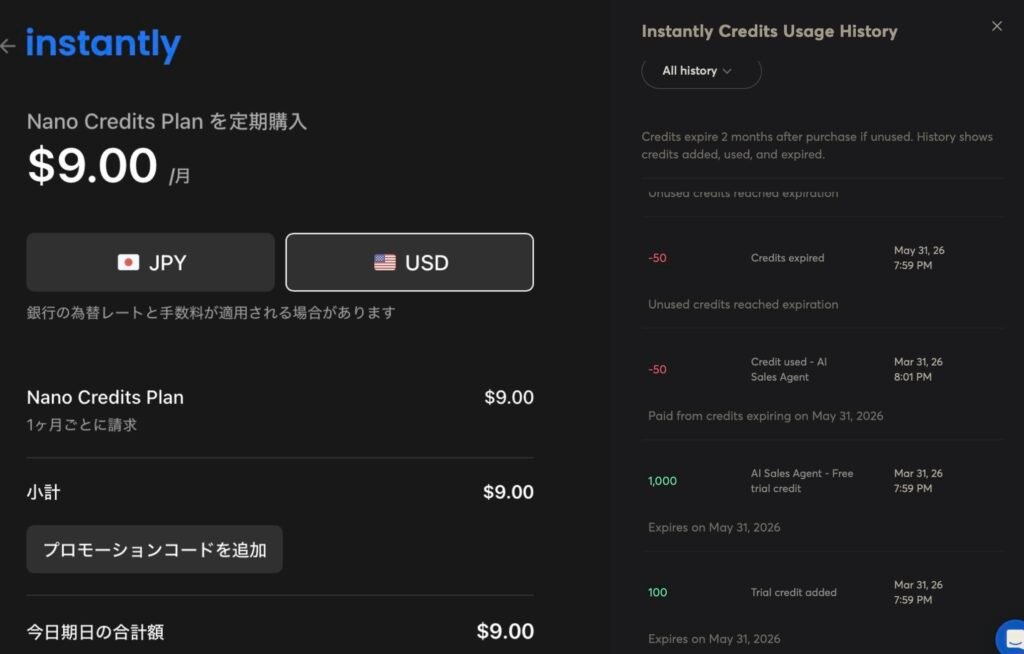
The $9 Nano Credits plan at checkout on FSR's account. Instantly's own usage log confirms unused credits expire two months after purchase.What this table makes obvious: 150 credits is not 150 of anything useful in agent terms. At 5 credits per generated reply or lead, a full Nano month is about 30 AI actions. Enrichment-only buyers stretch further, around 100 verified work emails at the blended average, but a single batch can move the meter fast.
Credits vs Outreach vs Bundles: the part buyers get wrong
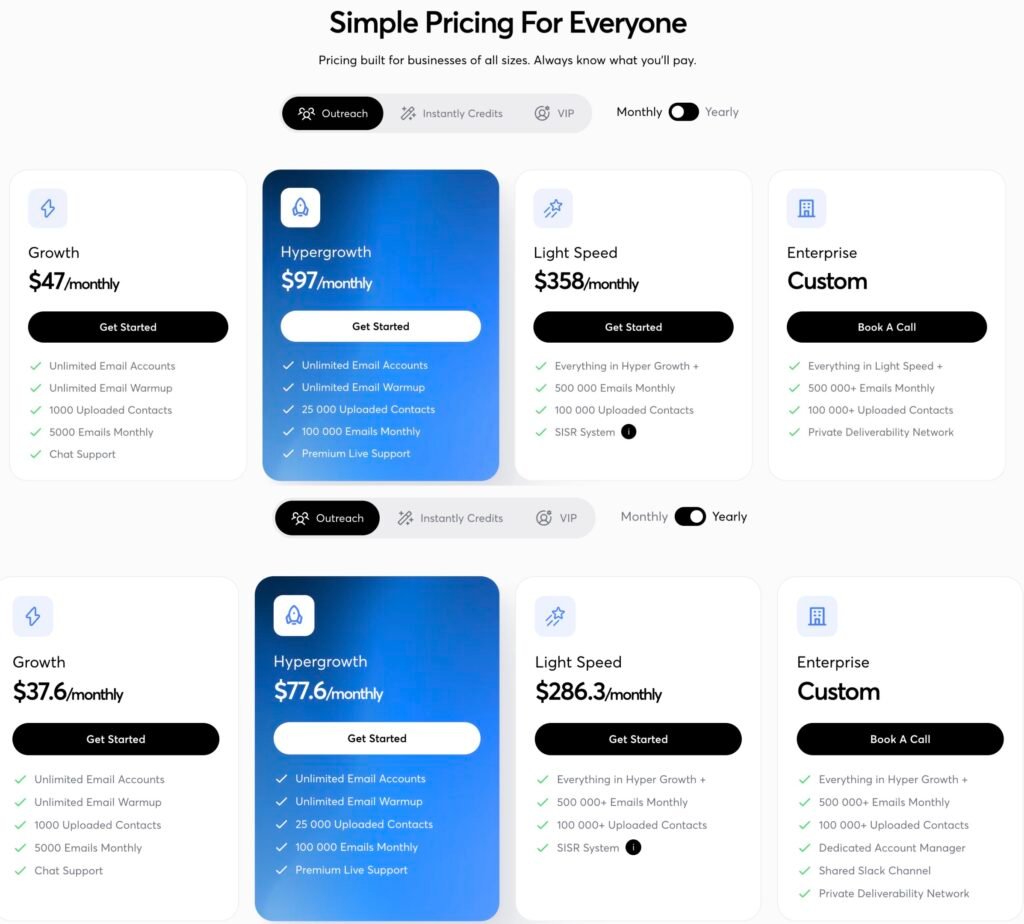
Instantly’s pricing page is organized into four tabs: Bundles, Outreach, Instantly Credits, and VIP. That structure is the source of most confusion, and it is worth slowing down on.
Outreach is the sending engine. It covers email accounts, warmup, contact upload limits, and monthly send volume. Growth Outreach is $47 a month for unlimited email accounts and 5,000 sends. It does not include AI credits.
Instantly Credits is the AI and data engine. It covers the 450M-record lead database, SuperSearch filtering, enrichment, Copilot, and the AI agents. Growth Credits is also $47 a month, for 1,500 credits. It does not include any sending capacity.
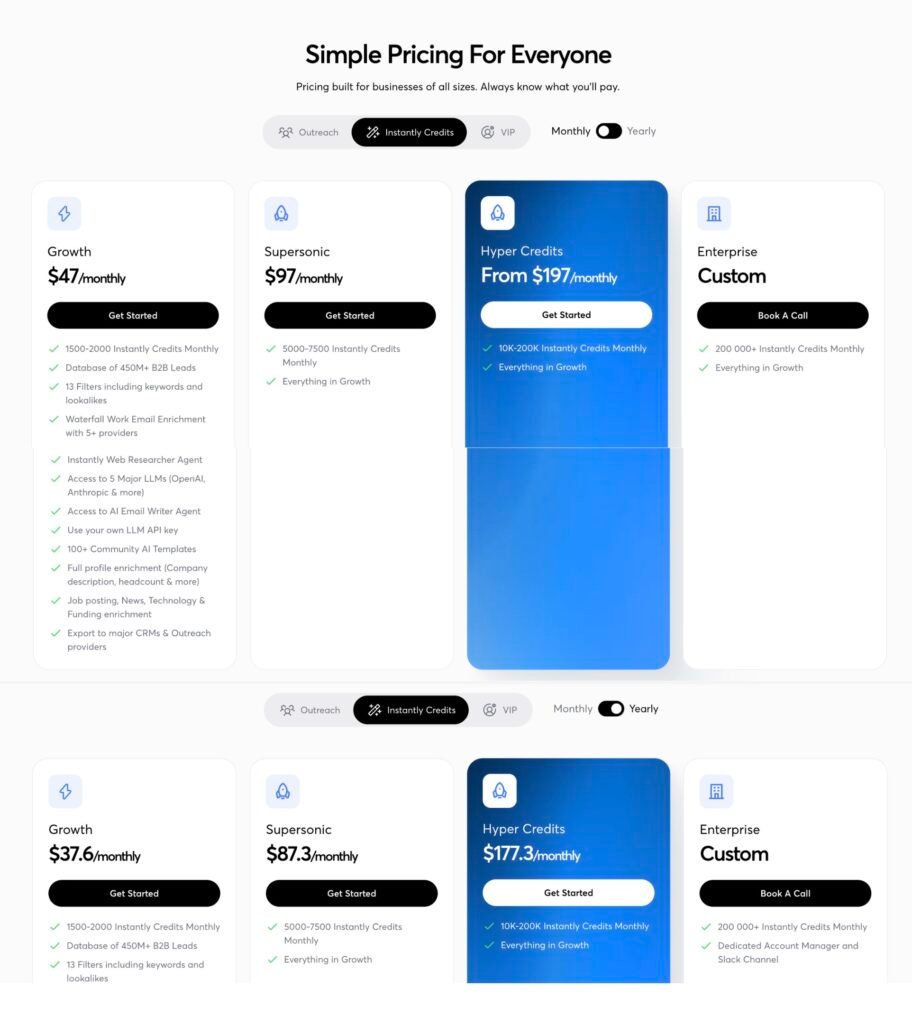
The overlap is easy to miss. There is a “Growth” plan at $47 a month on both product lines, and they are opposite products. One sends but has no AI credits. The other has AI credits but cannot send. A buyer who picks “the $47 Growth plan” without noticing which tab they are on can easily buy the half they did not mean to buy.
The plan that actually combines both is the Starter bundle, at $94 a month (or $85 annual), which pairs 5,000 sends with 1,500 credits and the database. Bundles are where “AI runs the whole campaign” becomes possible. The standalone $47 tiers are not.
| Can it… | OutreachGrowth $47 | CreditsGrowth $47 | Starter bundlefrom $85 |
|---|---|---|---|
| Send email | Yes | No | Yes |
| AI credits for agents and enrichment | No | Yes 1,500/mo | Yes 1,500/mo |
| 450M lead database + SuperSearch | No | Yes | Yes |
| Unlimited email accounts + warmup | Yes | No | Yes |
| Run an AI campaign end to end on its own | No no AI credits | No cannot send | Yes |
There is a second quiet gap. The cheapest credit plan, Nano at $9 a month for 150 credits, appears in the Instantly Credit System help article but is absent from the public pricing page, where the Credits tab starts at the $47 Growth tier. FSR’s billing screen showed the $9 plan as a live, current plan. So the lowest-cost way into the AI layer exists, but a buyer comparing plans on the marketing pricing page would not see it.
None of this is hidden in a dishonest way. The credit rates and plan tiers are documented. But the structure rewards careful reading, and most competitor reviews flatten it into a single price.
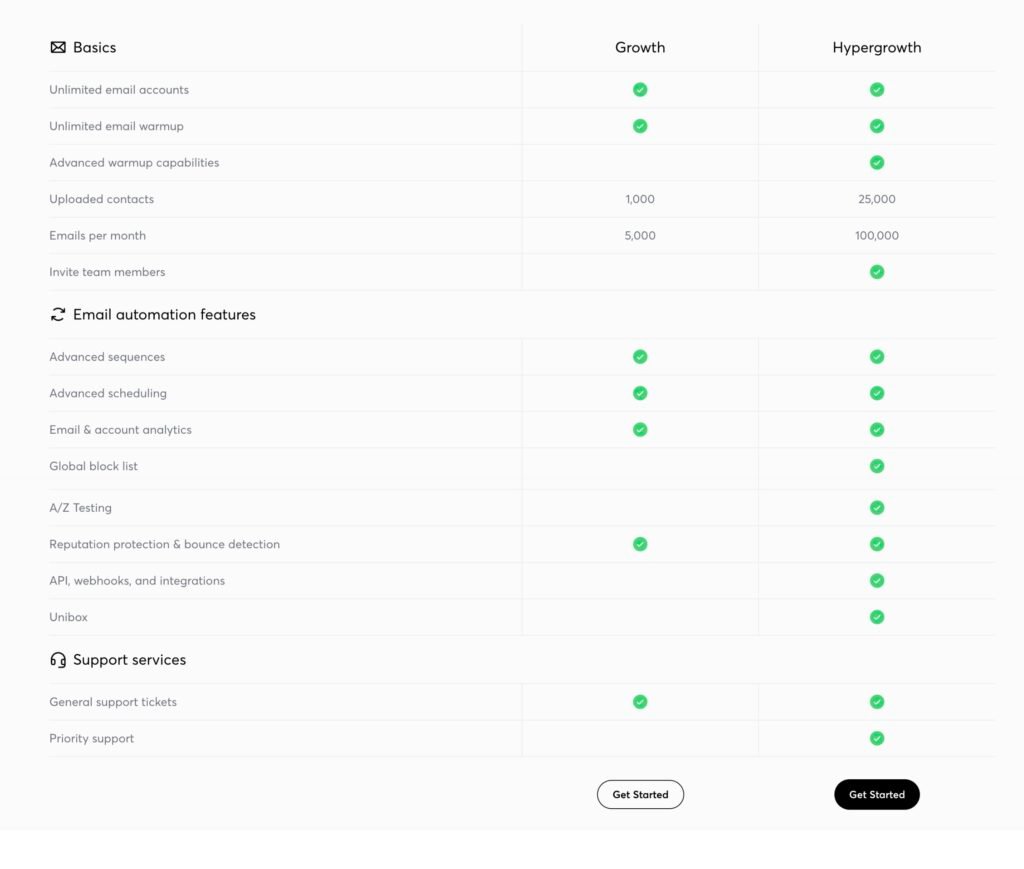
If sending is the part you actually need, that is the Outreach line, and it starts at $47 a month. You can start an Instantly plan here(FSR earns a commission on eligible sending products, not on the Credits plan, and never on this verdict.)
What FSR tested (and did not test)
FSR ran a Tier B test on a paid Nano Credits account in June 2026. The point was the boundary, not the campaign.
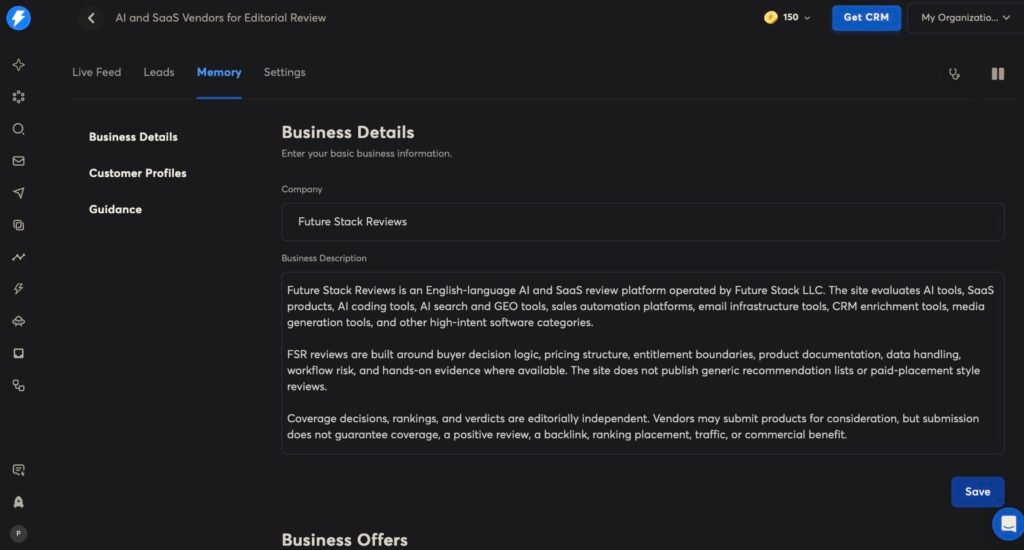
What FSR did: purchased Nano Credits and confirmed the $9 / 150-credit state in billing; ran one SuperSearch work-email enrichment and watched the ledger; configured an AI Sales Agent and pressed Start once; opened the AI Reply Agent setup flow through the final pre-creation step; ran three text prompts in Copilot; reviewed the integrations, preferences, and deliverability surfaces; and cancelled the plan.
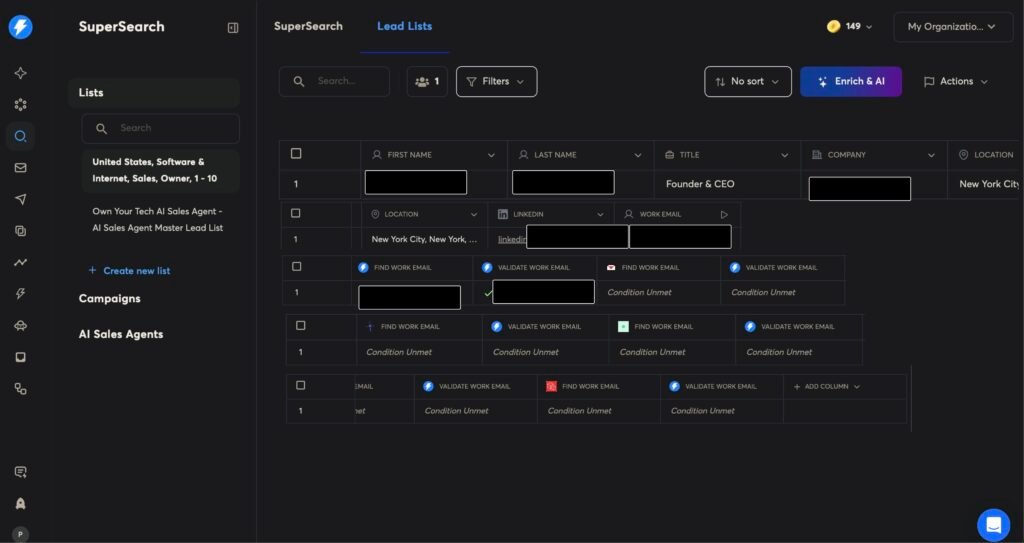
What FSR did not do, and what therefore cannot be claimed: send any email, connect a sending account, connect a CRM or inbox, enter any API key, create the AI Reply Agent, generate any reply, run a deliverability or inbox-placement test, or measure any reply rate. The agent never contacted a prospect. Several screens, including Analytics, Unibox, and Email Accounts, sat in their empty starting state, which is itself the proof that no live campaign ran.
This is a pricing, entitlement, and data-boundary audit. It is not a performance review of Instantly’s sending.
The credit meter: what every action costs
Instantly’s Credit System documentation publishes a per-action rate card, which is more than most outbound tools do. The rates that matter for budgeting:
SuperSearch work-email enrichment is 1 credit when Instantly finds the email itself and 2 credits when the email comes from a data partner, which the documentation describes as a waterfall across providers, averaging about 1.5 credits per verified work email. The documentation also states that no credit is charged when no verified work email is found. Full profile enrichment is 0.5 credits, AI enrichment about 0.5, lead verification 0.25, and several company-level enrichments such as job listings, technologies, news, and funding are 0.5 each.
That waterfall logic resolves a discrepancy FSR saw firsthand. When FSR opened the enrich modal for one lead, the preview showed about 1.5 credits per row. After processing, which took 57 seconds and returned a verified work email, the Usage History recorded a 1-credit charge, not 1.5. That is not an overcharge or an undercharge. The 1.5 is a blended average across the 1-credit and 2-credit outcomes. FSR’s lead was found by Instantly directly, so it landed at the 1-credit floor. The preview shows the average. The bill reflects the source.
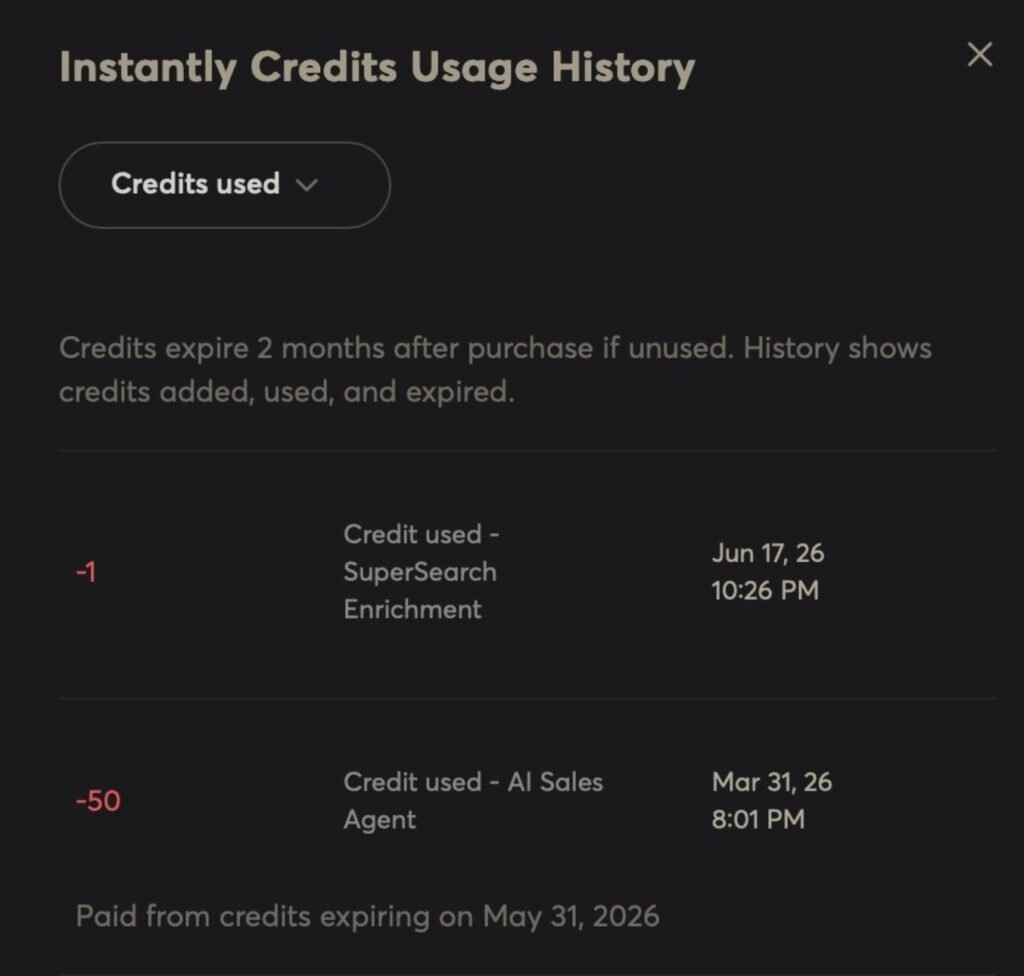
The same modal previewed a batch option: enrich the first 25 leads for about 37.5 credits.
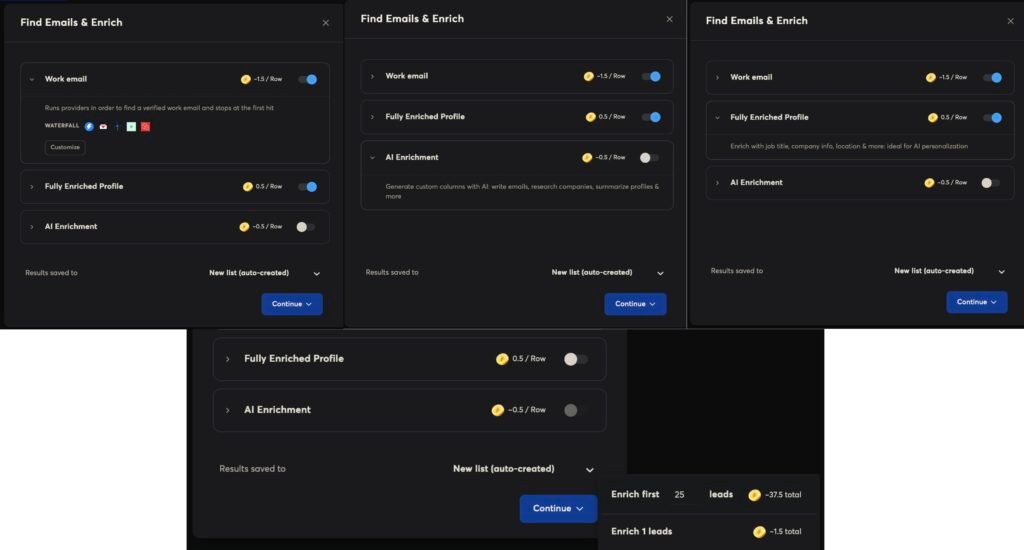
FSR did not run the batch, so 37.5 is a preview figure, not a confirmed deduction. But it makes the budgeting reality plain. A new buyer testing on Nano has 150 credits. One mistaken batch click on a 25-lead enrichment with full profiles toggled on could consume a meaningful slice of the month in a single action.
Copilot, the in-app assistant, is also metered, and the rates are small but real: 0.05 credits to request general information, 0.1 to generate a sequence or find prospects, 0.5 to create a campaign, and 1 credit for a workspace audit. The amounts are small, but Copilot is not free.
Manual SuperSearch filtering is a different matter. FSR narrowed a result set from roughly 528,000 to about 11,000 and then to a single lead using title, keyword, and employee-count filters, and the credit balance did not move. Filtering and viewing results did not consume credits in this test. Only the enrichment step did. Searching is not the same as acquiring, and only acquisition is billed.
The AI Sales Agent: configurable, then blocked
Instantly’s marketing for the AI Sales Agent describes it doing the whole job: finding leads, sending campaigns, and turning replies into pipeline. A June 2026 launch thread framed it as the agent working while a human takes the day off. That is the promise.
FSR configured an AI Sales Agent, set it to human-in-the-loop mode, and pressed Start with a funded credit balance and no sending account connected. The workflow stopped at a campaign diagnostic. The status was campaign_accounts_unhealthy, with a message that none of the sending accounts were healthy, connected, or usable. The raw response carried that same status and null values for the diagnostic detail fields. The credit balance did not change.
This is the entitlement boundary, stated cleanly. The AI Sales Agent runs on top of Outreach campaigns and the sending accounts attached to them. With no Outreach subscription and no connected account, there is nothing for the agent to send through, and the platform halts before any work begins.
There is a fair reading of this that favors Instantly. The block is a protective control. The platform refused to let FSR burn anything on broken infrastructure, and it surfaced the exact reason. That is better behavior than silently failing. FSR’s narrow, honest claim is only this: in this configuration, on a Credits-only plan, the agent stopped at the sending-account diagnostic. FSR did not test what happens once a healthy account is connected.
On cost, the documentation is explicit and worth internalizing before you scale an agent: the AI Sales Agent costs 5 credits per generated lead, charged whether or not you approve that lead. The meter runs on generation, not on outcomes.
The AI Reply Agent: 5 credits a reply is not the whole story
The agent selection screen lists the AI Reply Agent at 5 credits per reply. The documentation sharpens that: 5 credits per reply generated, regardless of whether the reply is sent or edited. As with the Sales Agent, you pay on generation.
But the per-reply price is the least interesting part. FSR walked the full setup flow, up to but not including the final Add Agent step, and the configuration is where the real constraints live.
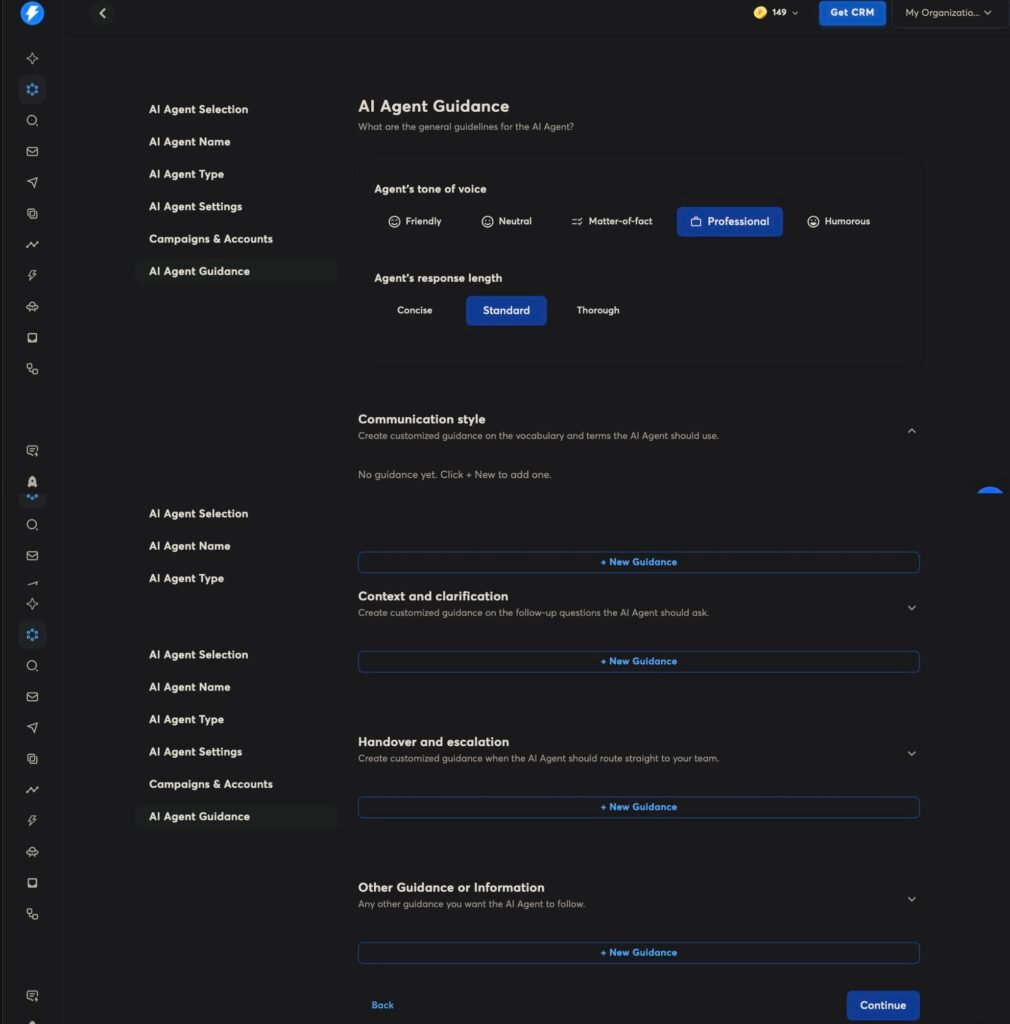
The agent offers two modes. Human-in-the-loop drafts replies for your review. Autopilot, the fully autonomous mode that replies around the clock with no manual review, carries a Pro badge and a note that it is available on Hyper Growth and above. So full autonomy is a tier gate, not a credit purchase. On a lower plan, you get the assistant, not the autonomous worker.
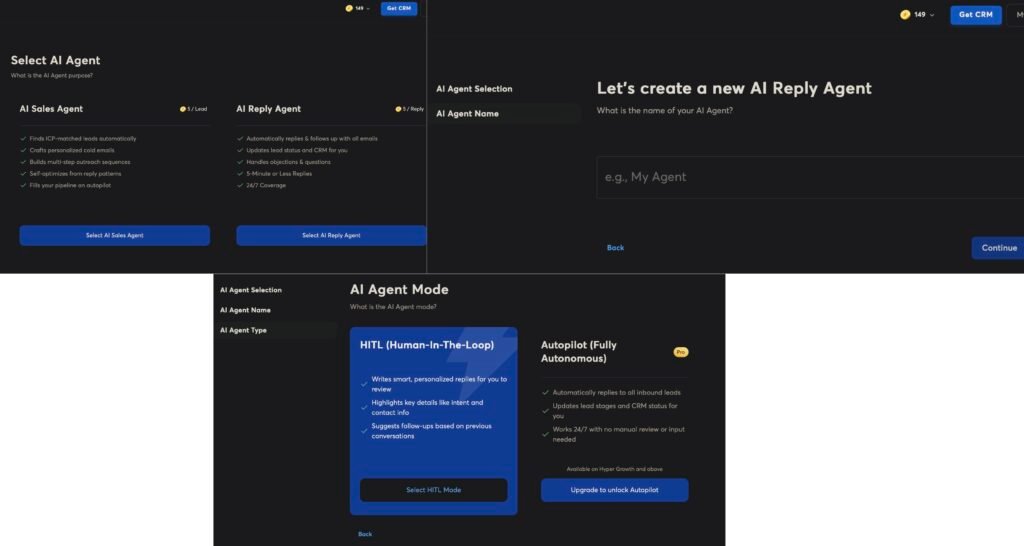
The scope step is the one to slow down on. It asks which campaigns and accounts the agent should work with, and the visible default was All Campaigns and Accounts. The only alternative FSR saw in that view was to create a new tag. No narrower per-campaign selector appeared. Defaulting to “all” is a common pattern across software, and it is the user’s job to change it before saving, so this is a UI default to be aware of rather than a flaw. But the blast radius is worth respecting: an agent left on the default scope is pointed at every active campaign, not a single test.
The settings layer adds reach most buyers will not expect. Handling follow-ups, responding to automatic and out-of-office emails, and handling objections, declines, and negative replies were all switched on by default in FSR’s view, with a newer No-Show Recovery feature left off.
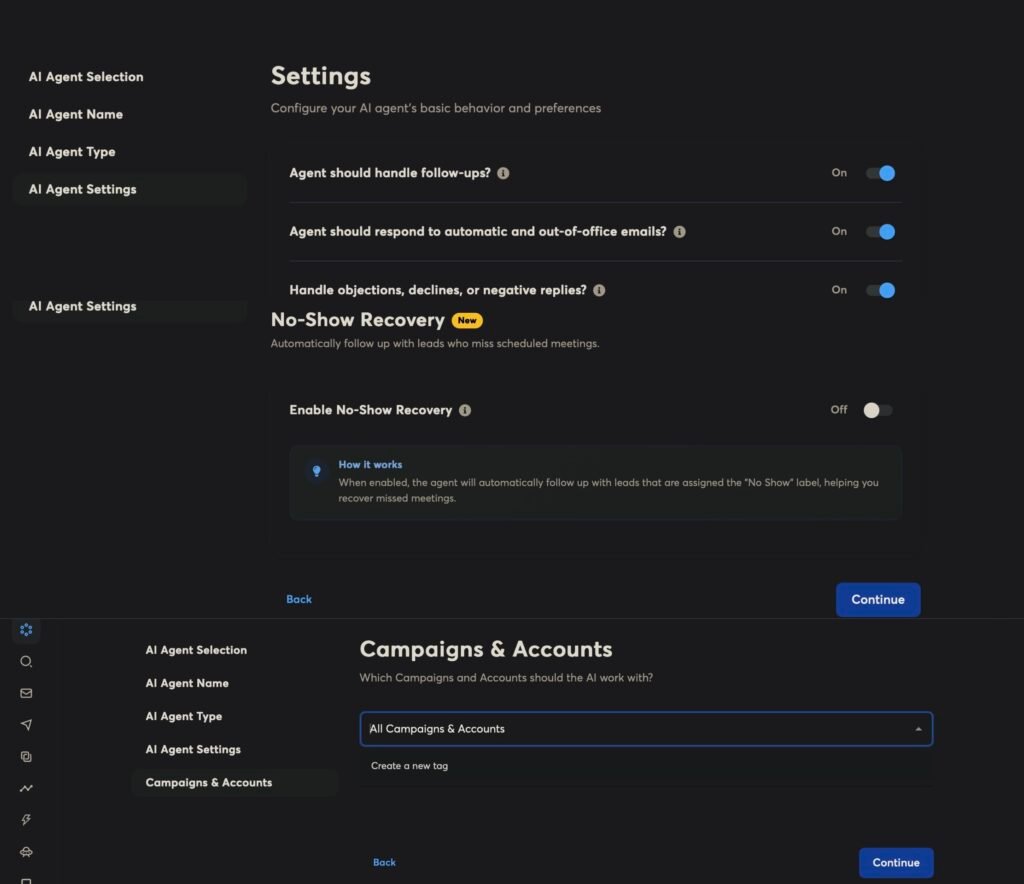
This is where the platform’s own contract matters. Instantly’s AI Sales Agent Terms, updated March 2026, state that the user is solely responsible for the campaigns, recipients, prompts, and all generated messages, that compliance with laws including GDPR, UK GDPR, PECR, CAN-SPAM, and CASL is the user’s responsibility, and that the user must review outputs before use because AI content may be inaccurate or inappropriate. The terms describe Instantly as a tool provider only. Read alongside the Autopilot mode, that creates a real tension a buyer should think through: the terms tell you to review outputs before they go out, while Autopilot is designed to send without manual review. Using Autopilot does not transfer the responsibility the terms place on you.
That tension is not unique to Instantly, and the research backs the caution. Studies of human-AI collaboration find that human oversight measurably reduces errors, and that people tend to over-trust automated output, a pattern researchers call automation bias, with simple warnings reducing but not removing the effect. For autonomous outbound that sends in your name to real prospects, the case for keeping a human in the loop is not just legal. It is operational.
Copilot: useful, not billing-authoritative
Copilot is helpful for navigation and explanation. When FSR asked why the AI Sales Agent would not start, Copilot correctly explained that no healthy sending account was connected. That is the kind of in-context help that saves time.
It is not a source of truth about your account. Copilot labeled FSR’s account as a Free Plan while the billing screen plainly showed an active $9 Nano Credits plan. After three text prompts, FSR also saw no matching entry in the Usage History at the time it was checked, even though the documented rate card meters Copilot actions. That could be display rounding on sub-credit amounts, a logging delay, or a non-billable prompt type. FSR could not determine which from a single session.
The practical rule: use Copilot to find your way around and to understand why something is blocked, but check the billing page for what plan you are on or what you can afford.
The cost stack beyond credits: BYO keys and external providers
The credit balance is not the full cost surface, and this is where budgets quietly expand.
Instantly’s Credits plans advertise access to five major LLMs, naming OpenAI and Anthropic among them, plus an option to use your own LLM API key. Those are two different things. The native multi-model access is included in the plan and runs on Instantly’s side. The bring-your-own-key path routes through an account you own and pay for.
In FSR’s integration screen, the OpenAI integration was visible, described as free and using your API key, with a modal asking for an OpenAI API key. FSR did not enter one. A preference labeled “Automatically suggest replies using OpenAI” also existed in the AI Inbox Manager settings. What the public documentation does not specify is exactly which model provider receives which customer content, and in what role. FSR did not test any data flow and is not asserting one.
The wider integration list is where “free” needs an asterisk. More than a dozen enrichment and data providers, including A-Leads, Apify, BuiltWith, Crunchbase, Diffbot, FullEnrich, Ocean.io, RocketReach, and Wappalyzer, are labeled as free and using your API key. Free here means Instantly does not add a charge. It does not mean the provider is free. Each of those typically requires its own paid account or API plan to generate a usable key. A buyer who reads “free” as zero cost is budgeting for the wrong number.
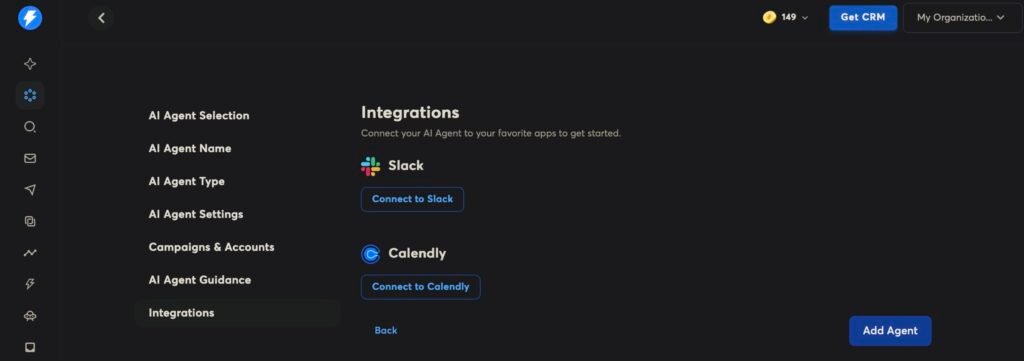
There is also a developer surface. The integrations screen showed API keys for version 2, with version 1 marked deprecated. Anyone wiring Instantly into Zapier or a custom automation should build on v2, since the legacy v1 path is on its way out and can break old integrations.
The honest summary: the $9, or $47, is the platform fee. The real cost of an operational AI outbound stack is that fee plus your sending plan plus your external enrichment and model bills. Instantly is, in large part, a routing and orchestration layer over infrastructure and data you bring and pay for.
Data, terms, and EU/procurement reality
This is the section where a quick search misleads, so FSR read the actual documents.
Start with what Instantly is. The operator is Foo Monk, LLC, doing business as Instantly.ai, a US entity. Its Privacy Policy, updated May 29, 2026, describes a data-marketing business: Instantly compiles personal information from data compilers, public sources, and customers, and it licenses that information to its own customers. The data it handles is broad, including names, personal and professional emails, job titles and history, phone and postal addresses, IP and device identifiers, email and website interaction signals, and inferred demographics such as income range and home ownership. Under its California disclosures, Instantly states that it sells or shares categories of personal information, including identifiers and employment data, with customer categories, and it published California Delete Act statistics showing it handled 5,229 opt-out or deletion requests in 2025. This is a data-broker model, and a buyer should understand the database that way.
Now correct a common misreading. Instantly does publish a substantive privacy and compliance framework. The Privacy Policy documents a GDPR legal basis, relying primarily on legitimate interests alongside contract, consent, and legal obligation. It names international transfer mechanisms, specifically the EU Standard Contractual Clauses, the EU-US Data Privacy Framework, and the UK-US Data Bridge. It names EDPO as Instantly’s appointed EU and UK GDPR representative. It states that data is generally stored in the United States, and it describes high-level security measures including encryption, hashing, and access controls. It also distinguishes its roles: when handling a customer’s own uploaded lists, Instantly says it acts as a processor and points data-subject requests back to that customer. None of that makes Instantly compliant or non-compliant. FSR makes no legal conclusion. But the framework exists, which matters, because several public summaries claim it does not.
What is still not publicly available is what an EU or regulated buyer’s procurement team will actually ask for. FSR could not locate a standalone, signable Data Processing Agreement with Article 28 processor terms. The Privacy Policy names categories of recipients, such as hosting, support, data, security, and payment providers, but does not publish a named subprocessor list. It does not name which AI or LLM providers receive customer reply or prompt content, or in what role. And FSR found no public SOC 2 or ISO 27001 attestation and no AI Act self-classification of the agents.
On the agents specifically, Instantly’s own terms are direct. The AI Sales Agent Terms place compliance with GDPR, UK GDPR, PECR, and the major anti-spam laws squarely on the buyer, require the buyer to review AI output before use, and describe Instantly as a tool provider only that does not guarantee output is lawful. For an EU buyer running cold outreach, that is the operative fact: Instantly is not going to carry your GDPR or ePrivacy risk, and its own terms place that responsibility on the customer.
The practical takeaway for procurement-sensitive buyers is in the FAQ and due-diligence list below. Request the DPA and subprocessor list directly, and get the AI data-flow question answered in writing before sending anything regulated.
Cancellation and data retention
FSR cancelled the Nano plan after testing. The flow is worth describing because the data language is stronger in the app than in the public help content.
The first screen warned that cancelling would result in all account data being deleted after the current billing period. The next step was a survey asking which cold-emailing tool the user was switching to, listing competitors such as Smartlead, Apollo, Lemlist, and Woodpecker, with cancellation completing at the end of the survey. A final screen confirmed the cancellation succeeded.
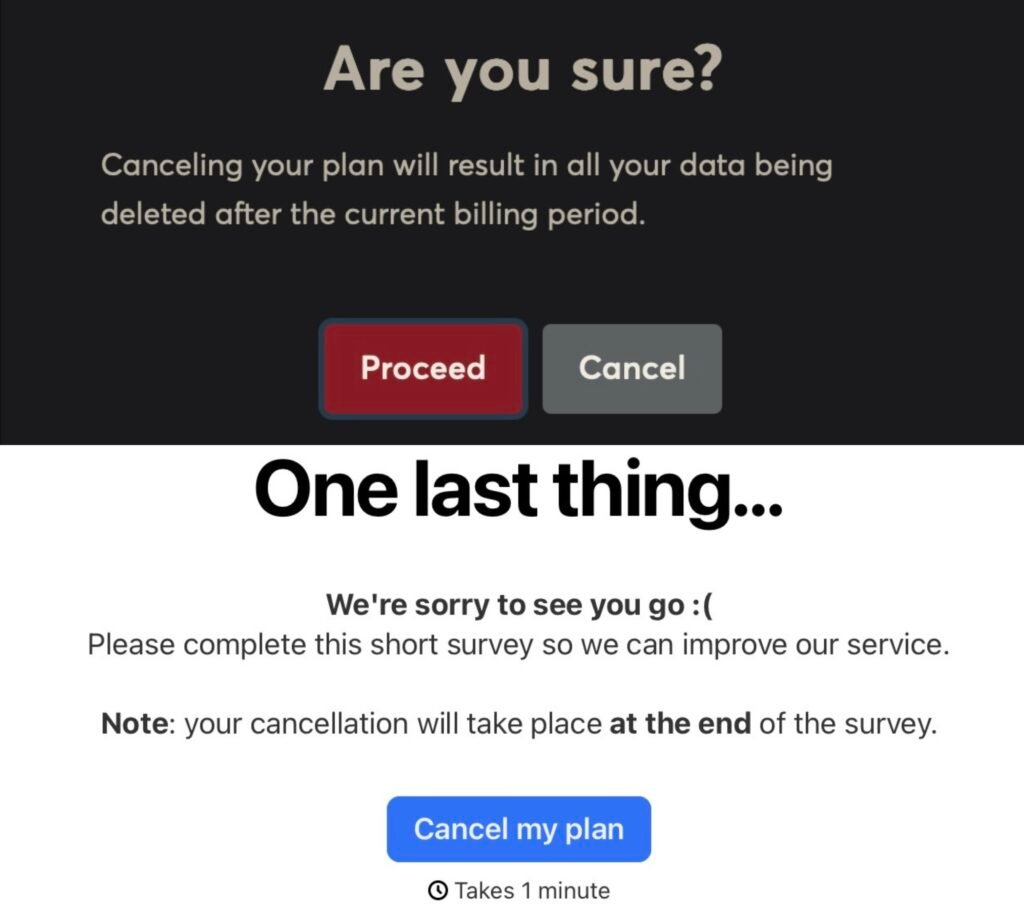
After cancelling, the billing page still showed the Nano plan, $9 a month, 149 of 150 credits remaining, billed monthly, scheduled to cancel on July 17, 2026. The prior credit usage entry was still visible in the history. So FSR observed a scheduled end-of-period cancellation with credits and history still shown, not an immediate wipe.
Two honest gaps remain. FSR did not let the period lapse, so FSR did not verify what the deletion actually removes. The exact scope of “all data,” whether it covers exported records, analytics, and logs, is not spelled out in the public help article, and the Privacy Policy’s retention language is qualitative rather than a fixed schedule. Separately, monthly credits expire two months after purchase if unused, but FSR found no public statement on whether unused credits are refunded on cancellation. If you cancel, assume you should export anything you want to keep, and do not assume remaining credits convert to a refund.
Who should use it, skip it, or wait
Use it if you already operate healthy sending infrastructure, you understand that the AI agents meter on generation at 5 credits each, and you want a single platform for the 450M-record database, enrichment, and AI drafting. RevOps teams, agencies, and technical founders who can provision their own accounts and API keys get the most out of it.
Buy Credits only if you send through a different platform already and you want Instantly purely as an enrichment and AI-drafting source. In that case Nano or Growth Credits is a cheap, useful add-on, and you will not miss the sending side.
Skip it if you are looking for a turnkey, all-in-one AI sales rep that includes native sending, native data, and managed infrastructure for one small fee. The bring-your-own-key requirements, the separate Outreach subscription, and the setup work will frustrate you. The $9 plan in particular is an enrichment and AI-layer entry point, not an autonomous campaign.
Wait if you are an EU, public-sector, or regulated buyer. Get the DPA, the subprocessor list, and a written answer on AI data flows before you commit, and price in that the AI Sales Agent Terms make compliance your responsibility. Also wait if you want Autopilot on the Reply Agent but are not on Hyper Growth, since full autonomy is tier-gated.
FAQ
What does the $9 Instantly Nano Credits plan include?
Do Instantly Credits include email sending?
Can you run the AI Sales Agent with credits alone?
How much does the Instantly AI Sales Agent cost per lead?
How much does the AI Reply Agent cost?
Does Instantly Copilot cost credits?
Does SuperSearch cost credits?
Is Instantly Credits the same as the Outreach plan?
Does Instantly use OpenAI, and where does my data go?
Is Instantly safe for EU or enterprise use?
What happens to my data when I cancel Instantly?
What did FSR not test?
Methodology and sources
Review depth: Tier B. This combines hands-on testing on a paid account with primary-source verification.
Hands-on, June 17 to 18, 2026: FSR purchased the $9 Nano Credits plan on a standard desktop browser, confirmed the billing state, ran one SuperSearch work-email enrichment (one credit, 57-second processing), configured an AI Sales Agent and pressed Start once (blocked at campaign_accounts_unhealthy), opened the AI Reply Agent setup flow to the final pre-creation step without creating it, ran three Copilot prompts, reviewed integrations and deliverability settings without changing them, and cancelled the plan.
Primary sources read directly on June 18, 2026: the Instantly pricing page (instantly.ai/pricing); the Instantly Credit System help article (help.instantly.ai); the Privacy Policy, updated May 29, 2026 (instantly.ai/privacy); and the AI Sales Agent Terms, updated March 25, 2026 (instantly.ai/sales-agent-terms). External research on human oversight and automation bias informed the Reply Agent section and is general, not specific to Instantly.
Limitations: no email was sent; no sending account, CRM, inbox, or API key was connected or entered; no AI Reply Agent was created and no reply was generated; no deliverability, inbox-placement, or reply-rate testing was performed; the cancellation deletion was warned but not verified; and a batch enrichment was previewed but not executed. Pricing, plan tiers, and agent features in this category change quickly. Recheck all figures before relying on them.
Affiliate disclosure and editorial independence
FSR is enrolled in Instantly’s Refer-a-Friend program, which runs on PartnerStack. If a reader signs up for an eligible Instantly sending product through a link on this page marked as sponsored, FSR can earn a 15% recurring commission for up to 12 months, at no extra cost to the reader.
By Instantly’s own program terms, eligible products are limited to Sending and Warmup, CRM (excluding phone numbers), Inbox Placement, and upgrades or addons on those products. The $9 Credits plan this review focuses on is not on that eligible list, so a Credits signup earns FSR nothing.
We bought the Nano Credits plan with our own money for this test. Instantly did not pay FSR to write this review, and our enrollment in the referral program began after the hands-on testing was complete. The findings, the pricing tables, and the verdict read the same with or without that link. If a finding about Instantly ever worked against the commission, the finding wins.
FSR verdict
Instantly is a strong outbound platform, and its credit model is more honestly documented than most reviews admit. The rate card is public, the enrichment waterfall is explained, and the platform protects you from burning credits on broken infrastructure.
The risk is not in the product. It is in the gap between how the AI is marketed and what a small credit balance actually delivers. Credits buy access and metered actions. They do not buy sending, they do not grant autonomy, and they do not absorb your external API costs or your compliance duty. The cheapest entry, $9 Nano, is an enrichment and AI-layer plan that quietly disappears from the public pricing page, and the AI Sales Agent will not move until you have paid for and connected the sending side.
Buy it with eyes open if you already run the infrastructure. Treat the credit number as the start of a budget, not the whole of it. And if you are sending into the EU or any regulated context, get the DPA and the data-flow answers first, because Instantly’s own terms are clear that the compliance risk is yours.
Decided the sending engine is worth it for your team? You can sign up for Instantly here (FSR may earn a commission on eligible sending products.)